
TL;DR: CUHMA, the Canadian Undersea and Hyperbaric Medical Association, is the professional body that sets training, safety, and practice standards for hyperbaric medicine in Canada. For a referring physician, CUHMA’s framework offers a fast way to check whether a hyperbaric centre follows recognised practice standards before a referral is sent. This article walks through what CUHMA does, how a typical referral pathway moves through a hyperbaric centre, and where to look for more detail on coverage and regulatory oversight.
CUHMA is a national association that brings together physicians, nurses, and technical staff working in hyperbaric medicine across Canada. It publishes practice guidance, supports training standards, and gives referring physicians a recognised point of reference when evaluating a hyperbaric centre. For a family physician, surgeon, or specialist considering a referral, understanding CUHMA’s role helps clarify what “standard practice” looks like in this field before any conversation with a patient begins.
At Canada Hyperbarics, our role is to make the Canadian hyperbaric evidence and referral landscape easy to find and fair to read. This article is written for referring physicians who want a clear, practical overview of CUHMA, the referral pathway, and where to send patients for further reading.
What Is CUHMA?
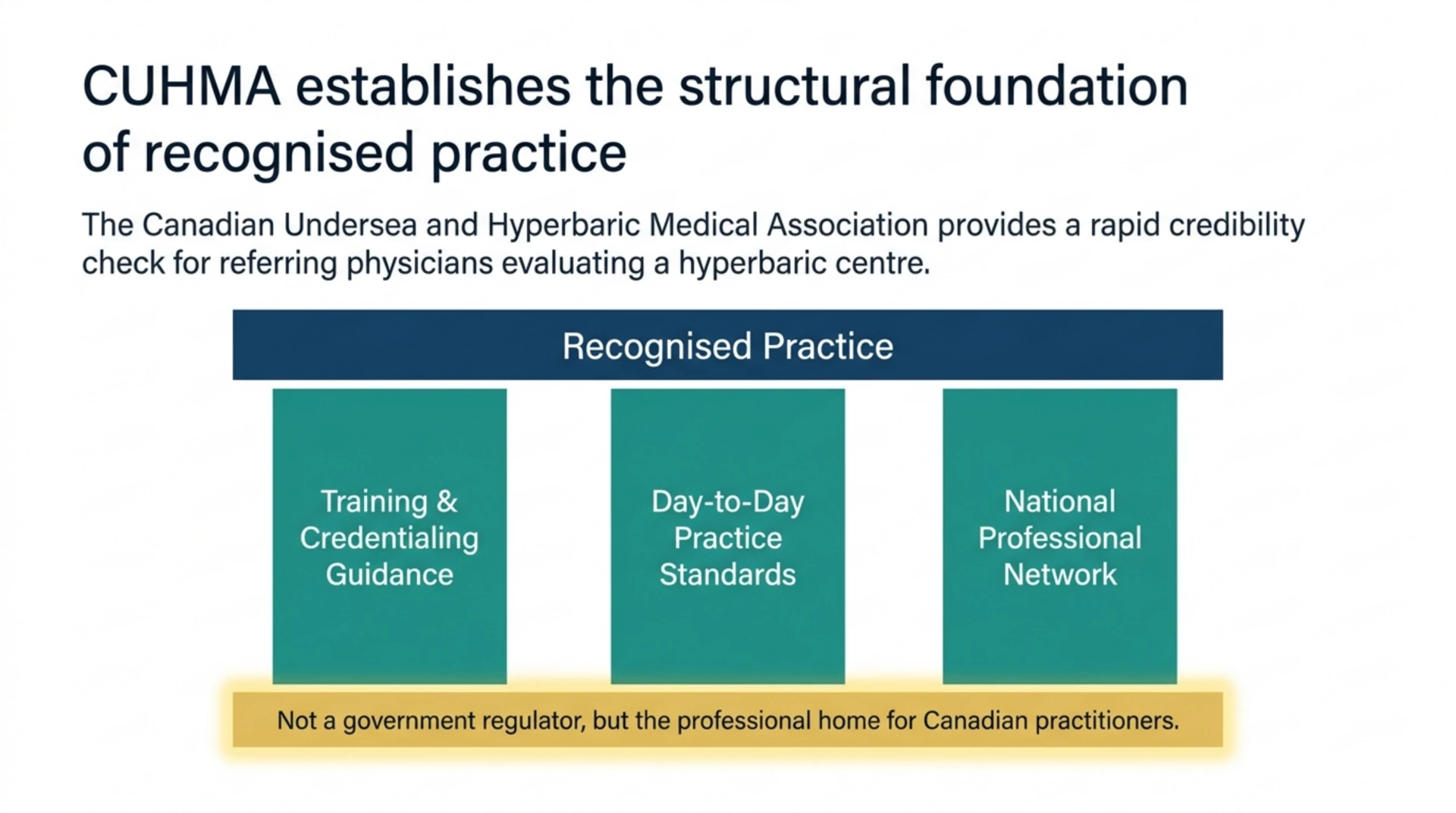
CUHMA stands for the Canadian Undersea and Hyperbaric Medical Association. It functions as the professional home for hyperbaric medicine practitioners in Canada, similar in spirit to how other specialty societies support clinicians working in a defined area of practice.
The association’s work centres on three practical areas that matter to a referring physician:
- Training and credentialing guidance for physicians and staff working in hyperbaric medicine.
- Practice standards that inform how hyperbaric centres operate day to day, including safety protocols and staffing expectations.
- A professional network connecting hyperbaric physicians, nurses, and technologists across provinces, which supports consistency in how centres are run.
Because CUHMA is a professional association rather than a government regulator, it works alongside, not in place of, provincial health authorities and facility-level regulatory oversight. For a fuller picture of how oversight is structured in this field, our regulatory overview is a useful companion to this article.
Why Should Referring Physicians Know About CUHMA?
Referring a patient for hyperbaric oxygen therapy (HBOT) is different from referring within a more familiar specialty. Many physicians outside hyperbaric medicine have limited day-to-day exposure to how a chamber session works, who staffs it, or what training the supervising physician holds.
CUHMA gives a referring physician a quick credibility check. Asking whether a centre’s medical staff are involved with CUHMA, or whether the centre follows CUHMA-aligned practice guidance, is a reasonable and useful question during the referral process. It is not the only factor to weigh, but it is a practical starting point.
This matters because hyperbaric centres in Canada vary in scope, staffing model, and the range of conditions they see. A centre’s relationship to recognised professional standards is one signal, among several, that a referring physician can use when deciding where to send a patient.
How Does the Referral Pathway Work?
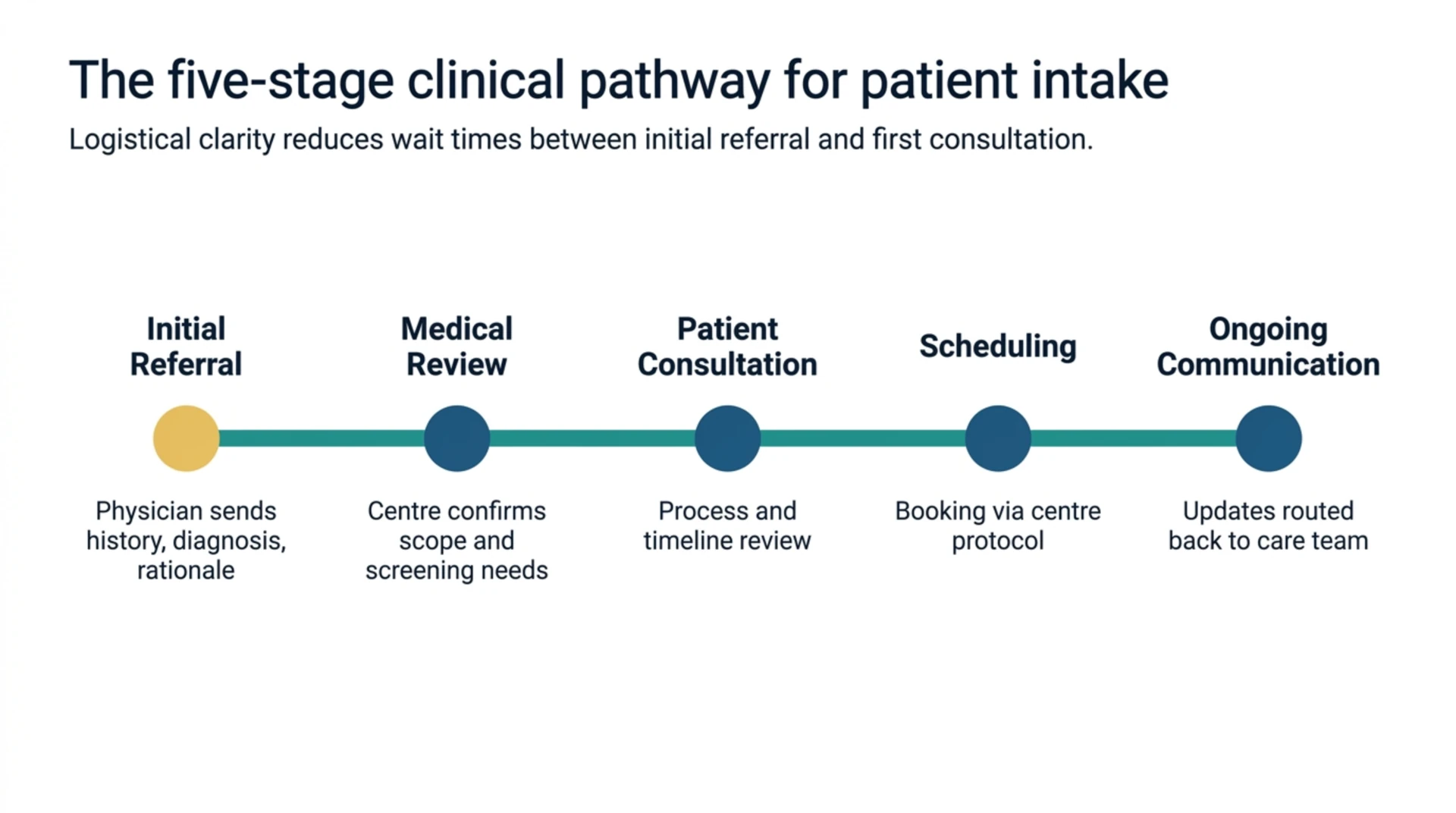
The exact steps vary by centre and by province, but most referral pathways for hyperbaric medicine follow a broadly similar shape.
- Initial referral. The referring physician sends relevant medical history, current diagnosis, and the reason for considering HBOT to the hyperbaric centre.
- Medical review. A hyperbaric physician reviews the referral to confirm the case fits within the centre’s scope of practice and to flag any screening needs, such as checking for conditions that require extra precaution in a pressurized environment.
- Patient consultation. The patient typically meets with the hyperbaric team before the first session to review the process, timeline, and what a course of treatment involves.
- Scheduling. Sessions are booked according to the centre’s protocol and the patient’s availability.
- Ongoing communication. Many centres send updates back to the referring physician at set points, keeping the original care team in the loop.
Streamlining this pathway is largely a logistics problem: fewer missing forms, clearer intake criteria, and faster triage all help reduce wait times between referral and first consultation. That is a process improvement, not a clinical outcome, and it is where most of the practical friction in hyperbaric referrals actually shows up.
What Should Be Included in a Referral?
A complete referral moves faster through intake. At minimum, most hyperbaric centres ask for:
- Relevant diagnosis and medical history
- Current medications
- Any prior chamber therapy, if applicable
- Contact details for the referring physician’s office, for follow-up correspondence
Incomplete referrals are one of the most common causes of delay. Centres generally follow up to request missing information, which adds time before a patient can be scheduled for their first consultation.
| Referral Element | Why It Matters for Intake |
|---|---|
| Diagnosis and history | Confirms the case fits the centre’s scope of practice |
| Medication list | Supports the pre-session screening process |
| Prior HBOT history | Helps the hyperbaric team plan scheduling and follow-up |
| Office contact details | Keeps the referring physician informed as care progresses |
Where Does a Condition Fit Into the Referral Decision?
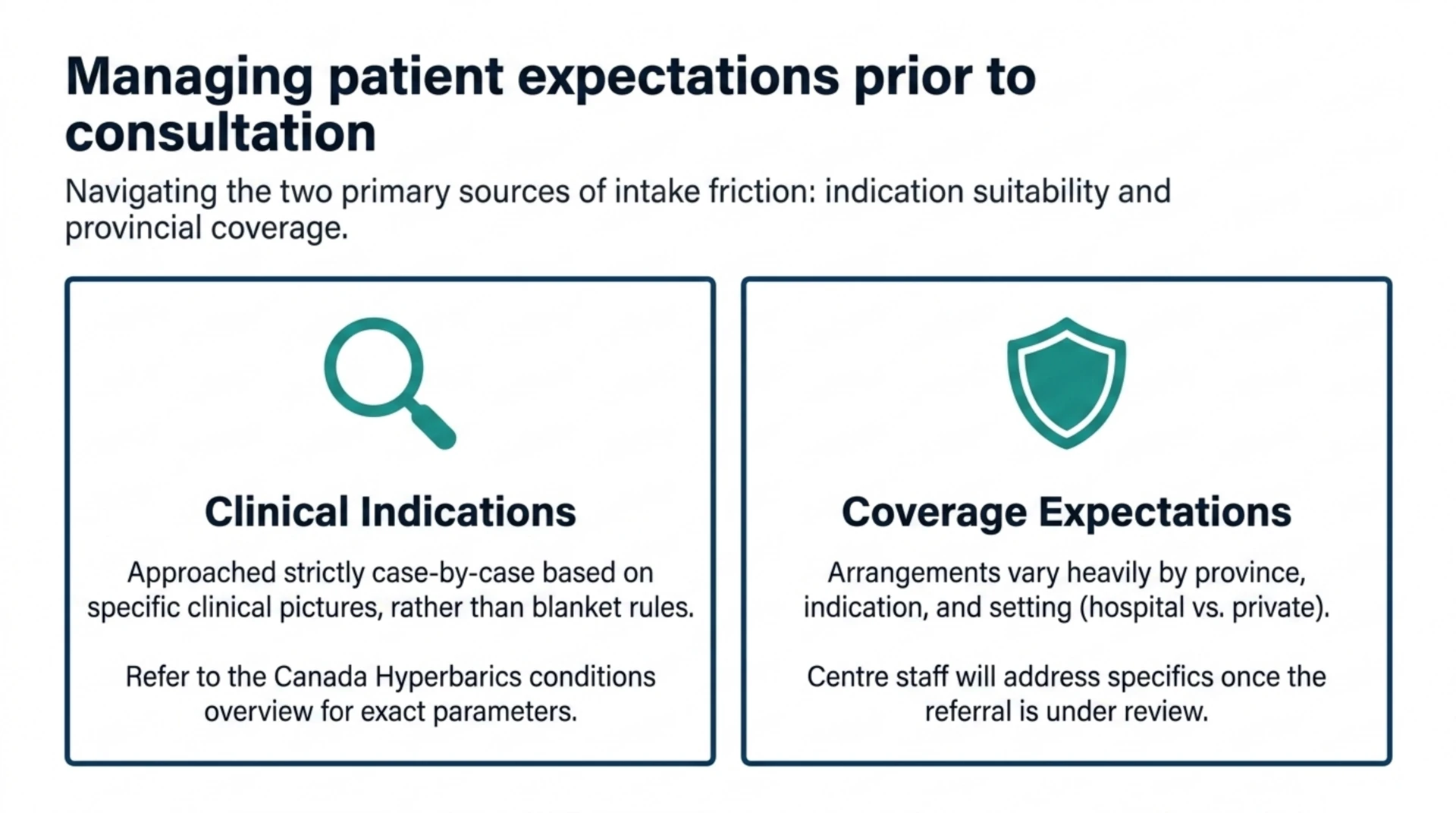
Physicians sometimes ask which conditions are commonly considered for hyperbaric referral. That question is genuinely case-by-case, and it depends on the specific clinical picture, not a general rule that applies to every patient with a given diagnosis.
Rather than summarize condition-specific detail here, referring physicians and their patients are better served by our conditions overview, which lays out the range of conditions clinicians may consider HBOT for and points to further reading on each. This keeps the referral conversation grounded in condition-specific detail rather than general statements that may not apply to a particular patient.
What Role Does Regulatory Oversight Play?
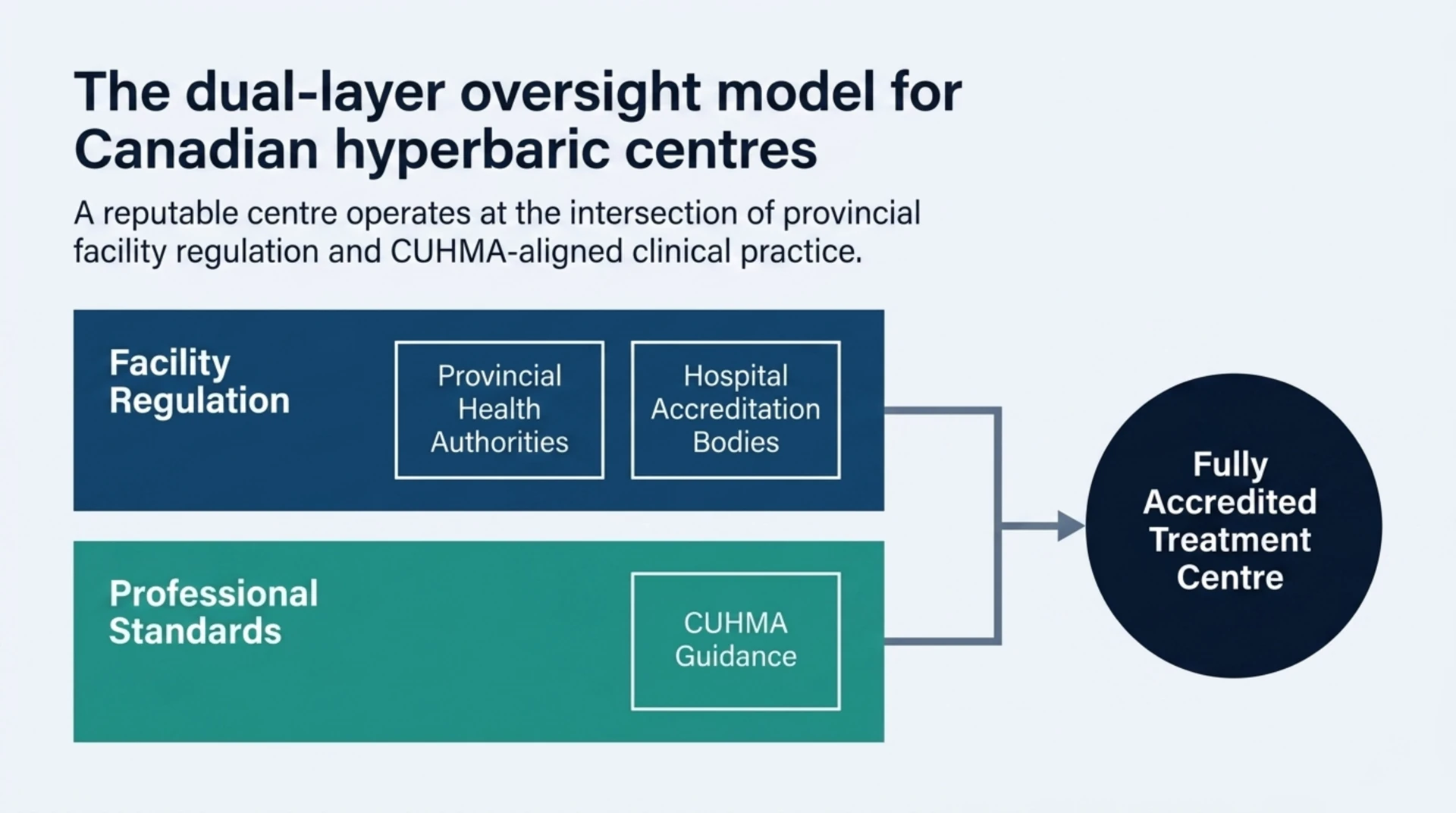
CUHMA sets professional practice guidance, but day-to-day facility oversight sits with provincial health authorities and, where applicable, hospital accreditation bodies. A referring physician evaluating a hyperbaric centre is really looking at two layers: the professional standards a centre’s staff follow, and the regulatory framework the facility itself operates under.
Both layers matter. A centre can be well staffed by CUHMA-connected practitioners while also operating under provincial oversight specific to the facility type, whether that is a hospital department or a standalone regulated clinic. For the specifics of how that oversight is structured, see our regulatory page.
How Does Coverage Fit Into the Referral Conversation?
Coverage is frequently the first question a patient asks after a referral is made, and it is worth addressing early rather than leaving it until after the first consultation. Coverage arrangements differ by province, by indication, and by whether the treatment occurs in a hospital or a private setting.
Referring physicians do not need to become coverage experts, but a general awareness of how coverage questions typically get resolved can help set patient expectations before the first appointment. Our coverage page walks through how these questions are usually addressed, and centre staff can generally give a patient-specific answer once a referral is under review.
How Should Physicians Evaluate a Centre’s Standing?
The most direct way to identify a hyperbaric centre’s standing is to ask directly during the referral process. Reputable centres are generally comfortable answering questions about staff training, CUHMA involvement, and facility oversight.
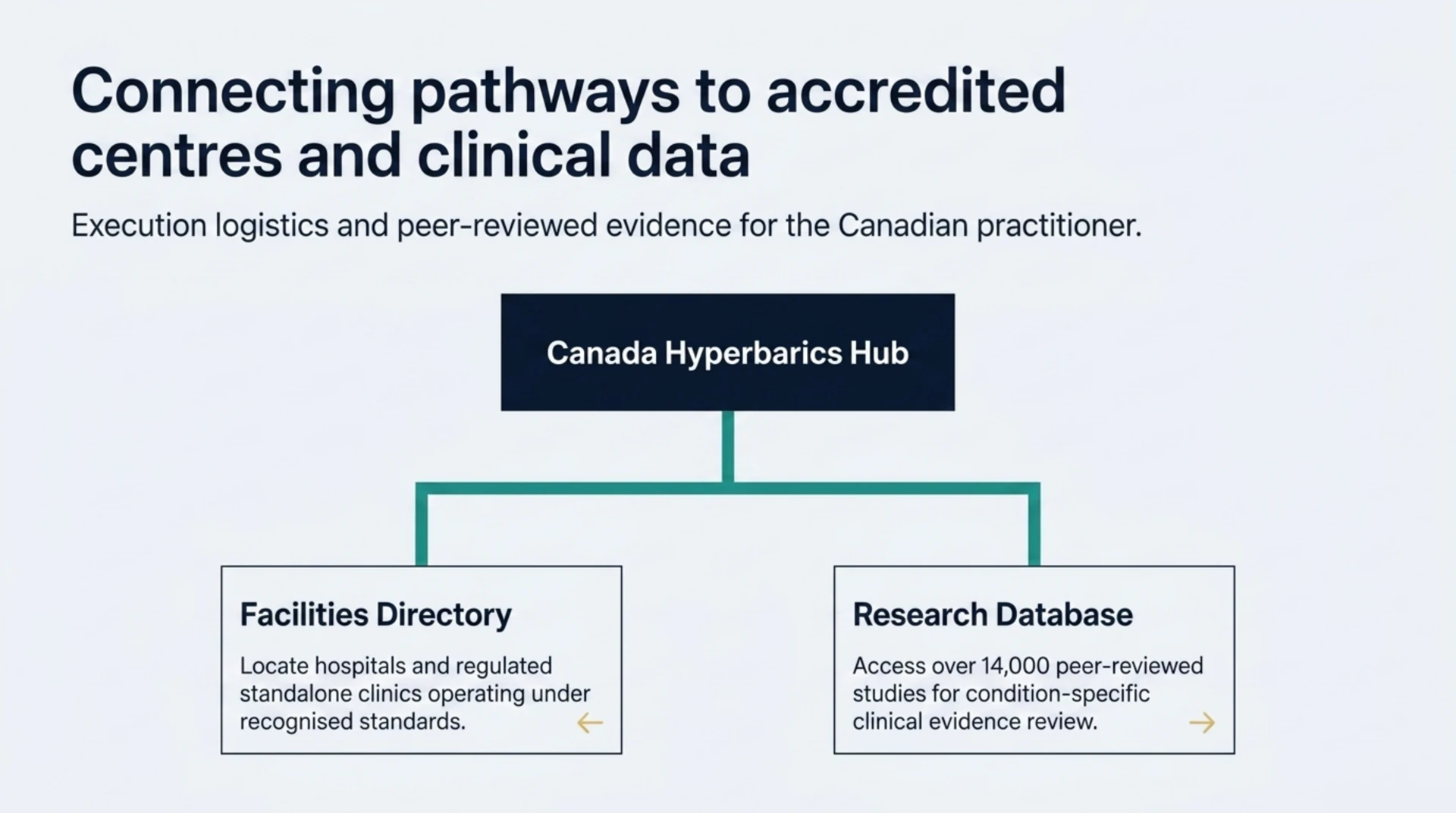
Canada Hyperbarics maintains an overview of hospitals and regulated facilities for physicians who want to compare options before sending a referral. Our about page also outlines how our educational resource is organized for a Canadian practitioner audience.
Frequently Asked Questions
What does CUHMA stand for?
CUHMA stands for the Canadian Undersea and Hyperbaric Medical Association, the national professional body for hyperbaric medicine practitioners in Canada.
Is CUHMA a government regulator?
No. CUHMA is a professional association, not a government body. Facility-level regulatory oversight sits with provincial health authorities and applicable accreditation bodies, detailed further on our regulatory page.
How long does a hyperbaric referral typically take to process?
Processing time varies by centre and by how complete the initial referral is. A complete referral with full medical history and medication information generally moves through intake faster than one requiring follow-up requests.
Do all hyperbaric centres in Canada follow CUHMA guidance?
Involvement with CUHMA varies by centre. Asking directly during the referral process is the most reliable way to confirm a specific centre’s standing and staff training.
What information should a referring physician’s office prepare before sending a referral?
Diagnosis and relevant history, current medications, any prior hyperbaric treatment, and current office contact details for follow-up correspondence.
Where can a physician learn more about which conditions are considered for HBOT referral?
Our conditions overview covers the range of conditions clinicians may consider HBOT for, with further detail on each.
Does insurance or provincial coverage affect the referral decision?
Coverage varies by province and indication. It is worth raising early in the referral conversation, and our coverage page outlines how these questions are typically addressed.
A Note on Scope
This article is a process overview for referring physicians, not a review of clinical evidence for any specific condition. Canada Hyperbarics maintains a database of over 14,000 peer-reviewed studies for clinicians who want to review the evidence base for a particular indication; that kind of evidence review belongs on a condition-specific page, not in a general discussion of professional standards and referral logistics.
Related Reading
- Is Hyperbaric Oxygen Therapy Covered by Insurance?
- Hyperbaric Chamber Barrie: A Patient’s Step-by-Step Guide
- Hyperbaric Chamber Shortage in Winnipeg: A Clinic Brief
Physicians considering a referral, or patients who have received one, can review our list of hospitals and regulated facilities to find a hyperbaric centre near them.
This content is for informational purposes only and is not medical advice.