
TL;DR: Hyperbaric oxygen therapy (HBOT) is a treatment that delivers 100% oxygen at greater-than-atmospheric pressure to support wound healing and tissue oxygenation. The evidence on hyperbaric oxygen toxic epidermal necrolysis treatment is limited to a handful of case reports and small case series, not controlled trials, so any benefit described below is scoped to those individual cases and cannot be generalized as a proven population-level effect.
Toxic epidermal necrolysis (TEN) is a rare, severe, and potentially life-threatening reaction, usually to a medication, that causes the top layer of skin to separate from the layers beneath it over large areas of the body. Because TEN behaves clinically like an extensive burn, some burn and wound care teams have explored hyperbaric oxygen toxic epidermal necrolysis protocols as an adjunct to standard burn-unit care. The Canada Hyperbarics research library has reviewed the published case literature on this question, and this article summarizes what it actually shows, and what it does not.
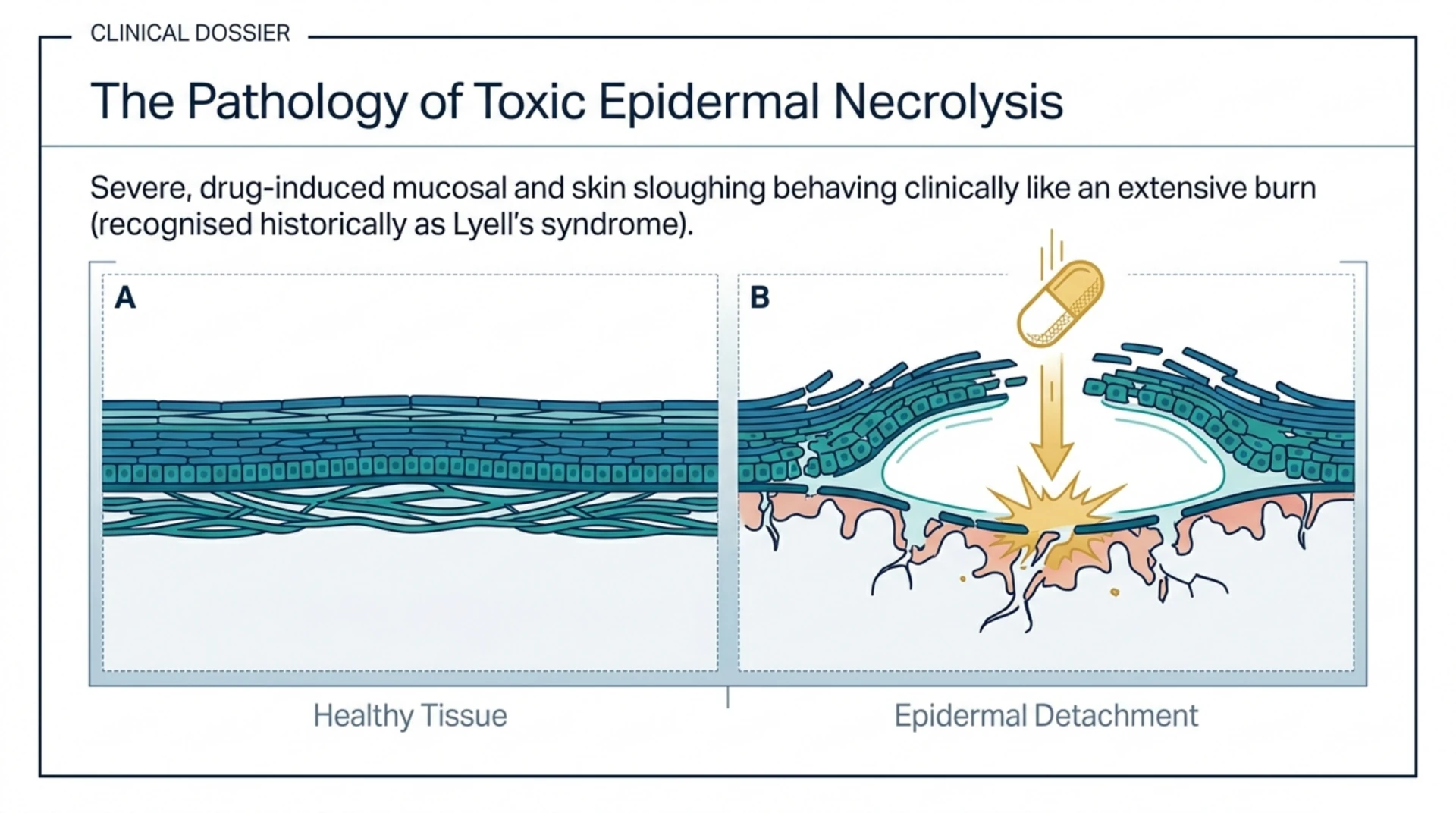
What Is Toxic Epidermal Necrolysis?
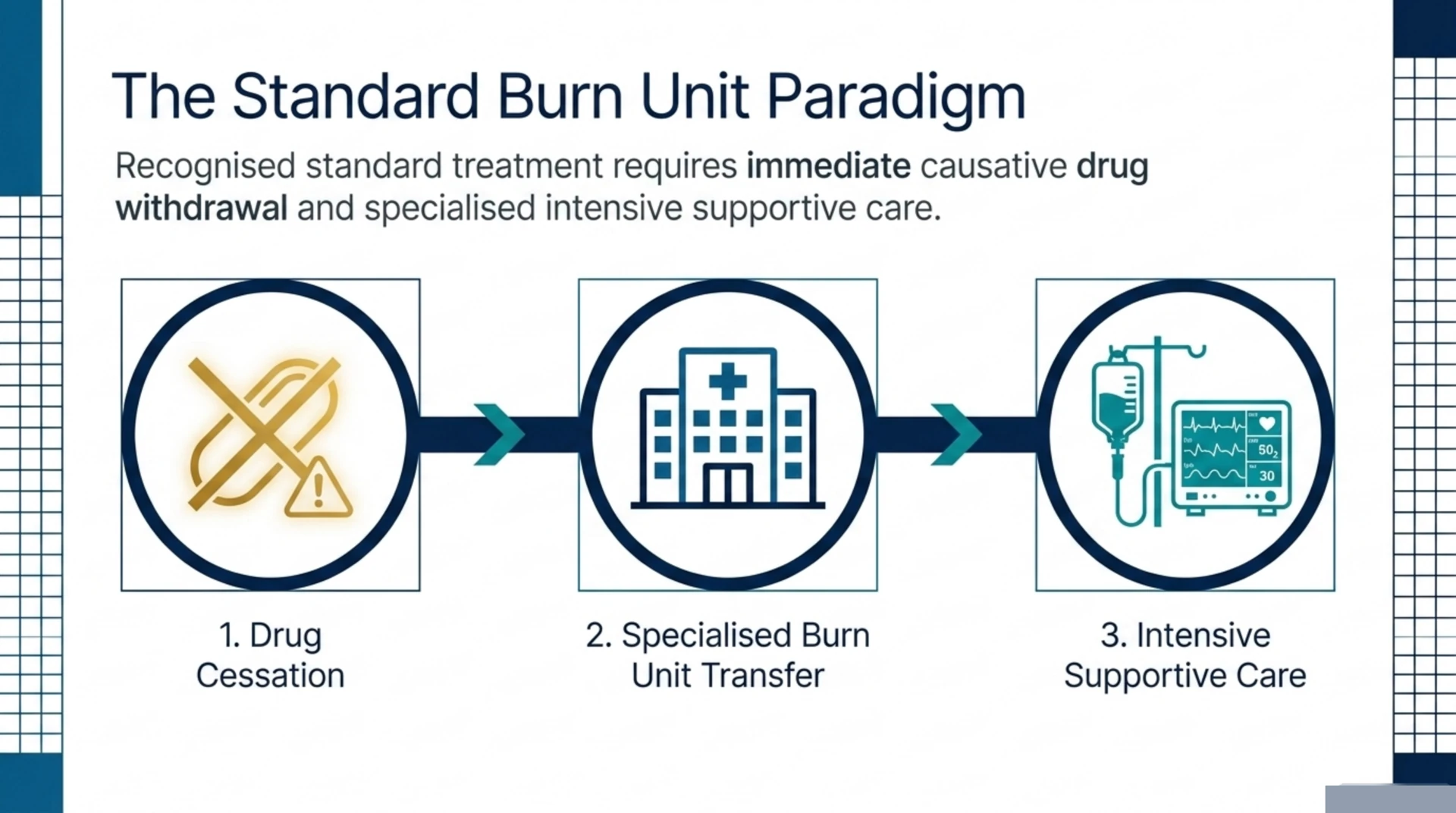
TEN is the most severe form of a spectrum of skin reactions that also includes Stevens-Johnson syndrome (SJS). It is most often triggered by a drug reaction and causes widespread blistering, skin sloughing, and mucous membrane damage affecting the eyes, mouth, and genitals. A 2005 description of the condition, also known as Lyell’s syndrome (PubMed | Our Assessment), outlines its characteristic presentation, common drug triggers, and the treatment approaches used at the time, which centre on stopping the causative drug and providing intensive supportive care.
Because the skin loss in TEN is comparable in extent and physiology to a major burn, patients are frequently managed in specialized burn units. A 2004 review from the Coimbra Burns Unit in Portugal (PubMed | Our Assessment) described the burn-unit treatment protocol used there for TEN, illustrated with a clinical case, and reinforced the view of TEN as a pathology best handled by teams experienced in burn wound care.
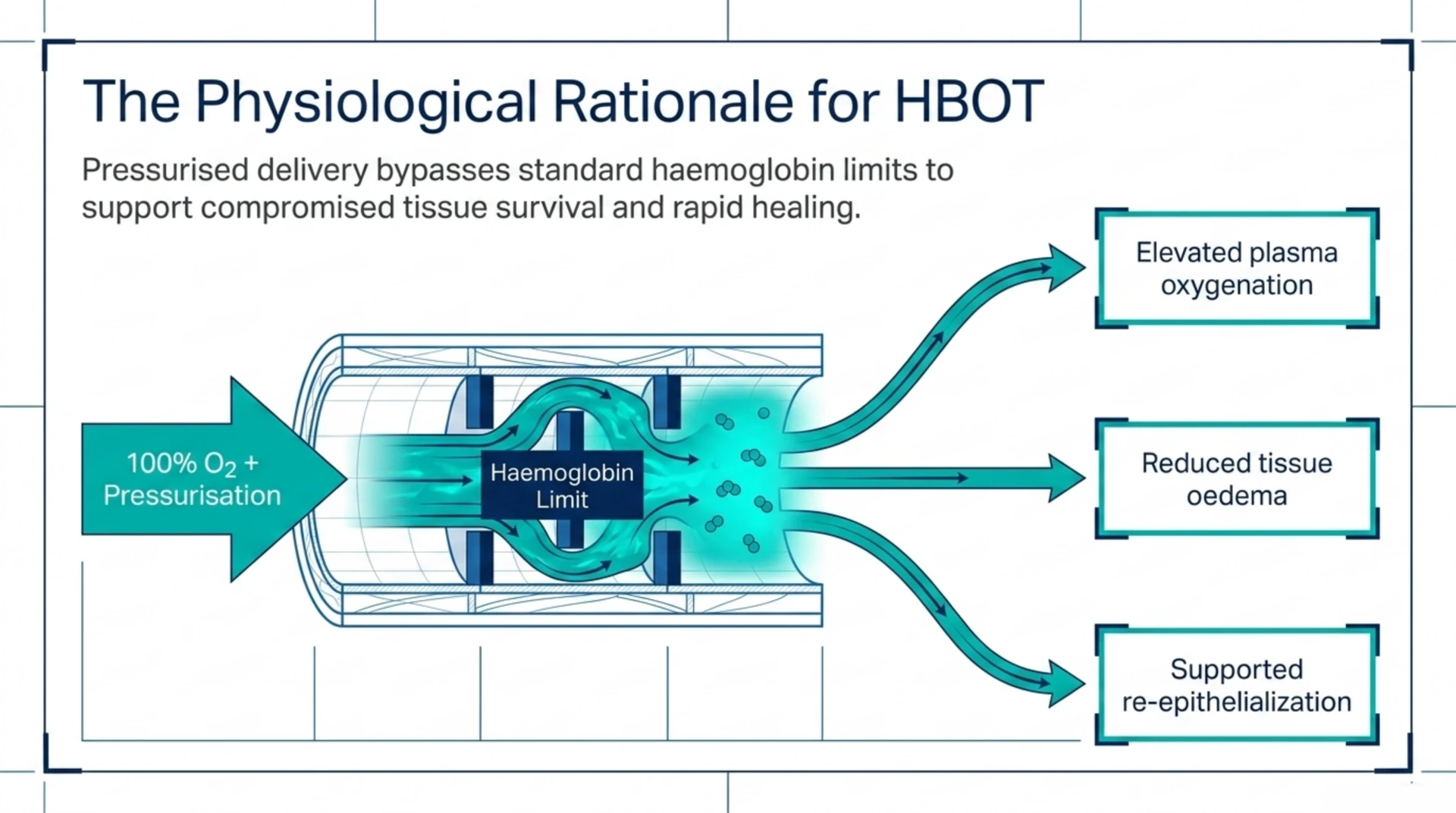
What Is Hyperbaric Oxygen Therapy?
Hyperbaric oxygen therapy involves breathing near-pure oxygen inside a pressurized chamber, which raises the amount of oxygen dissolved in the blood plasma well beyond what is possible at normal atmospheric pressure. In burn and wound care, this elevated oxygen delivery is used to try to support tissue survival, reduce swelling, and encourage re-epithelialization, which is the process by which new skin cells cover an open wound.
HBOT is a well-established adjunct for several recognised wound and burn indications. Its use in TEN specifically is much less studied, and the evidence base described in this article is small and consists entirely of individual case reports and one small case series, not randomised trials.
What Does the Case Evidence on Hyperbaric Oxygen Toxic Epidermal Necrolysis Treatment Show?
The published literature on hyperbaric oxygen toxic epidermal necrolysis treatment is limited to case reports and a small case series spanning nearly four decades. No randomised controlled trials have compared HBOT against standard burn-unit care alone for TEN. The following sections summarize each of the available reports.
The Earliest Case Series (1986)
The earliest report identified in this review is a 1986 case series published in Cutis (PubMed | Our Assessment). In this study, hyperbaric oxygen was used alone, as the sole treatment, in three patients with drug-induced toxic epidermal necrolysis. All three patients experienced quick re-epithelialization in this small series. Because HBOT was the only treatment reported for these three patients, and because there was no comparison group, this finding cannot be used to claim that HBOT is more effective than standard burn-unit care, only that rapid healing was observed in this specific, uncontrolled case series.
A More Recent Case Report (2021)
A 2021 case report published in Diving and Hyperbaric Medicine (PubMed | Our Assessment) described a 60-year-old woman with TEN who received hyperbaric oxygen treatment as part of her care, undergoing five HBOT sessions. As with the 1986 series, this is a single-patient report without a comparison group, so it documents one patient’s course rather than establishing a general treatment effect.
Ocular Complications and HBOT (2023)
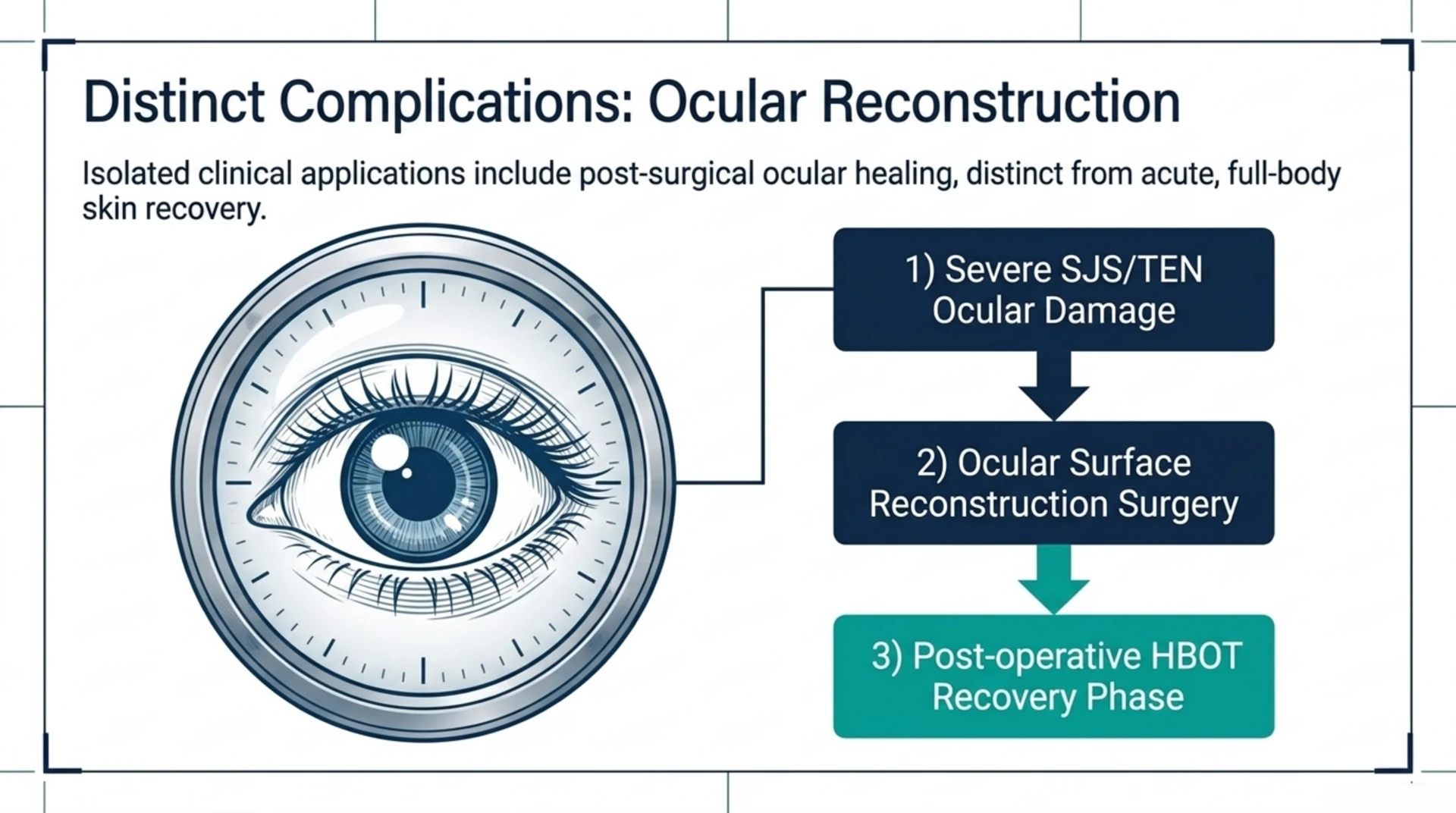
TEN frequently damages the eyes, sometimes severely enough to threaten vision. A 2023 case report in Heliyon (PubMed | Our Assessment) described one woman whose eyes were severely damaged by Stevens-Johnson syndrome and TEN. She was treated with major ocular surface reconstruction surgery, followed by hyperbaric oxygen therapy as part of her recovery. This report is notable because it addresses a distinct complication of TEN, namely ocular scarring, rather than acute skin healing, and again reflects the experience of a single patient.
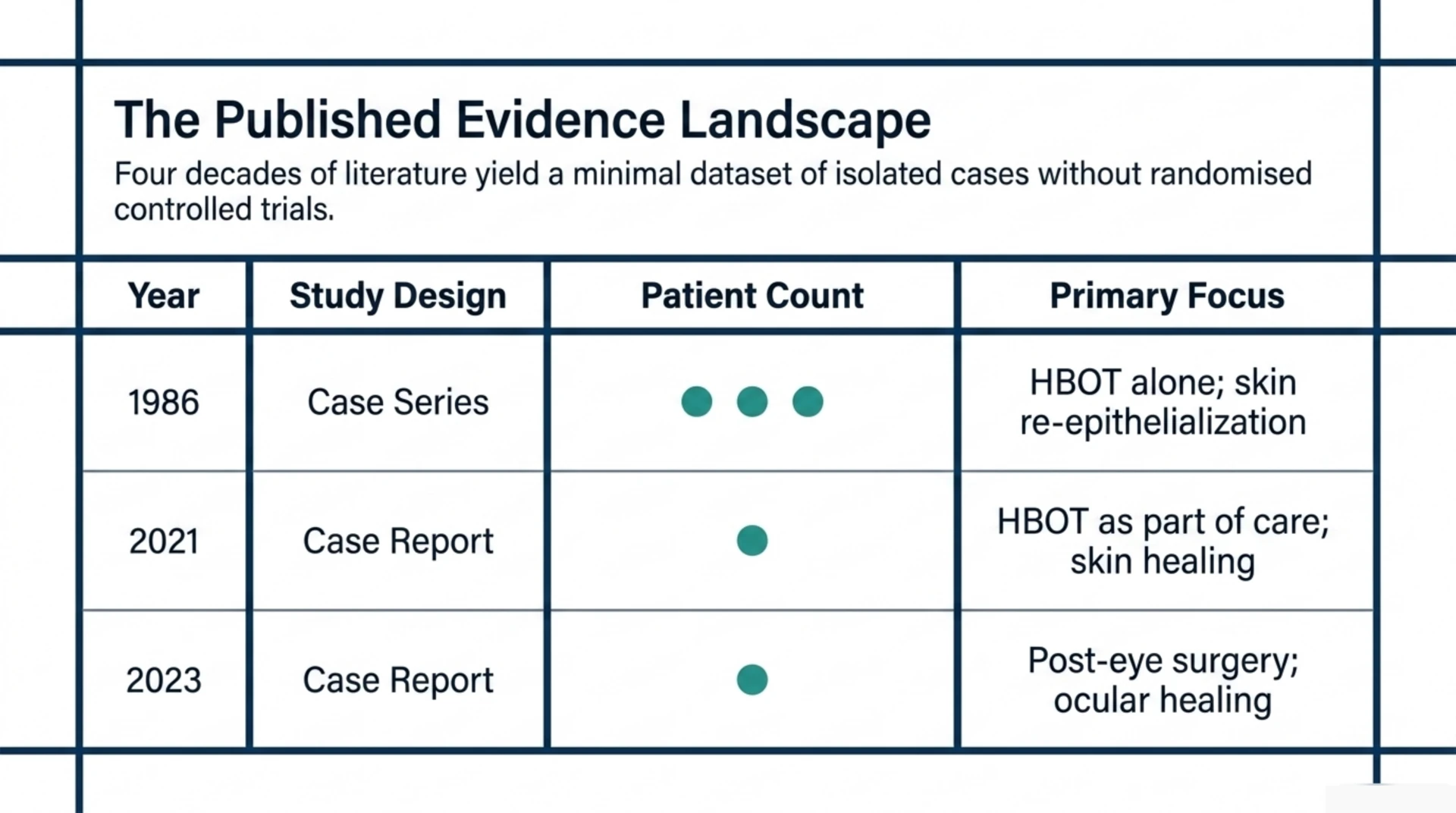
How Do These Reports Compare?
| Study | Year | Design | Patients | Focus |
|---|---|---|---|---|
| Hyperbaric oxygen treatment of toxic epidermal necrolysis | 1986 | Case series | 3 | HBOT alone; skin re-epithelialization |
| Hyperbaric oxygen treatment for toxic epidermal necrolysis | 2021 | Case report | 1 | HBOT as part of care; skin healing |
| Ocular surface reconstruction case report | 2023 | Case report | 1 | HBOT after eye surgery; ocular healing |
| Toxic Epidermal Necrolysis (Lyell syndrome): a pathology for burn units | 2004 | Protocol review with case | 1 | Burn-unit treatment approach |
| Lyell’s syndrome | 2005 | Descriptive review | Not applicable | Condition overview |
Is Hyperbaric Oxygen a Standard Treatment for TEN?
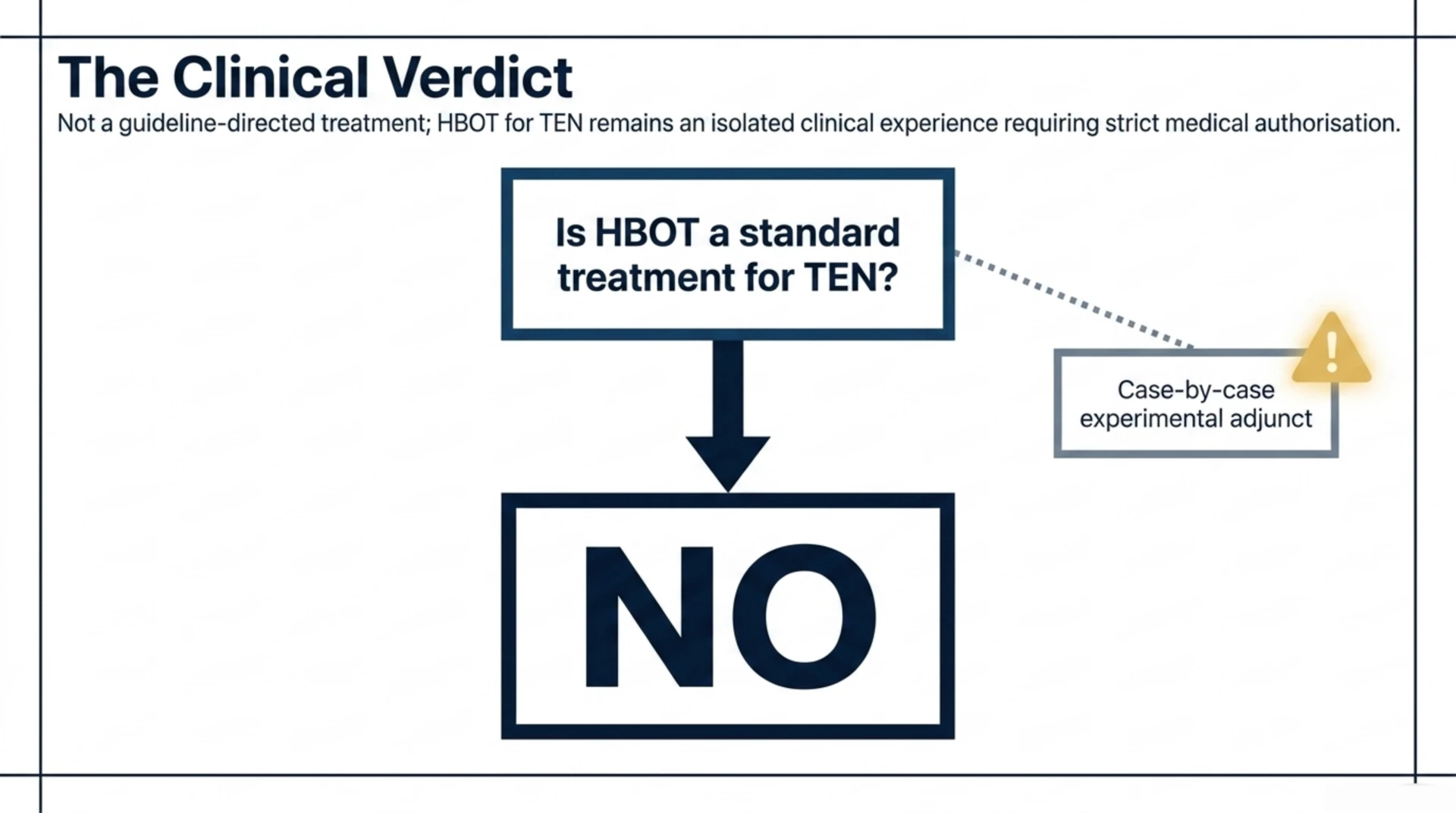
No. Based on this evidence base, HBOT is not established as a standard or guideline-directed treatment for TEN. The condition is primarily managed by stopping the causative drug and providing intensive supportive care in a burn unit or intensive care setting, as reflected in the burn-unit protocol review discussed above. The reports on HBOT here represent isolated clinical experiences, not a validated treatment pathway.
This distinguishes TEN from some other conditions where HBOT has a more established evidence base and recognised indication status. Readers interested in conditions where HBOT is more thoroughly studied can review the Canada Hyperbarics overview of HBOT coverage in Canada for context on which uses are more broadly recognised.
What Are the Limitations of This Evidence?
Several limitations apply directly to the hyperbaric oxygen toxic epidermal necrolysis literature reviewed here. First, every report is a case report or small case series; none is a controlled trial, so none can isolate the effect of HBOT from the effect of concurrent standard care, spontaneous healing, or other factors. Second, the total number of reported patients is very small, only a handful across nearly forty years of literature. Third, publication of case reports tends to favour cases with a positive or interesting outcome, which can make the available literature look more favourable than the true range of outcomes.
These limitations mean the evidence should be read as hypothesis-generating rather than practice-defining. The Canada Hyperbarics research library flags this distinction deliberately, because case reports can be genuinely informative for clinicians managing a rare condition while still falling well short of proof of effect.
Frequently Asked Questions
Is hyperbaric oxygen therapy proven to treat toxic epidermal necrolysis?
No. The available evidence consists only of case reports and one small case series. There are no randomised controlled trials, so HBOT is not proven as an effective treatment for TEN in the way that term is used in evidence-based medicine.
How many patients have been studied for hyperbaric oxygen toxic epidermal necrolysis treatment?
The reports identified in this review together describe a small number of individual patients, most from single case reports plus one three-patient series. This is far too small a sample to draw firm conclusions.
Why might a burn unit consider hyperbaric oxygen for TEN?
Because TEN causes skin loss similar in extent to a major burn, and HBOT is used as an adjunct in some burn and wound care settings to support tissue oxygenation and healing, some clinicians have extended this reasoning to TEN on a case-by-case basis, as reflected in the reports above.
Can hyperbaric oxygen help with eye damage from TEN?
One 2023 case report described HBOT used after major ocular surface reconstruction surgery in a patient whose eyes were severely damaged by Stevens-Johnson syndrome and TEN. This is a single case and does not establish HBOT as a standard treatment for TEN-related eye damage.
What is the standard treatment for toxic epidermal necrolysis?
Standard care centres on immediately stopping the drug believed to have caused the reaction and providing intensive supportive care, often in a specialized burn unit, as described in the burn-unit protocol literature reviewed here.
Where can I read the original studies on this topic?
Every study referenced in this article is dual-linked to its original PubMed listing and to the corresponding assessment page in the Canada Hyperbarics research library, which reviews over 14,000 peer-reviewed studies on hyperbaric oxygen therapy across many conditions.
Related Reading
- Publication Bias in HBOT Meta-Analyses: Funnel Plots
- Hyperbaric Oxygen for Radiation Enteritis: Evidence Review
- Hyperbaric Clinic Clinical Trial Site Participation in Canada
What Should You Do With This Information?
Toxic epidermal necrolysis is a serious, rapidly progressing condition that requires urgent specialist care. If you or someone you know has been diagnosed with TEN or SJS and hyperbaric oxygen therapy is being discussed as part of the treatment plan, talk to the treating physician or burn unit team about whether it is appropriate for that specific case, given how limited the published evidence currently is.
This content is for informational purposes only and is not medical advice.