
TL;DR: Hyperbaric oxygen therapy (HBOT) is a treatment that delivers 100% oxygen inside a pressurized chamber to increase the amount of oxygen dissolved in blood plasma. For anoxic brain injury following cardiac arrest, the referral question a physician actually faces is whether this mechanism translates into meaningful clinical benefit. The evidence base for that specific question is still early: mechanistic reviews, one case report, and a small retrospective cohort, not large randomised trials. This article lays out what the research does and does not show.
Anoxic brain injury after cardiac arrest is one of the more difficult referral questions in hyperbaric medicine. Families and referring physicians alike want to know whether hyperbaric oxygen post-cardiac arrest anoxic brain injury referral pathways exist and whether they are backed by evidence, not just physiological plausibility. The honest answer, drawn from the research library at Canada Hyperbarics, is that the mechanistic case is more developed than the clinical case. This review works through both, and is explicit about where the evidence stops.
What Is Anoxic Brain Injury After Cardiac Arrest?
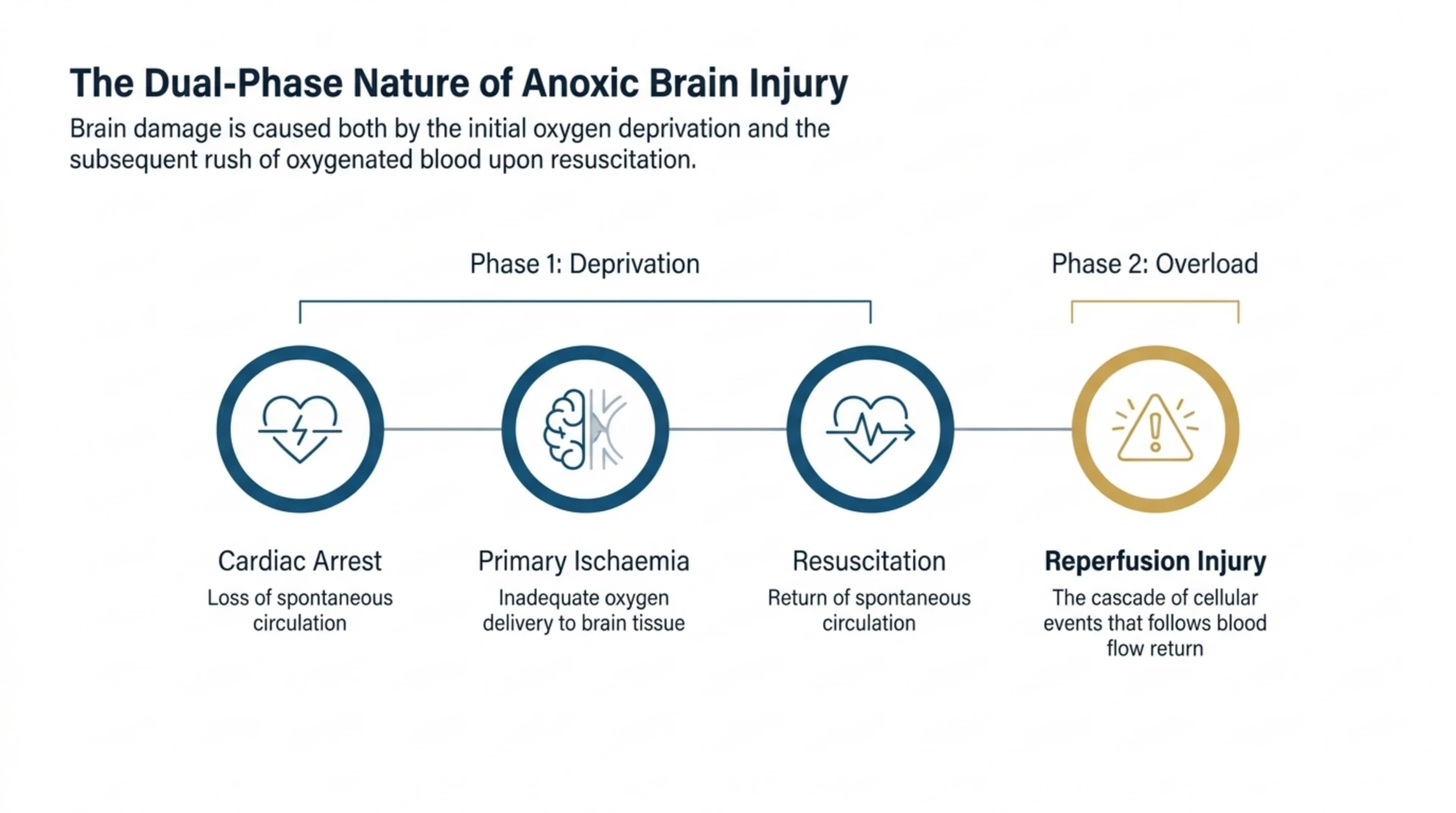
Anoxic brain injury is damage to brain tissue caused by a period of inadequate oxygen delivery, most commonly the interval between cardiac arrest and return of spontaneous circulation. Even with successful resuscitation, the brain can sustain injury from the oxygen-deprivation period itself and from the cascade of cellular events that follows once blood flow returns, a process often called reperfusion injury.
Clinically, this can present as anything from mild cognitive impairment to persistent unresponsiveness, depending on the duration of arrest, the speed of resuscitation, and individual patient factors. Because outcomes vary so widely, post-cardiac arrest care teams are motivated to explore adjunctive therapies, including hyperbaric oxygen, that might support neurological recovery.
How Might Hyperbaric Oxygen Protect the Brain After Cardiac Arrest?
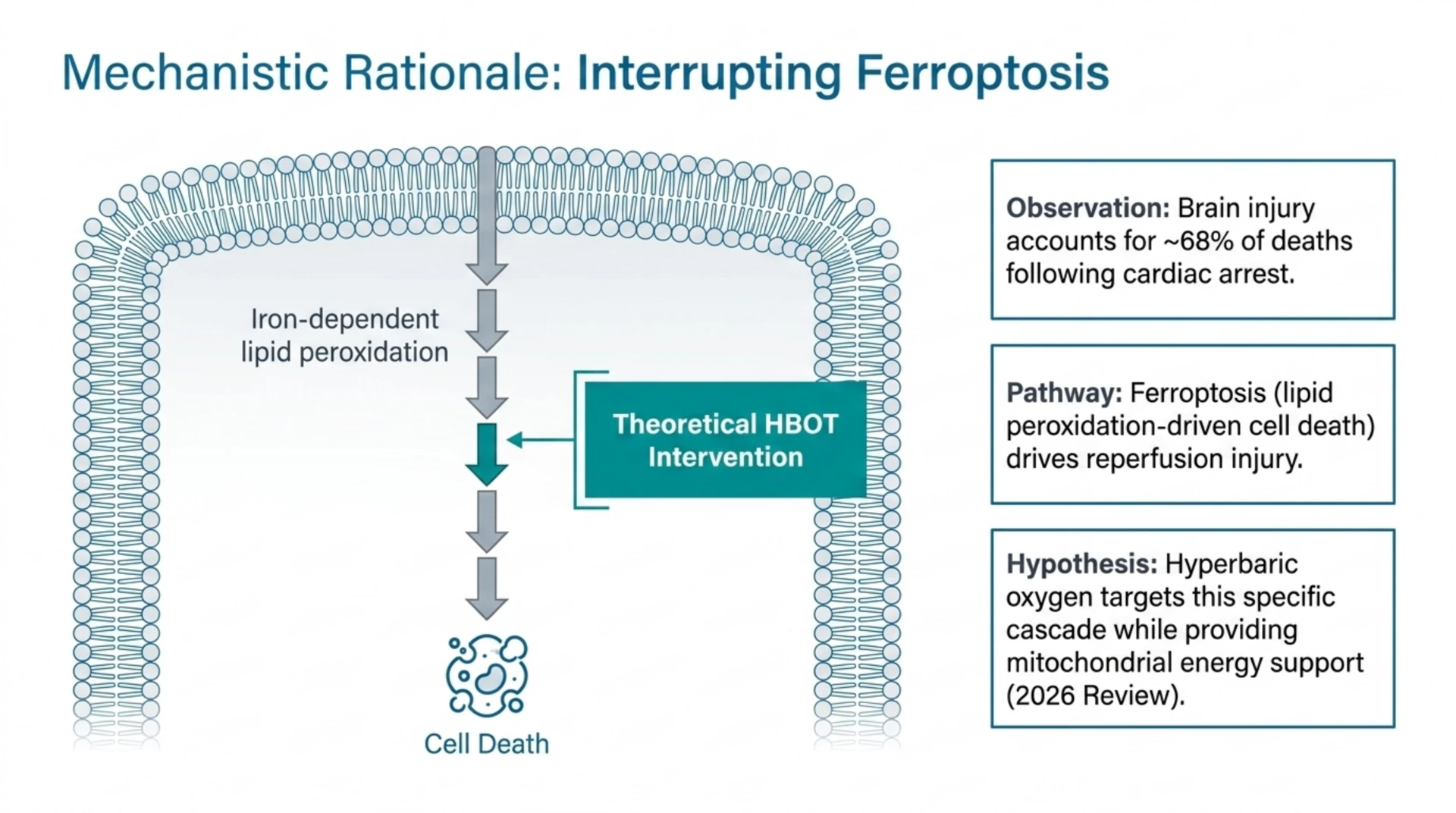
The rationale for HBOT in this setting rests on cellular mechanisms studied mostly in preclinical and review literature rather than confirmed in clinical trials of cardiac arrest patients.
Ferroptosis and the Injury Cascade
A 2026 review in the International Journal of Medical Sciences (PubMed | Our Assessment) noted that brain injury is responsible for an estimated 68% of deaths following cardiac arrest, and identified ferroptosis, an iron-dependent form of lipid peroxidation-driven cell death, as a specific mechanism underlying that injury. The authors described several ways HBOT has been proposed to interrupt this cascade, including effects on cellular oxidative stress and mitochondrial energy support. This is mechanistic and hypothesis-generating work; it describes a proposed pathway, not a measured clinical outcome in cardiac arrest patients.
Oxygen as a Double-Edged Sword
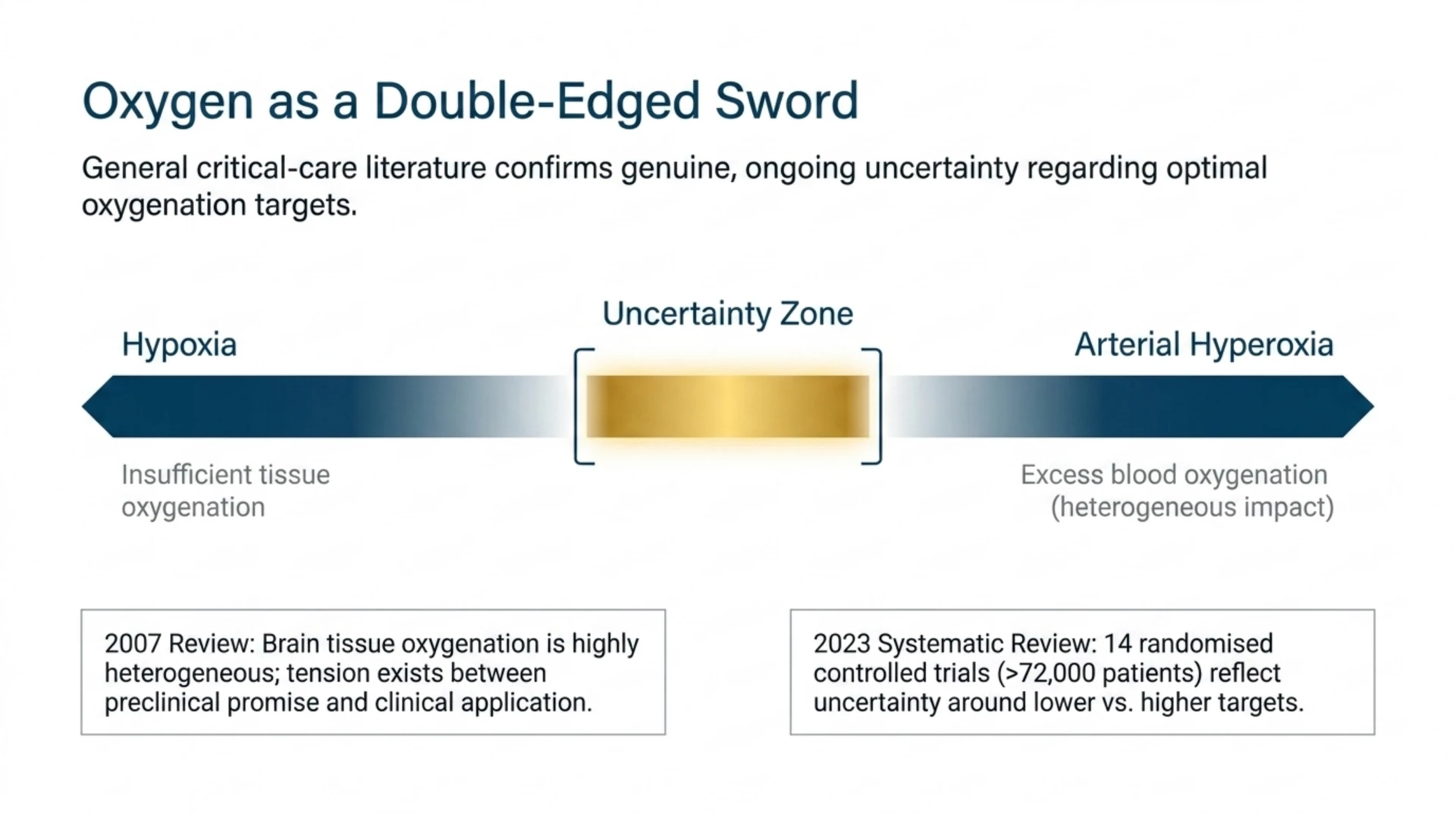
A 2007 review in Neurological Research (PubMed | Our Assessment) examined the basic physiology and challenges of using HBOT for cerebral ischaemic-anoxic insults. Rather than presenting a simple case for benefit, the review characterized oxygen’s effect on injured brain tissue as a double-edged sword: brain tissue oxygenation is highly heterogeneous from region to region, and the paper pointed to a persistent gap between encouraging preclinical findings and the more limited clinical evidence supporting HBOT’s use in this setting. This tension between preclinical promise and clinical uncertainty is a recurring theme across the literature, not a problem unique to any one study.
What Does the Clinical Evidence Show for HBOT After Cardiac Arrest?
Moving from mechanism to outcomes, the available clinical evidence for HBOT specifically in post-cardiac arrest anoxic brain injury is limited in both volume and study design.
A case report (PubMed | Our Assessment) described a 43-year-old man who developed neurological complications after cardiac arrest caused by carbon monoxide poisoning and subsequently received hyperbaric oxygen therapy, with the authors reporting improvement in his neurological symptoms. As a single case, this finding cannot be generalized to other patients or arrest etiologies, but it illustrates the kind of clinical scenario that prompts referral in practice.
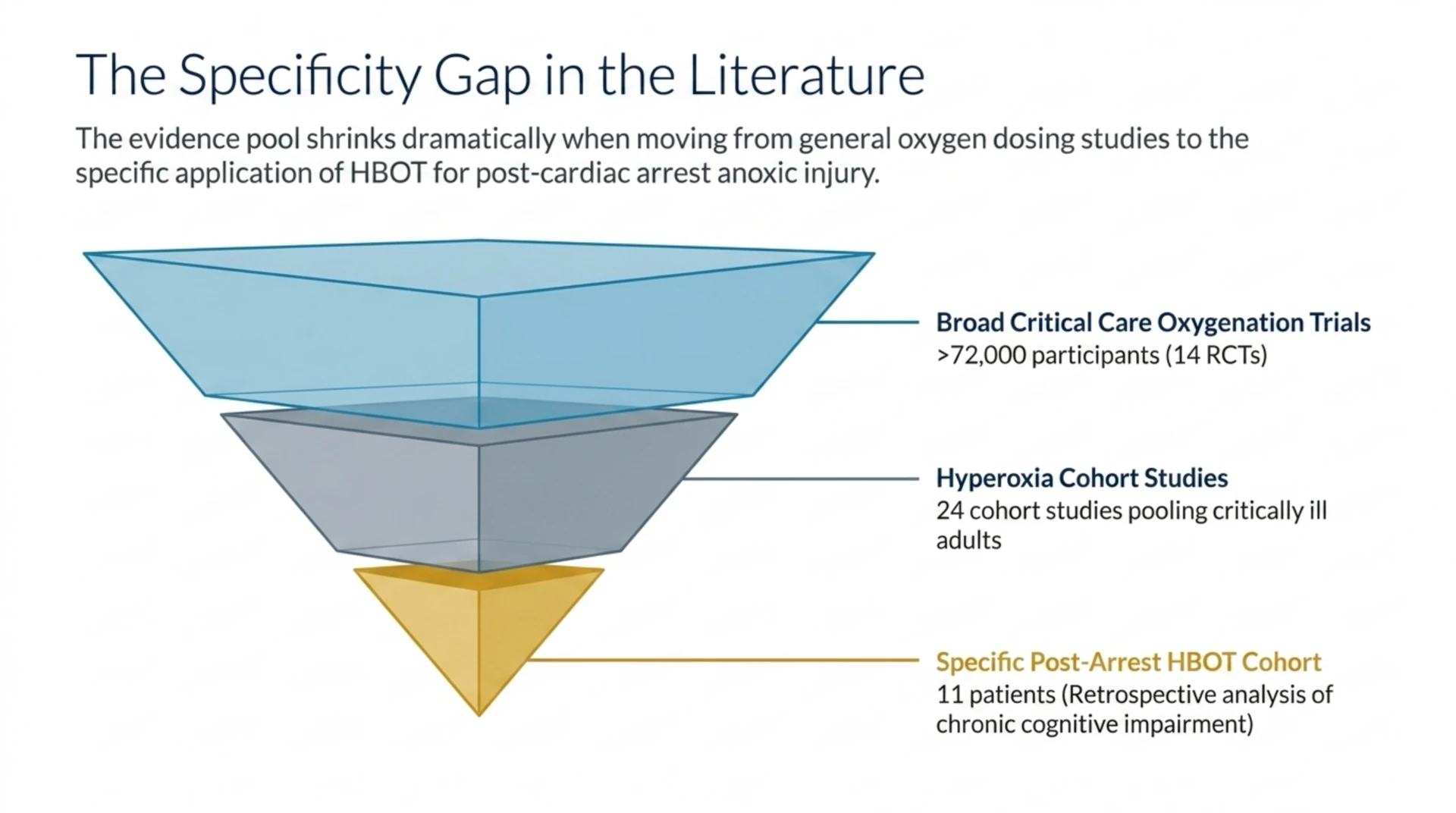
A retrospective analysis of 11 patients with chronic cognitive impairment following cardiac arrest (PubMed | Our Assessment) who received 60 daily HBOT sessions found that treatment was associated with improvements in cognitive function, which the authors linked to induced neuroplasticity. Because this is a small, retrospective, uncontrolled cohort, the association should be read as hypothesis-supporting rather than confirmatory.
Two review articles round out the evidence picture. One review (PubMed | Our Assessment) surveyed the advantages and disadvantages reported for HBOT in post-cardiac arrest syndrome following global cerebral ischaemia and concluded that further clinical evidence is needed to define its role. A separate systematic review of neuroprotective strategies after cardiac arrest (PubMed | Our Assessment) situated hyperbaric oxygen alongside other pharmacological and gas-based approaches still under bench-to-bedside investigation, rather than presenting it as an established intervention.
Why Is Oxygen Dosing a Double-Edged Sword in Critical Illness?
Because HBOT works by increasing oxygen delivery, referring physicians should also weigh the broader critical-care literature on oxygen dosing itself, which cautions against assuming more oxygen is automatically better.
A meta-analysis pooling 24 cohort studies (PubMed | Our Assessment) examined whether critically ill adults with unusually high blood oxygen levels had worse outcomes than those with normal levels, and found that arterial hyperoxia was associated with significantly worse hospital outcomes overall (adjusted OR 1.21, 95% CI 1.08-1.37), though the strength of that association varied across patient subsets. This underscores that oxygen exposure is not uniformly beneficial across all critically ill populations.
Separately, a systematic review of 19 studies, including 14 randomised controlled trials and more than 72,000 participants (PubMed | Our Assessment), compared lower versus higher oxygenation targets in critically ill patients. The body of trial evidence it reviewed reflects genuine, ongoing uncertainty in critical care about the optimal oxygenation target, evidence directly relevant to how oxygen dosing should be approached in anoxic brain injury care generally.
Evidence Snapshot: Study Design Matters
| Study | Design | What It Tells a Referring Physician |
|---|---|---|
| Neuroprotective mechanisms review, 2026 | Narrative review | Proposes ferroptosis as an injury pathway HBOT may target; mechanistic, not outcome data |
| Basic physiology of HBO in brain, 2007 | Physiological review | Frames oxygen as a double-edged sword; flags a preclinical-to-clinical evidence gap |
| Post-cardiac arrest case report, 2021 | Single case report | Describes one patient’s improvement; not generalizable |
| Cognitive impairment cohort, 2015 | Small retrospective cohort (n=11) | Cognitive improvement associated with HBOT; uncontrolled |
| Oxygenation targets review, 2023 | Systematic review of RCTs | Confirms genuine uncertainty around optimal oxygen dosing in critical illness |
What Should Referring Physicians Consider?
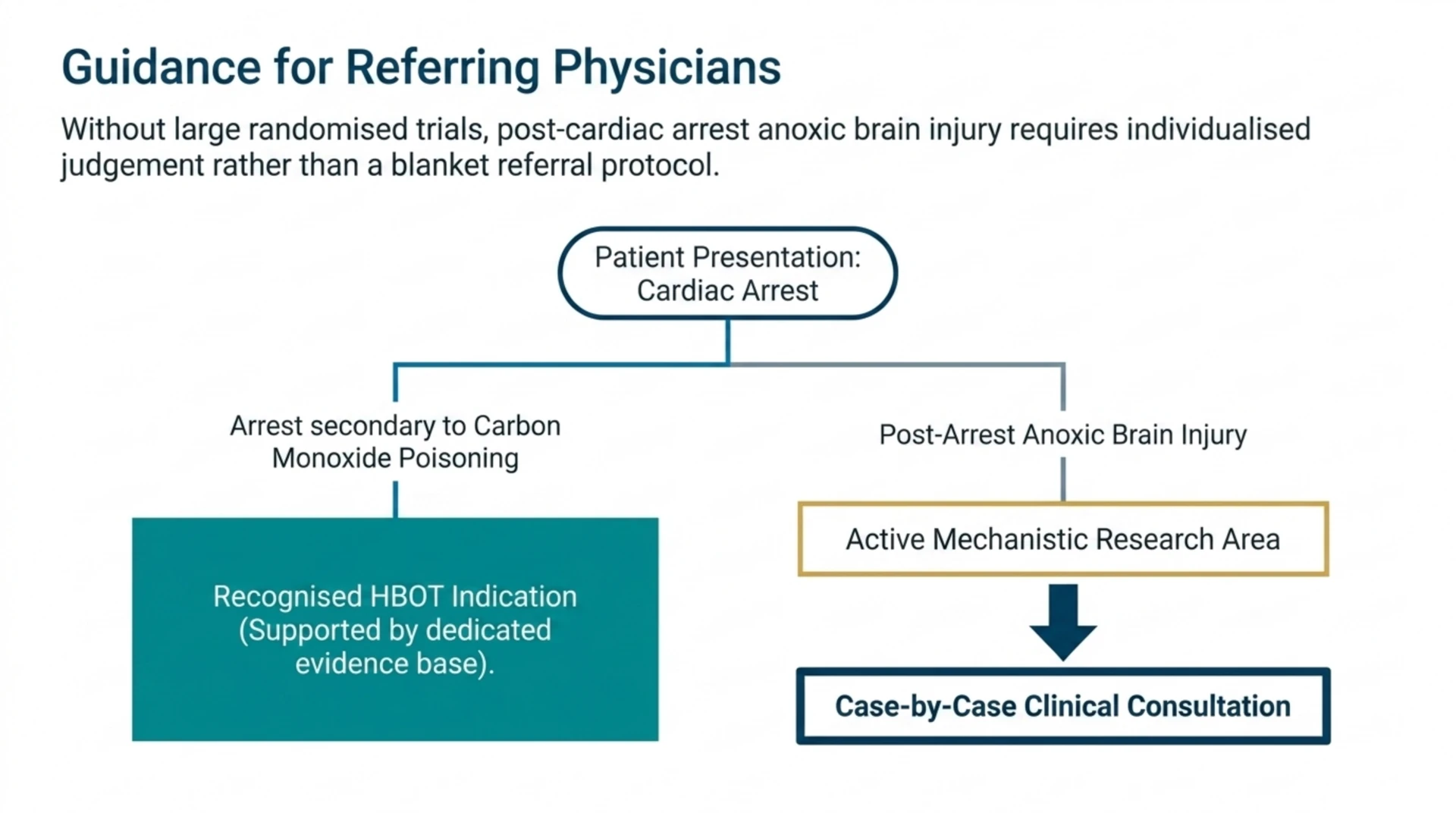
Taken together, the Canada Hyperbarics research library shows a treatment with a plausible cellular rationale, a small amount of encouraging but low-certainty clinical data, and no large randomised trial specific to post-cardiac arrest anoxic brain injury. That combination calls for individualized clinical judgment, not a blanket referral protocol. For context on which hyperbaric indications currently carry recognised funding pathways in Canada, see our overview at HBOT Coverage in Canada.
Patients and families who ask about hyperbaric oxygen after cardiac arrest should understand that this is an area of active mechanistic research rather than a standardised post-arrest care pathway. The Canada Hyperbarics review process exists to keep that distinction clear as new studies are published.
Frequently Asked Questions
Is hyperbaric oxygen a standard treatment after cardiac arrest?
No. It is not part of standard post-cardiac arrest care protocols. The available literature consists of mechanistic reviews, a case report, and a small retrospective cohort, not large controlled trials establishing it as standard therapy.
What is the proposed mechanism for HBOT in anoxic brain injury?
Reviewed mechanisms include interrupting ferroptosis, an iron-dependent cell death pathway implicated in post-cardiac-arrest brain injury, and supporting cellular oxidative and mitochondrial function. These remain proposed pathways studied mainly in review and preclinical literature.
Does more oxygen always help an injured brain?
Not necessarily. Critical-care research on arterial hyperoxia has found that the relationship between higher blood oxygen levels and patient outcomes varies by clinical subgroup, which is part of why oxygen dosing is an active area of study rather than a settled question.
What does the case report evidence actually show?
A single case report described neurological improvement in one patient treated with HBOT after cardiac arrest caused by carbon monoxide poisoning. A single case cannot establish that the therapy caused the improvement or that it would apply to other patients.
Should a physician refer a post-cardiac arrest patient for HBOT?
That depends on the individual clinical picture. Given the early state of the direct evidence, this is a case-by-case decision best made in conversation with the patient’s care team rather than a default referral.
Is carbon monoxide-related cardiac arrest evaluated the same way?
Carbon monoxide poisoning is a recognised HBOT indication in its own right and is supported by a separate body of evidence. When it also causes cardiac arrest, the anoxic brain injury component still falls into the less-established evidence category discussed here.
Related Reading
- HBOT Adverse Event Reporting: What Systematic Reviews Show
- Building Physician Referral Partnerships for HBOT Clinics
- Hyperbaric Oxygen Therapy for ALS: The Evidence
This content is for informational purposes only and is not medical advice.