
TL;DR: Hyperbaric oxygen therapy (HBOT) is a treatment that involves breathing near-pure oxygen inside a pressurized chamber. For amyotrophic lateral sclerosis (ALS) specifically, the direct evidence is extremely thin: only two small, decades-old studies in the Canada Hyperbarics research library tested HBOT in people with ALS, and neither found a meaningful clinical benefit. One was a five-person safety study with no control group; the other reported only a minimal, short-lived effect. HBOT is not an approved or evidence-supported treatment for ALS in Canada.
Hyperbaric oxygen therapy ALS evidence review is a narrow field to search, and this article explains exactly why. ALS is a progressive disease of the motor neurons, and patients and families understandably look for anything that might slow it down. HBOT gets mentioned in some of these searches because it has been studied, in small and mostly old trials, for a range of neurological conditions. This review sets out what the actual published evidence says about HBOT and ALS, using only the studies held in the Canada Hyperbarics research library, and it does not soften a thin evidence base to make it sound stronger than it is.
What Is Hyperbaric Oxygen Therapy?
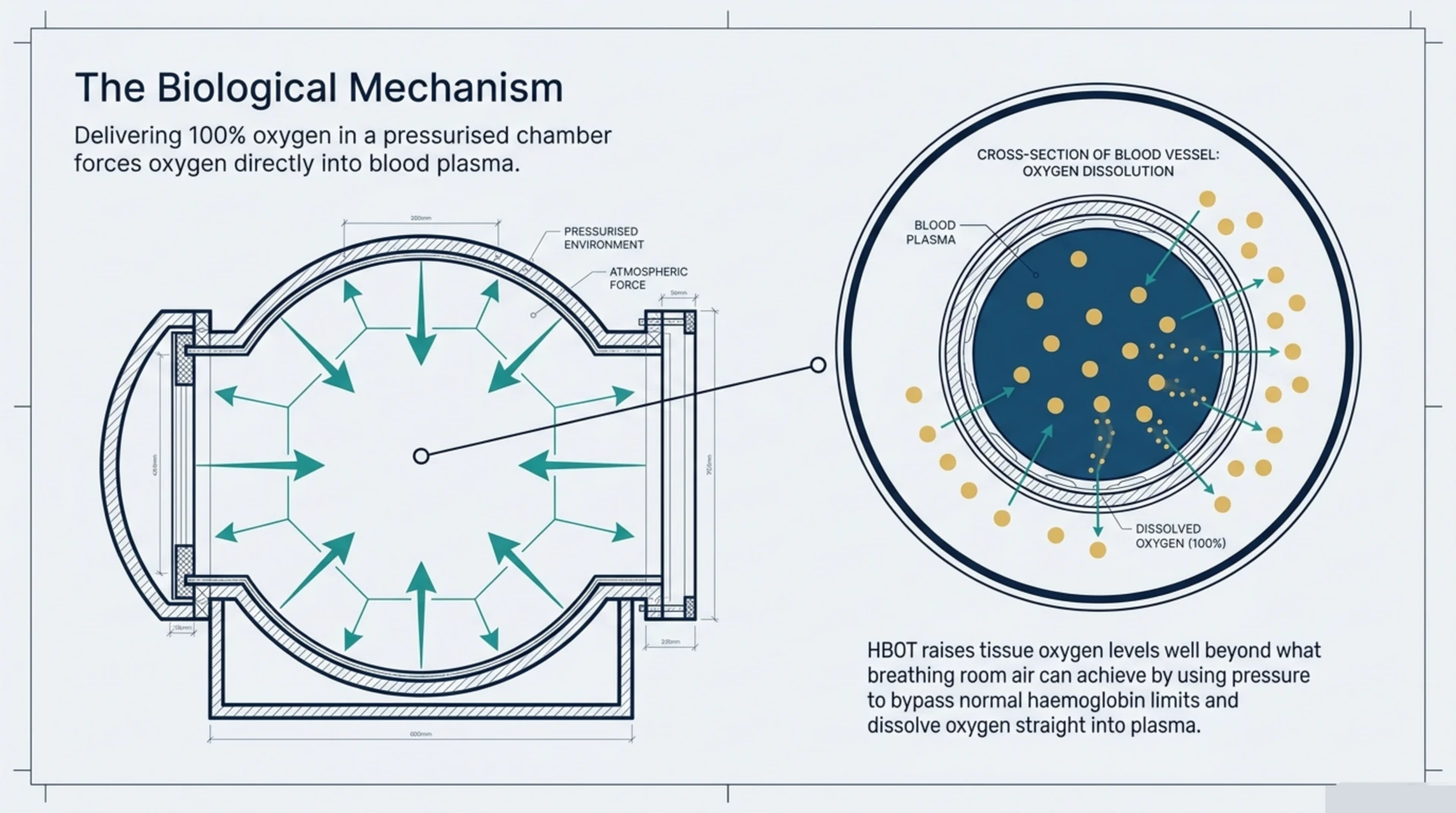
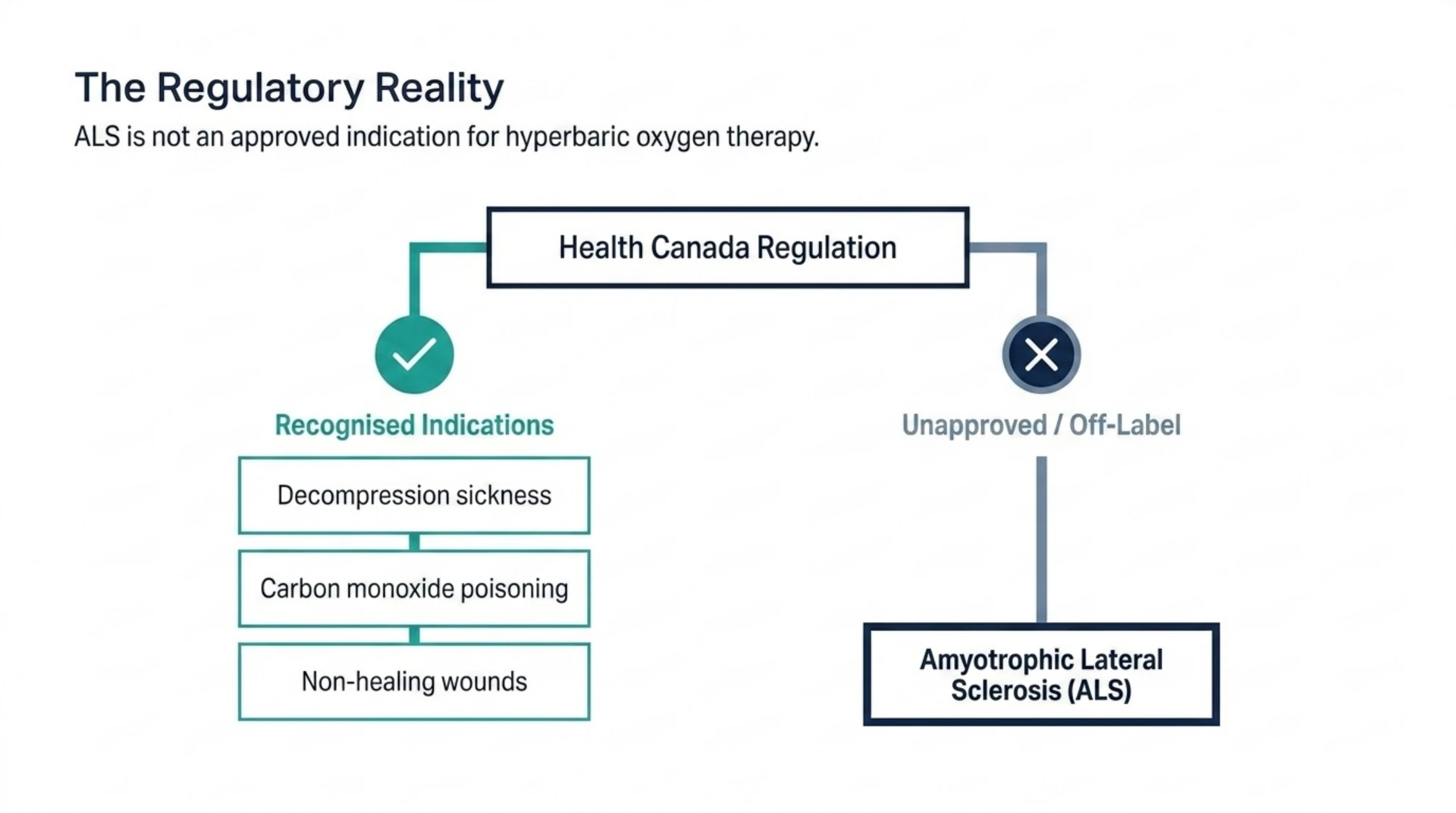
HBOT delivers 100% oxygen to a patient sitting or lying inside a sealed chamber pressurized above normal atmospheric pressure. The increased pressure allows more oxygen to dissolve directly into blood plasma, raising tissue oxygen levels well beyond what breathing room air can achieve. Health Canada recognises HBOT for a defined list of conditions, such as decompression sickness, carbon monoxide poisoning, and certain non-healing wounds. ALS is not on that list, which is part of why the research base for ALS specifically is so small.
What Does the Direct Evidence for HBOT and ALS Show?
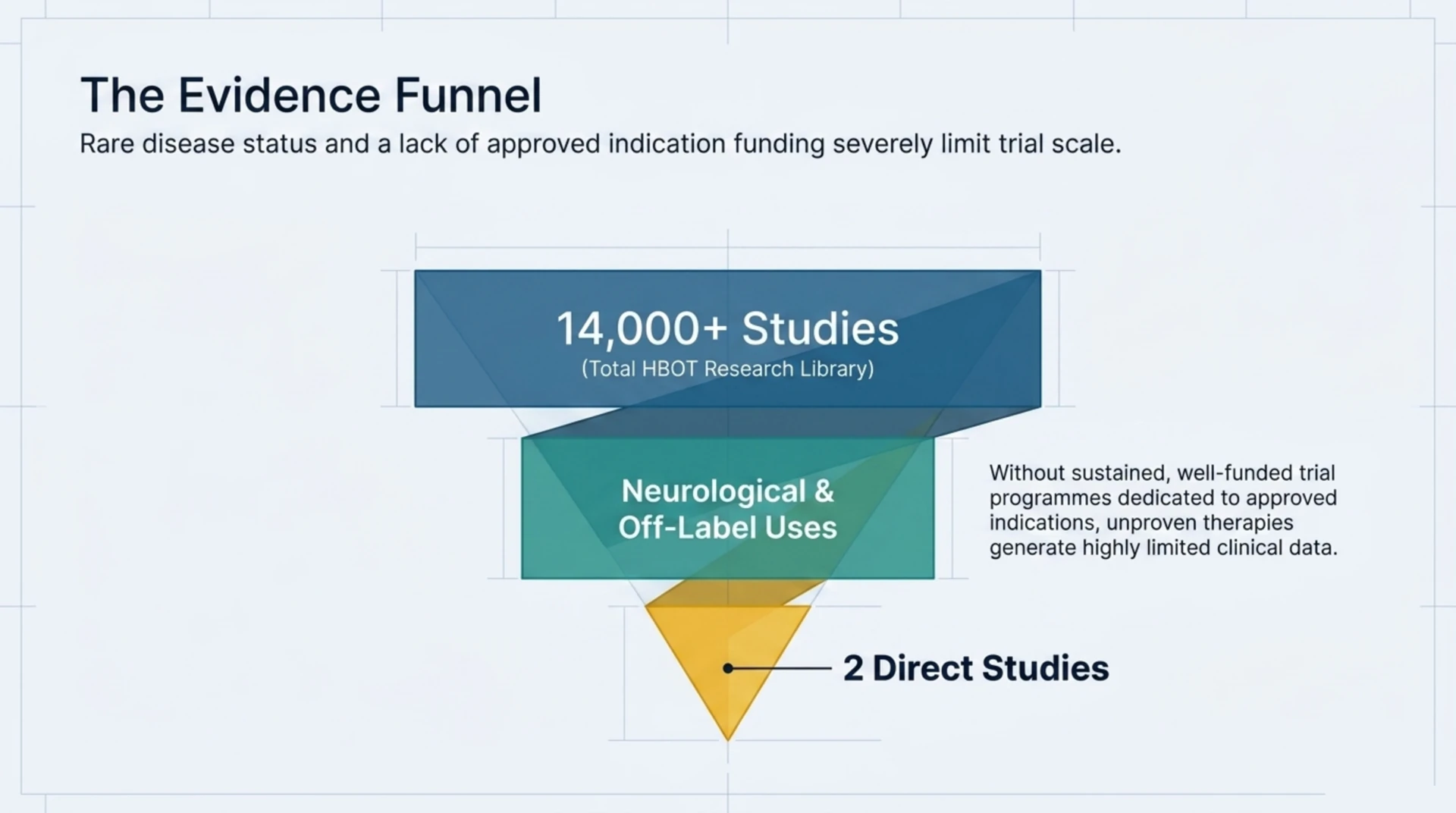
Only two studies in the Canada Hyperbarics research library tested hyperbaric oxygen directly in people with ALS. Both are small, both are old, and neither supports HBOT as an effective treatment for the disease.
The 2004 Phase I Safety Study
A 2004 Phase I safety study (PubMed | Our Assessment) treated five people with ALS with daily HBOT sessions for four weeks. This was a safety and feasibility study, not a trial designed to measure whether the disease slowed down. Four of the five participants tolerated the treatment, which is a useful safety signal, but the study was never designed or powered to show a clinical benefit, and it did not include a control group. The study did report a significant improvement in maximum isometric voluntary contraction (muscle strength) across most muscle groups, by up to 97%, though the authors cautioned this could reflect a placebo or learning effect rather than a true treatment effect given the absence of a control group. A five-person, uncontrolled safety study can tell you whether a treatment is tolerable. It cannot tell you whether it works.
The 1985 Vertebrogenic Myelopathy Study
A 1985 study in a Russian neurology journal (PubMed | Our Assessment) examined motor recovery after HBOT in patients with spinal cord dysfunction from vertebral disease, and its own findings specifically address lateral amyotrophic sclerosis, the formal name for ALS. According to the study’s own reported results, HBOT was associated with only a minimal and short-lived positive effect in ALS patients. This is not a null result and not a strongly negative one either, but it is a modest, transient signal from a single small observational study, not evidence of a durable clinical benefit. The one other study that looked at ALS found the opposite of a strong effect: a small, short-lived response at best.
Why Is the ALS Evidence Base So Small?
ALS is a relatively rare disease, which makes recruiting large trials difficult for any experimental treatment, not just HBOT. Because HBOT is not on Health Canada’s approved indication list for ALS, it has not attracted the kind of sustained, well-funded trial programs that approved indications receive. The result is exactly what the Canada Hyperbarics research library shows: two small studies, decades apart, neither designed as a definitive efficacy trial. That gap is not unique to HBOT. It reflects how difficult ALS research is in general, and it means claims of benefit for any unproven ALS therapy should be treated with real caution until larger, controlled studies exist.
What Does Related Case Evidence Add?
Two further studies in the research library are not about ALS, but they are useful context for understanding how HBOT has performed and behaved in other neurological and connective-tissue conditions where evidence is similarly limited to small studies and case series.
A Case Report on Vision Loss During MS Treatment
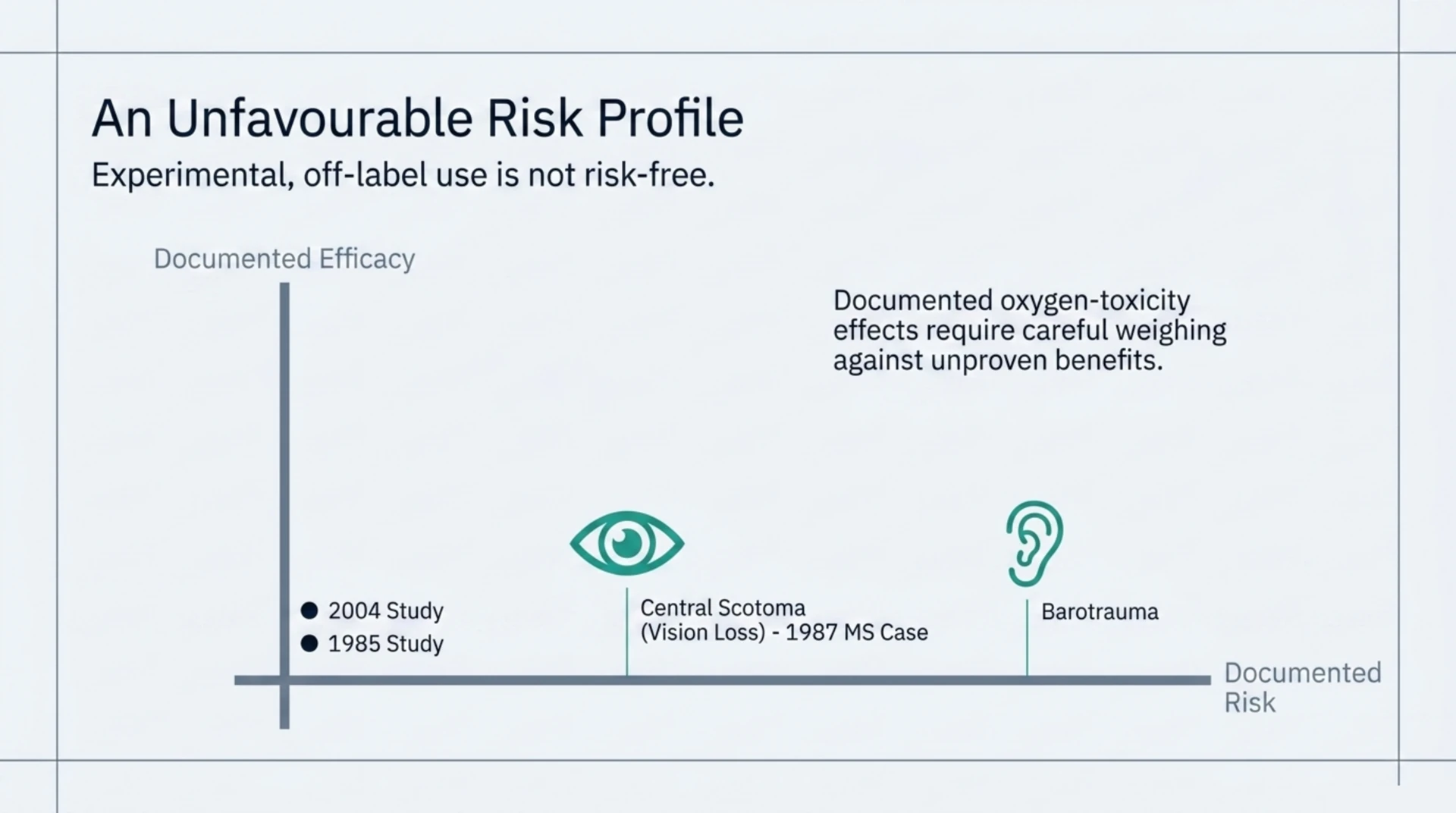
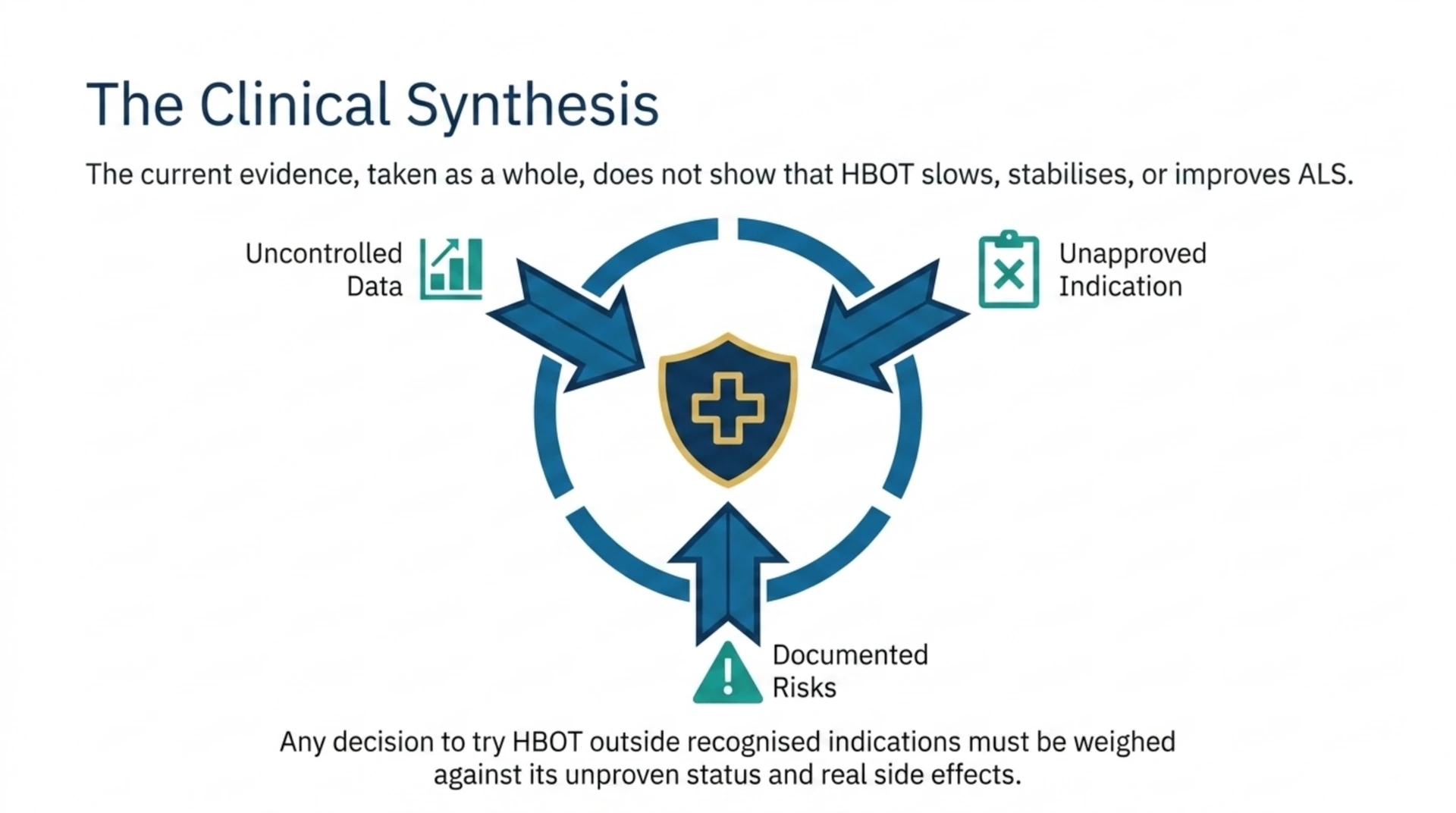
A 1987 case report (PubMed | Our Assessment) described a patient with multiple sclerosis who developed a slowly reversible central visual field defect after hyperbaric oxygen sessions, an oxygen-toxicity effect on the eye. This is not ALS evidence, but it is a useful reminder that HBOT is not risk-free, and that any use of HBOT outside its approved indications should be weighed against real, documented side effects, not just potential benefit.
A Case Series on Skin Ulcers in Systemic Sclerosis
A 2017 case series (PubMed | Our Assessment) followed six patients using HBOT as an add-on treatment for chronic digital and leg ulcers linked to systemic sclerosis. Like the ALS studies, this is small, uncontrolled evidence, and its findings are specific to skin ulcers, not neurological disease. It illustrates the same broader pattern seen across the research library: HBOT case evidence for conditions outside its approved list tends to be small in scale and preliminary in nature.
How Does the Direct ALS Evidence Compare?
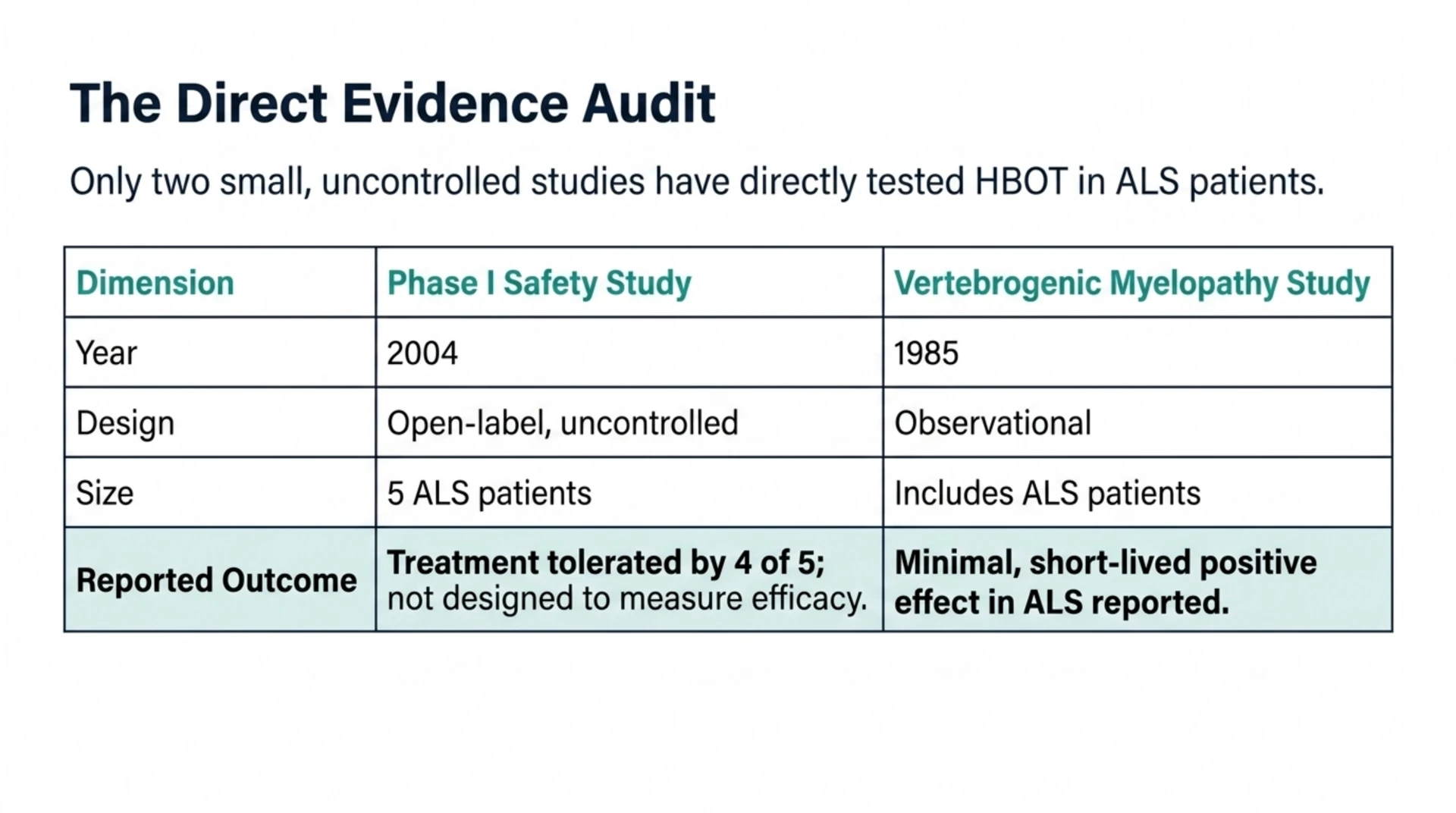
| Study | Year | Design | Participants | Reported Outcome |
|---|---|---|---|---|
| Phase I safety study | 2004 | Open-label, uncontrolled | 5 ALS patients | Treatment tolerated by 4 of 5; not designed to measure efficacy |
| Vertebrogenic myelopathy study | 1985 | Observational | Includes ALS patients | Minimal, short-lived positive effect in ALS reported |
Is HBOT an Approved Treatment for ALS in Canada?
No. HBOT is not on Health Canada’s approved indication list for ALS, and the Canada Hyperbarics research library does not contain evidence that would support that use. The current evidence, taken as a whole, does not show that HBOT slows, stabilizes, or improves ALS. Readers who want to understand which uses of HBOT are recognised in Canada can review the overview of HBOT coverage in Canada for context on approved versus non-approved indications.
Frequently Asked Questions
What is hyperbaric oxygen therapy?
Hyperbaric oxygen therapy is a treatment where a patient breathes 100% oxygen inside a pressurized chamber, which increases the amount of oxygen dissolved in the blood plasma beyond what normal breathing provides.
Does hyperbaric oxygen therapy cure or slow ALS?
No study in the Canada Hyperbarics research library shows that HBOT cures or reliably slows ALS. The only direct evidence consists of a small uncontrolled safety study and a study reporting a minimal, short-lived effect.
What did the 2004 Phase I study actually test?
It tested whether five ALS patients could safely tolerate four weeks of daily HBOT. It was not designed to measure whether the disease progressed more slowly, and it had no control group for comparison.
What did the 1985 study find about HBOT and ALS?
The study reported that HBOT was associated with only a minimal and short-lived positive effect in patients with lateral amyotrophic sclerosis, a modest and temporary signal rather than a lasting benefit.
Are there risks to hyperbaric oxygen therapy?
Yes. Documented risks include oxygen-toxicity effects such as the reversible vision change reported in a multiple sclerosis patient in the research library, along with more common risks like ear barotrauma. Any decision to try HBOT outside its approved indications should weigh these risks carefully.
Is HBOT covered by provincial health insurance for ALS in Canada?
HBOT coverage in Canada is generally tied to the 14 Health Canada-recognised conditions covered by provincial health plans, which do not include ALS. Details on approved uses and coverage are available on the Canada Hyperbarics coverage overview.
Where can I find more HBOT research on neurological conditions?
The Canada Hyperbarics research library holds summaries of over 14,000 peer-reviewed studies covering HBOT across many conditions, including the neurological case reports referenced in this review.
Related Reading
- Hyperbaric Oxygen for Noise-Induced Hearing Loss: Evidence
- Cold or Sinus Congestion Before Hyperbaric Oxygen Therapy?
- Hyperbaric Chamber Sterilization & Infection Control
The Canada Hyperbarics research library exists to make studies like these easy to find and easy to read honestly, including when the evidence is limited rather than favourable. For ALS specifically, that honesty means being clear that the direct evidence is small, old, and does not show a meaningful clinical benefit. Anyone considering HBOT for ALS or any off-label use should talk to their physician about whether it is appropriate for their situation.
This content is for informational purposes only and is not medical advice.