
TL;DR: Hyperbaric oxygen therapy (HBOT) is a treatment that delivers 100% oxygen at increased atmospheric pressure inside a sealed chamber. In children, the evidence base is small, uneven, and concentrated in neurological injury, cerebral palsy, and carbon monoxide poisoning, with most studies being retrospective reviews, case reports, or single small trials rather than large randomised controlled trials. Paediatric considerations differ from adult HBOT in dosing tolerance, ear and sinus barotrauma risk, sedation needs, and how clinicians should respond when families request HBOT for unproven indications like autism.
Hyperbaric oxygen therapy in children raises paediatric considerations that go beyond simply scaling down an adult protocol. Children are not small adults: their eustachian tubes are narrower, their ability to actively equalize middle ear pressure is less reliable, and many indications where HBOT has been studied in children (severe head injury, birth-related brain injury, cerebral palsy) sit outside the therapy’s recognised, well-evidenced uses. For a referring physician, the practical question is narrower than “does HBOT work” and more like: which paediatric conditions actually have data behind them, how strong is that data, and what should you say when a family asks about it.
This review draws only on the studies in the Canada Hyperbarics research library that specifically examine hyperbaric oxygen therapy in children. It does not attempt to resolve the broader adult HBOT evidence base, which is covered in the HBOT coverage in Canada overview.
What Does the Paediatric HBOT Evidence Base Actually Look Like?
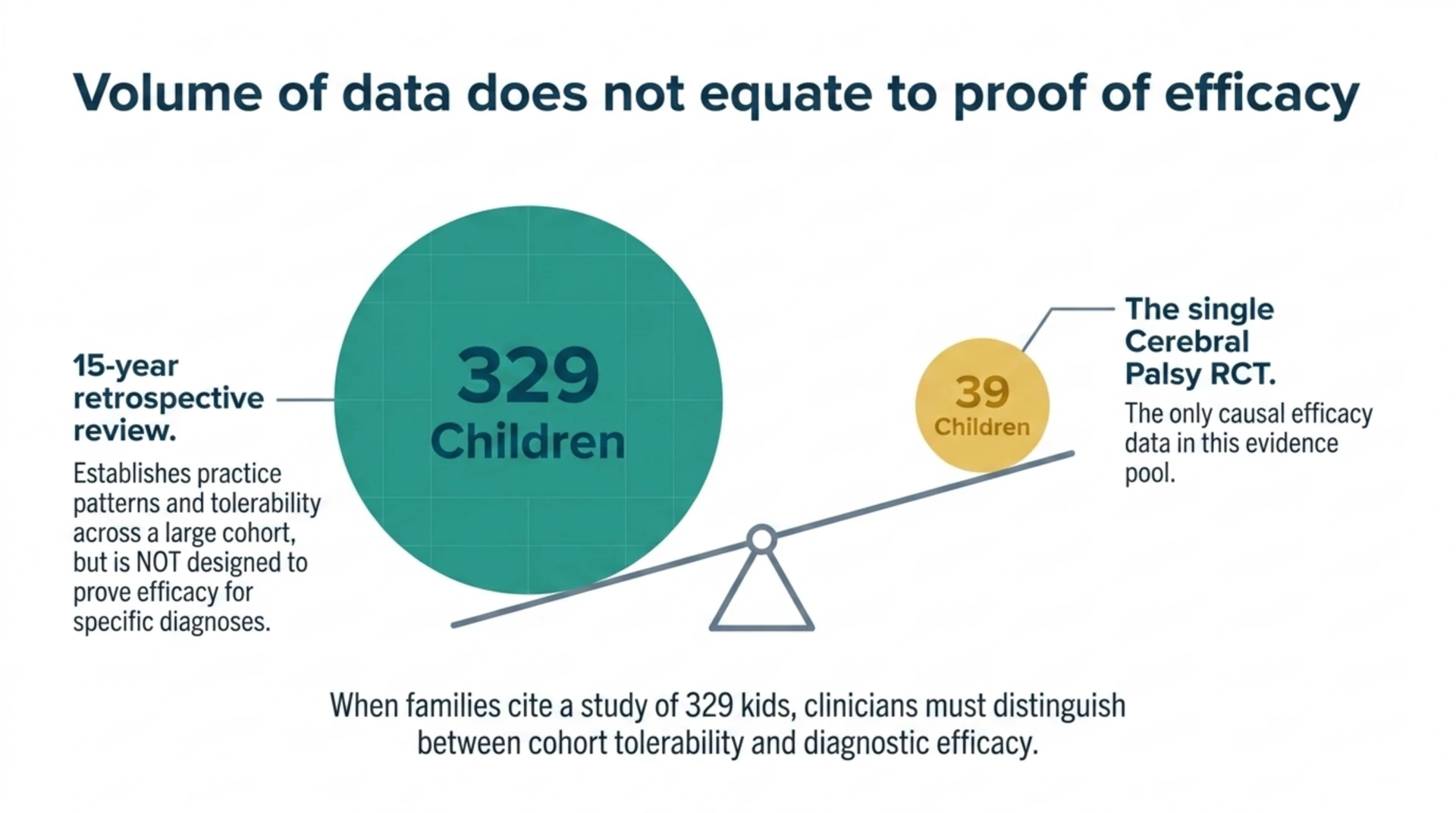
The single largest paediatric HBOT dataset in this review is a 15-year, two-centre retrospective review of 329 children who received hyperbaric oxygen treatment (PubMed | Our Assessment). Reviews like this are useful for understanding practice patterns and tolerability across a large paediatric cohort, but they were not designed to prove efficacy for any single condition. That distinction matters when a family cites “a study of 329 kids” as proof HBOT works for their child’s specific diagnosis.
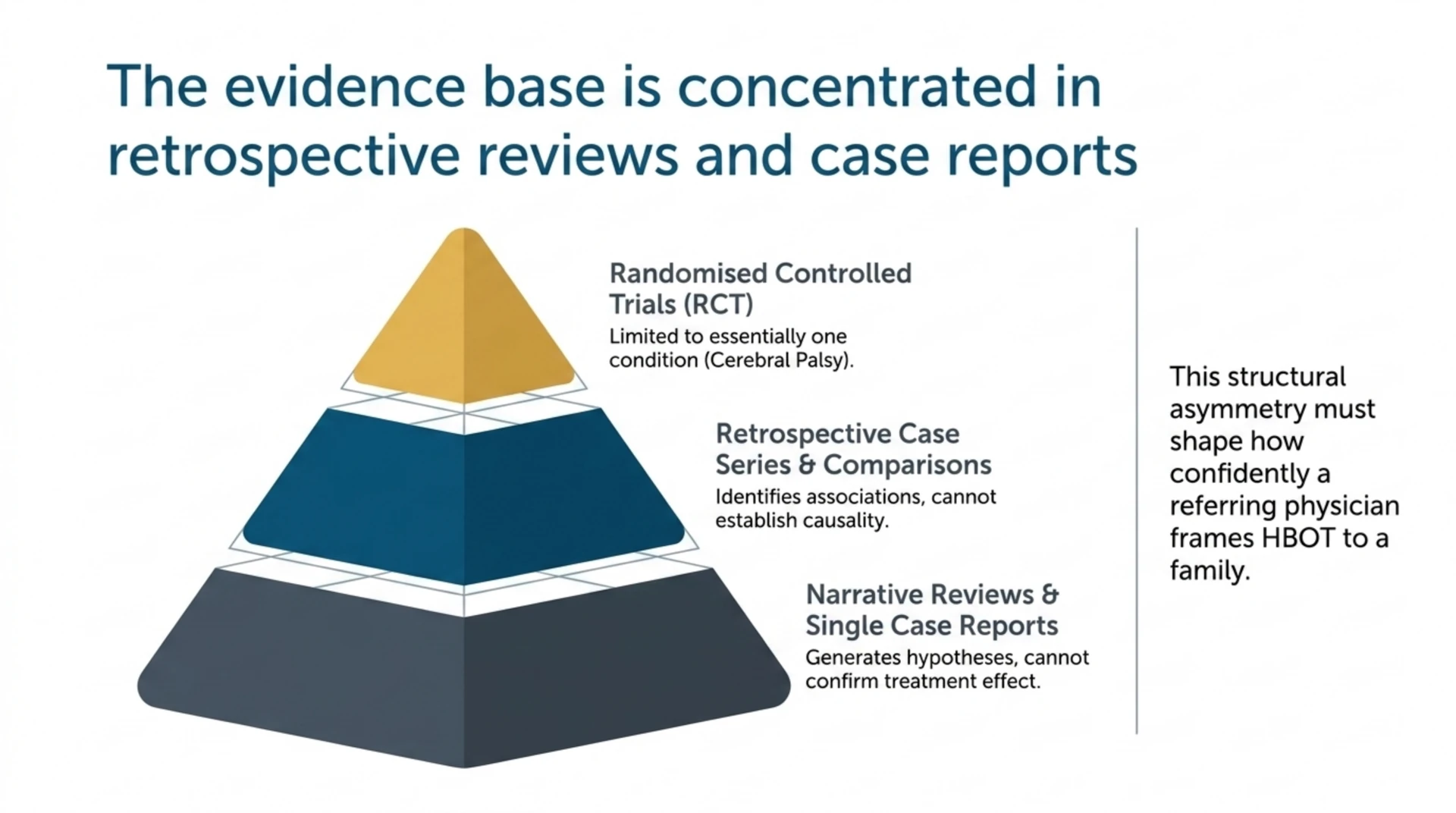
Outside that cohort study, most of the paediatric-specific literature in this pool is retrospective case series, small comparison studies, single case reports, and narrative or ethics-focused reviews. Randomised controlled trial data in children is limited to essentially one condition area in this pool: cerebral palsy. That asymmetry should shape how confidently a referring physician frames HBOT to a family, condition by condition.
Neurological Injury: Where Most of the Paediatric Data Sits
Traumatic and Hypoxic Brain Injury
A secondary analysis of a retrospective case series looked at HBOT in children with severe traumatic brain injury (TBI), applying psychometric and nonparametric methods to re-examine outcome measures from the original case series (PubMed | Our Assessment). As a secondary, retrospective analysis, it can identify associations worth studying further, but it cannot establish that HBOT caused the outcomes observed.
An older, smaller comparison study looked at 28 children with severe head injury who received HBOT alongside 28 children who did not (PubMed | Our Assessment). Outcomes in the HBOT group were associated with better recovery measures than in the comparison group, but because patients were not randomised, differences in baseline injury severity or care setting cannot be ruled out as explanations.
At the case-report level, one paediatric patient with severe brain oedema showing the radiological appearance of pseudosubarachnoid haemorrhage was treated with HBOT and had a good outcome (PubMed | Our Assessment), and a small, uncontrolled prospective study of 14 Cuban children with organic brain damage reported neurological gains after hyperbaric oxygenation (PubMed | Our Assessment). Single cases and small uncontrolled cohorts like these can generate hypotheses; they cannot confirm a treatment effect.
A Note on Related Conditions in the Same Pool
Not every paediatric neurological study in this evidence pool is actually about HBOT. Some describe the broader landscape of paediatric brain injury management that HBOT sits alongside, rather than testing HBOT itself, and a referring physician should not read them as HBOT evidence. It is worth knowing this literature exists so that HBOT is correctly positioned as one option under discussion, not the only one, when standard rehabilitation pathways are already being pursued for a child with TBI.
Cerebral Palsy: Where the Evidence Is Strongest, and Where It Is Weakest
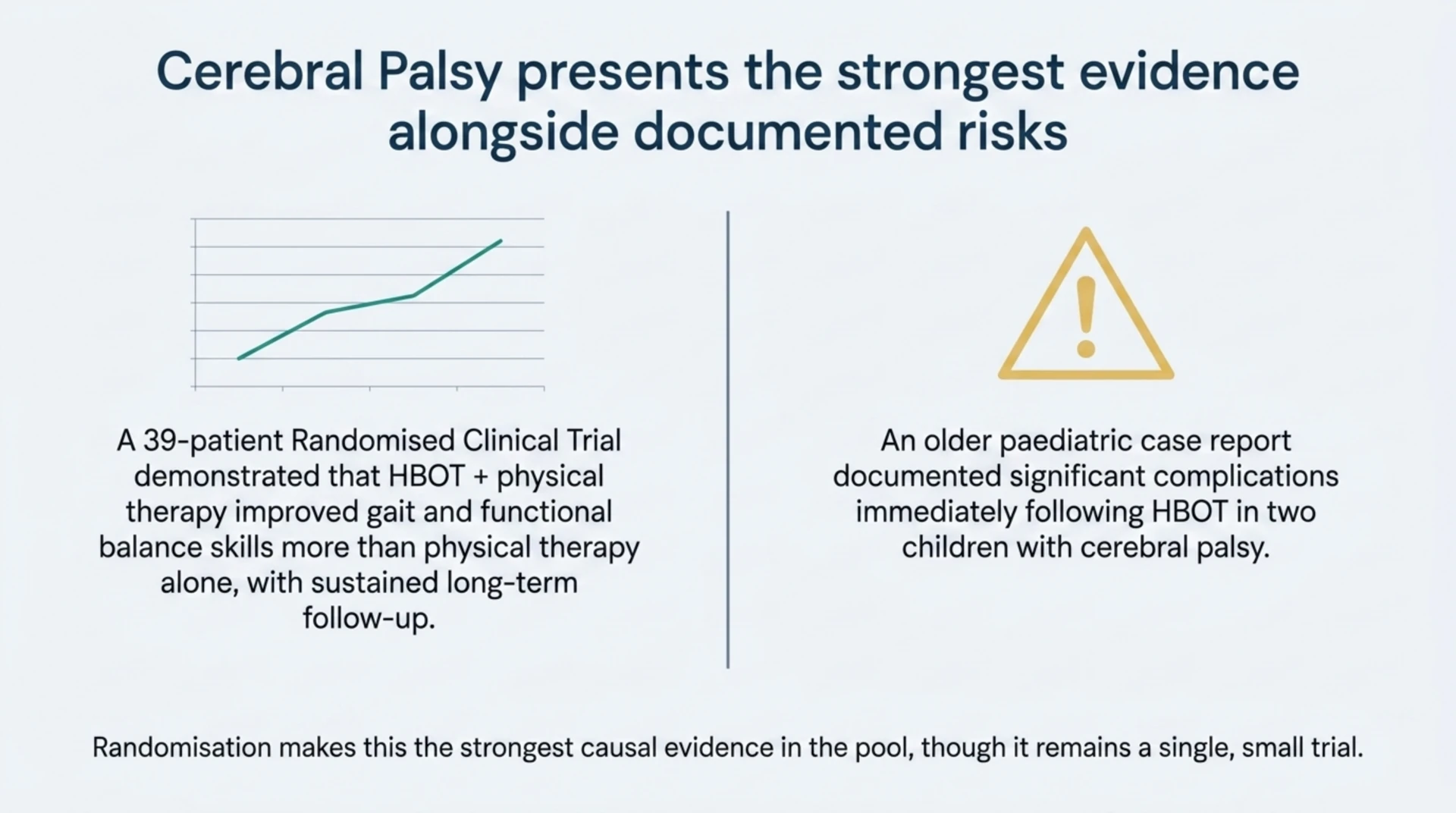
Cerebral palsy is the one paediatric area in this pool with a randomised clinical trial. In a trial of 39 children with cerebral palsy, HBOT combined with traditional physical therapy improved gait and functional balance skills more than physical therapy alone, and the improvement was sustained at long-term follow-up in this trial (PubMed | Our Assessment). Because it is randomised, this is the strongest single piece of causal evidence in the paediatric pool, though it is one small trial and has not been broadly replicated at scale.
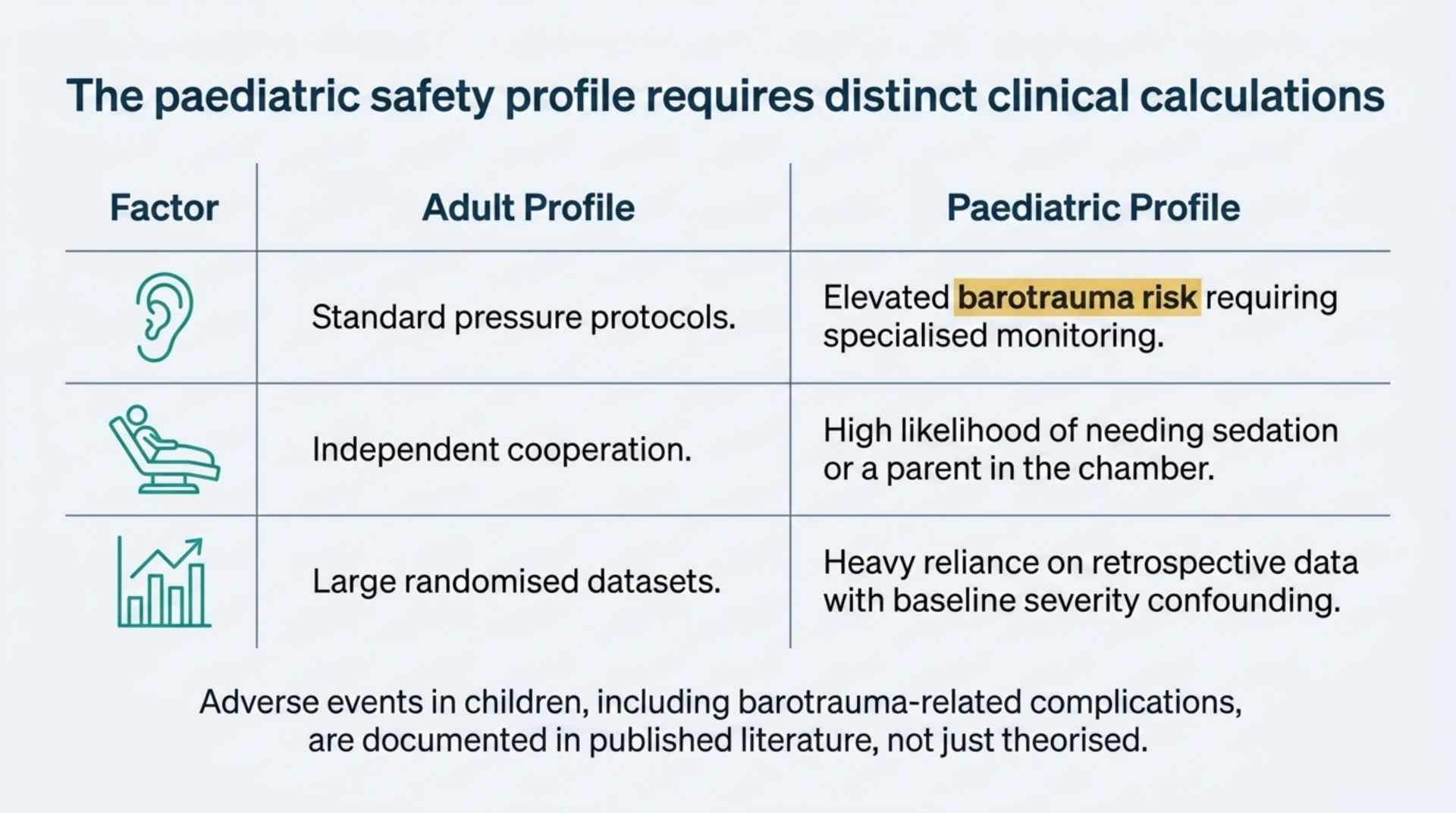
Set against that trial, an older paediatric case report described two children with cerebral palsy who experienced significant complications immediately following HBOT (PubMed | Our Assessment). This is a reminder that paediatric HBOT is not risk-free, and that adverse events in children, including barotrauma-related complications, have been documented in the published literature, not just theorized.
A clinical review specifically addressed how physicians should respond when families of children with cerebral palsy or other neurodevelopmental disorders request HBOT or stem cell “therapy” as unproven interventions (PubMed | Our Assessment). The review’s core message is that clinicians should engage these requests honestly rather than dismiss them, laying out the actual state of the evidence rather than either endorsing or refusing to discuss the option.
When Is Paediatric HBOT an Ethical Question as Much as a Clinical One?
A case discussion on HBOT for a neurologically devastated child examined who should be making the decision to pursue an unproven treatment when the child cannot consent and outcomes are uncertain (PubMed | Our Assessment). For a referring physician, this framing is often more clinically useful than the efficacy question alone: in severe, poor-prognosis paediatric neurological injury, the decision to try HBOT is frequently a shared decision-making conversation about goals of care, not a straightforward treatment recommendation.
Carbon Monoxide Poisoning and Acute Paediatric Indications
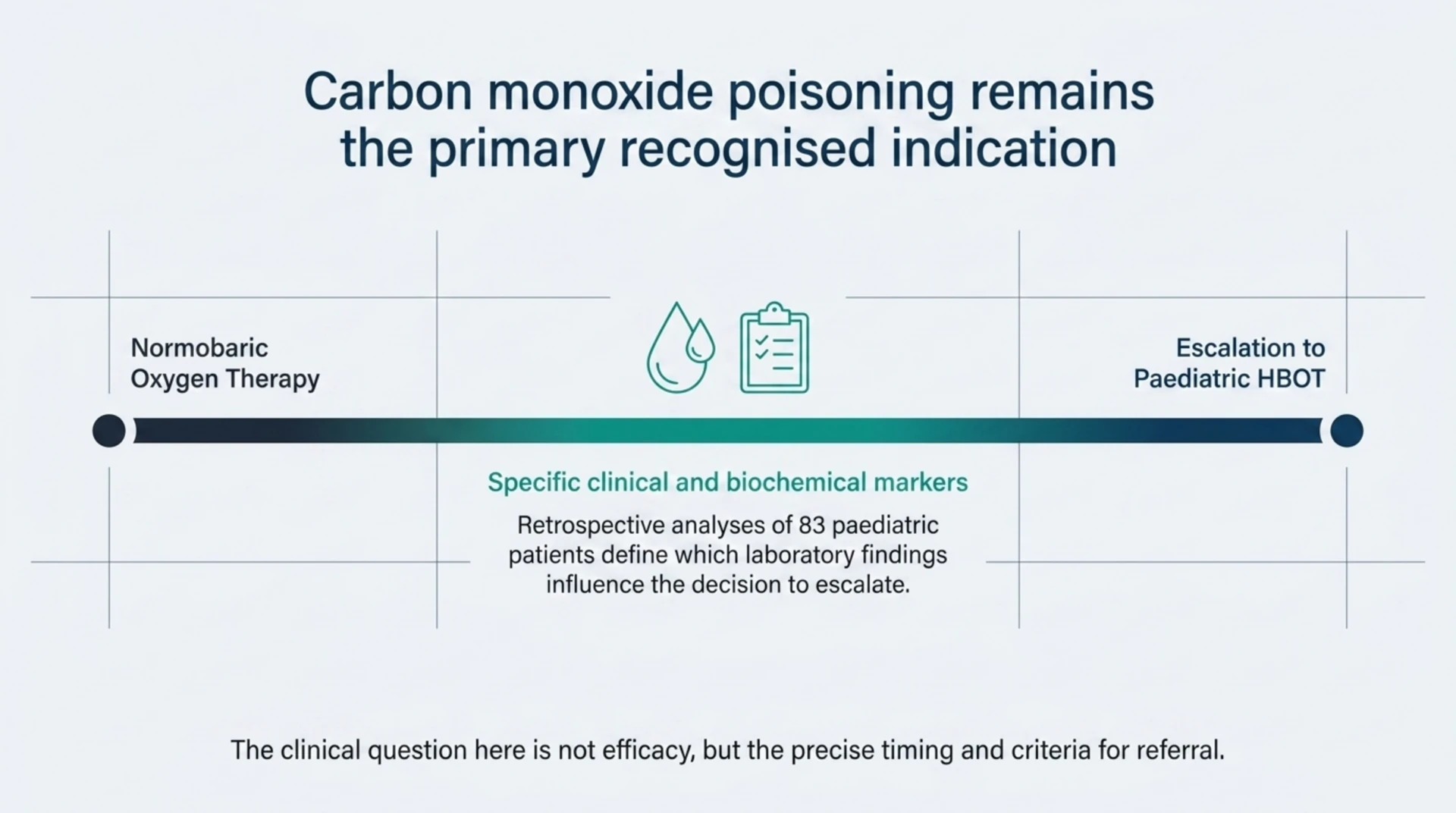
Carbon monoxide poisoning is one of the few areas where HBOT has a recognised, guideline-supported role in adults, and paediatric-specific decision factors have also been studied. A retrospective analysis of 83 paediatric carbon monoxide poisoning patients examined which clinical and laboratory findings influenced the decision to use hyperbaric versus normobaric oxygen therapy (PubMed | Our Assessment). Certain clinical and biochemical markers were associated with the choice to escalate to HBOT, which is useful context for referral timing but does not itself prove HBOT changes outcomes versus normobaric oxygen in children.
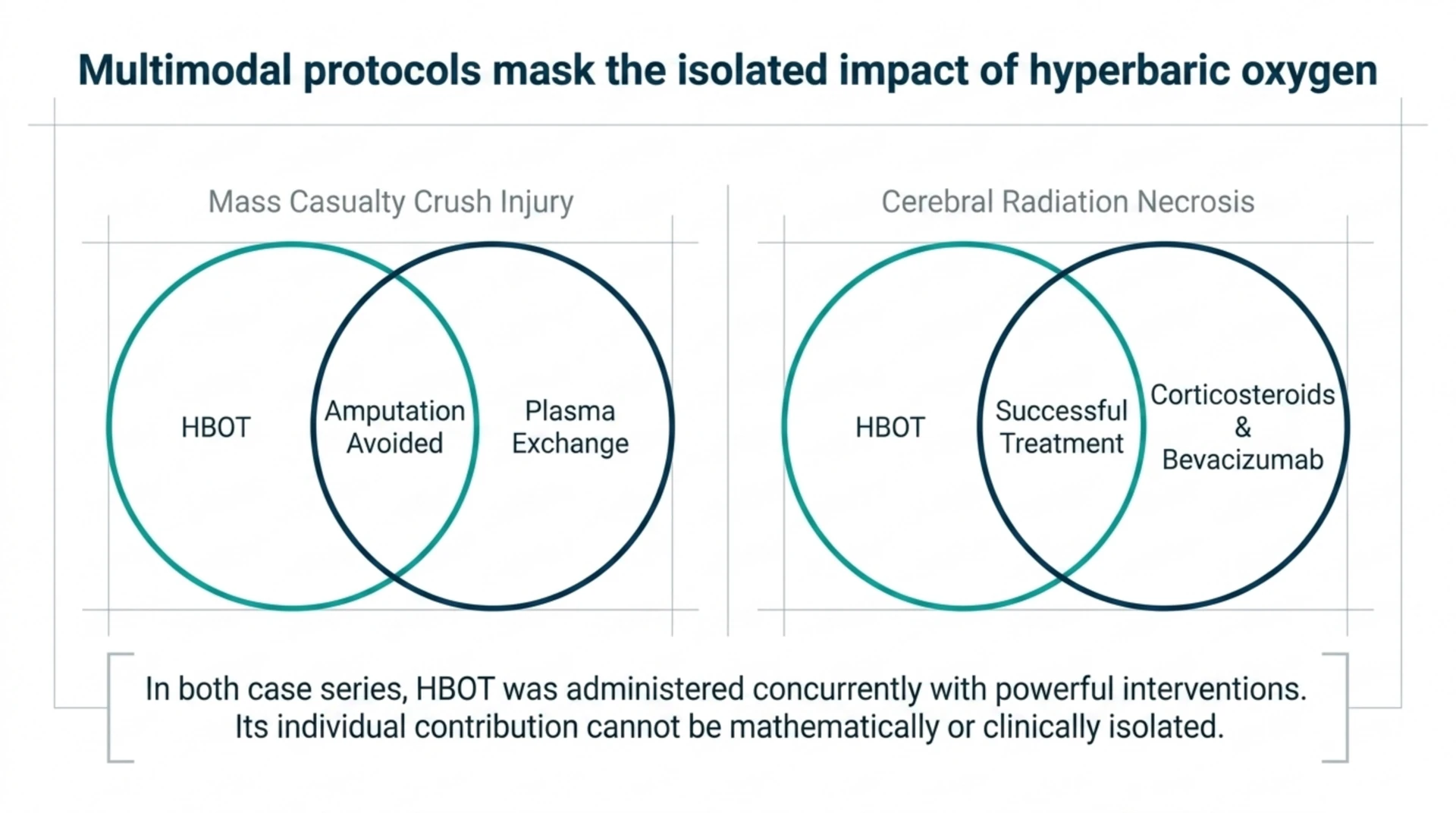
In a different acute setting, a case series from the 2023 earthquake disaster in Türkiye described paediatric patients with severe crush injuries in whom a protocol combining plasma exchange and HBOT was used before a planned amputation, and amputation was avoided in these cases (PubMed | Our Assessment). This is a small, uncontrolled case series from a mass-casualty setting, and the outcome cannot be attributed to HBOT alone since plasma exchange was given concurrently.
A separate case report described a young child with cerebral radiation necrosis treated successfully with a combination of corticosteroids, bevacizumab, and hyperbaric oxygenation (PubMed | Our Assessment). As with the crush injury series, HBOT was one component of a multimodal treatment, so its individual contribution cannot be isolated from a single case.
Why Do Families Ask About HBOT for Autism and Other Neurodevelopmental Conditions?
Referring physicians are commonly asked about HBOT for autism spectrum disorder, a use that is not supported by the neurological injury or cerebral palsy literature above and sits outside recognised paediatric indications. A cross-sectional study of parents of children with autism in Jordan found that a substantial proportion of families used complementary and alternative therapies alongside conventional treatment, reflecting a broader pattern of parents seeking additional options when a child’s diagnosis carries prognostic uncertainty (PubMed | Our Assessment). This study describes usage patterns, not HBOT efficacy for autism, but it is useful context for why the conversation comes up in clinic. The unproven-interventions review discussed above offers the clearest paediatric-specific guidance on how to handle that conversation constructively rather than dismissively.
Paediatric-Specific Safety Considerations
Several safety considerations recur across this literature and are specific to, or amplified in, children:
- Barotrauma risk. Children have narrower eustachian tubes and less reliable ability to actively equalize ear pressure than adults, which is part of the documented complication picture in the cerebral palsy case report above.
- Sedation and cooperation. Younger children may need sedation or a parent accompanying them in the chamber, which adds a layer of risk assessment not present in adult HBOT.
- Baseline severity confounding. Several paediatric HBOT studies are retrospective or non-randomised, meaning children who received HBOT may have differed systematically from comparison groups in ways that affect the apparent result.
- Multimodal treatment. In several of the strongest-sounding case outcomes above (radiation necrosis, crush injury), HBOT was one part of a combined protocol, not a standalone intervention.
| Paediatric Use Area | Strongest Evidence Type Available | Recognised / Off-Label |
|---|---|---|
| Cerebral palsy (gait/balance) | Small randomised controlled trial | Off-label, actively researched |
| Carbon monoxide poisoning | Retrospective decision-factor analysis | Recognised indication, paediatric dosing considerations apply |
| Severe TBI / head injury | Retrospective case series and non-randomised comparison | Off-label |
| Severe crush injury (mass casualty) | Small case series, multimodal protocol | Off-label |
| Cerebral radiation necrosis | Single case report, multimodal treatment | Off-label |
| Autism spectrum disorder | No paediatric HBOT efficacy data in this pool | Off-label, not evidence-supported here |
Frequently Asked Questions
Is hyperbaric oxygen therapy approved for children in Canada?
HBOT has recognised indications that apply across age groups, such as carbon monoxide poisoning, where paediatric-specific decision factors have been studied. Most other paediatric uses discussed in this review, including cerebral palsy and traumatic brain injury, are off-label and supported mainly by small trials, retrospective series, or case reports rather than large paediatric randomised trials.
What is the strongest paediatric HBOT evidence available?
Within this evidence pool, the strongest single study is a randomised clinical trial in 39 children with cerebral palsy showing improved gait and functional balance with HBOT plus physical therapy compared to physical therapy alone.
Are there documented risks of HBOT specific to children?
Yes. A case report of two children with cerebral palsy documented significant complications immediately following HBOT, and paediatric anatomy generally carries a higher barotrauma risk profile than adult anatomy due to less reliable ear pressure equalization.
What should a physician say when a family asks about HBOT for autism?
The paediatric evidence pool reviewed here contains no HBOT efficacy studies specific to autism spectrum disorder. A published clinical review on responding to family requests for unproven neurodevelopmental interventions recommends discussing the actual evidence honestly rather than either dismissing the request or implying support that the data does not show.
How reliable are the paediatric HBOT case reports and small case series?
Case reports and small case series, such as those describing brain oedema, radiation necrosis, and crush injury outcomes, can illustrate what HBOT was used for and what happened in that specific child, but they cannot establish that HBOT caused the outcome, especially when it was combined with other treatments.
Does paediatric HBOT dosing differ from adult protocols?
The studies in this pool do not provide a standardised paediatric dosing comparison against adult protocols; treatment parameters varied by centre and indication. This is an area where individualized clinical judgment and centre-specific paediatric protocols matter more than a single published standard.
Related Reading
- HBOT Informed Consent Documentation for Clinics
- Hyperbaric Oxygen Therapy Trial Methodology: Sham Control
- Hyperbaric Oxygen Dose, Pressure and Protocol Optimization
The Canada Hyperbarics research library draws on over 14,000 peer-reviewed studies, and this review reflects only the subset specific to paediatric HBOT use. As with any off-label or limited-evidence paediatric treatment, findings should be weighed condition by condition rather than generalized from one study to another. The Canada Hyperbarics research library will continue tracking new paediatric HBOT publications as they are indexed.
This content is for informational purposes only and is not medical advice. Physicians and families considering hyperbaric oxygen therapy for a child should discuss the specific diagnosis, evidence, and risks with the child’s treating physician to determine whether HBOT is appropriate.