
TL;DR: Sudden sensorineural hearing loss (SSNHL) is treated as a hearing emergency, and hyperbaric oxygen therapy (HBOT) is sometimes added to steroids on the theory that getting extra oxygen to the cochlea quickly improves the odds of recovery. The evidence reviewed here supports the biological rationale for acting fast, but it does not support a precise, validated “treatment window” measured in hours. Real-world propensity-matched and multicentre studies in this pool found no statistically significant benefit from adding HBOT to standard care, while the largest pooled meta-analysis, built mostly from randomised trials, still faces major heterogeneity between studies. The honest summary: timing plausibly matters, but the studies available today cannot tell us exactly how much, or for whom.
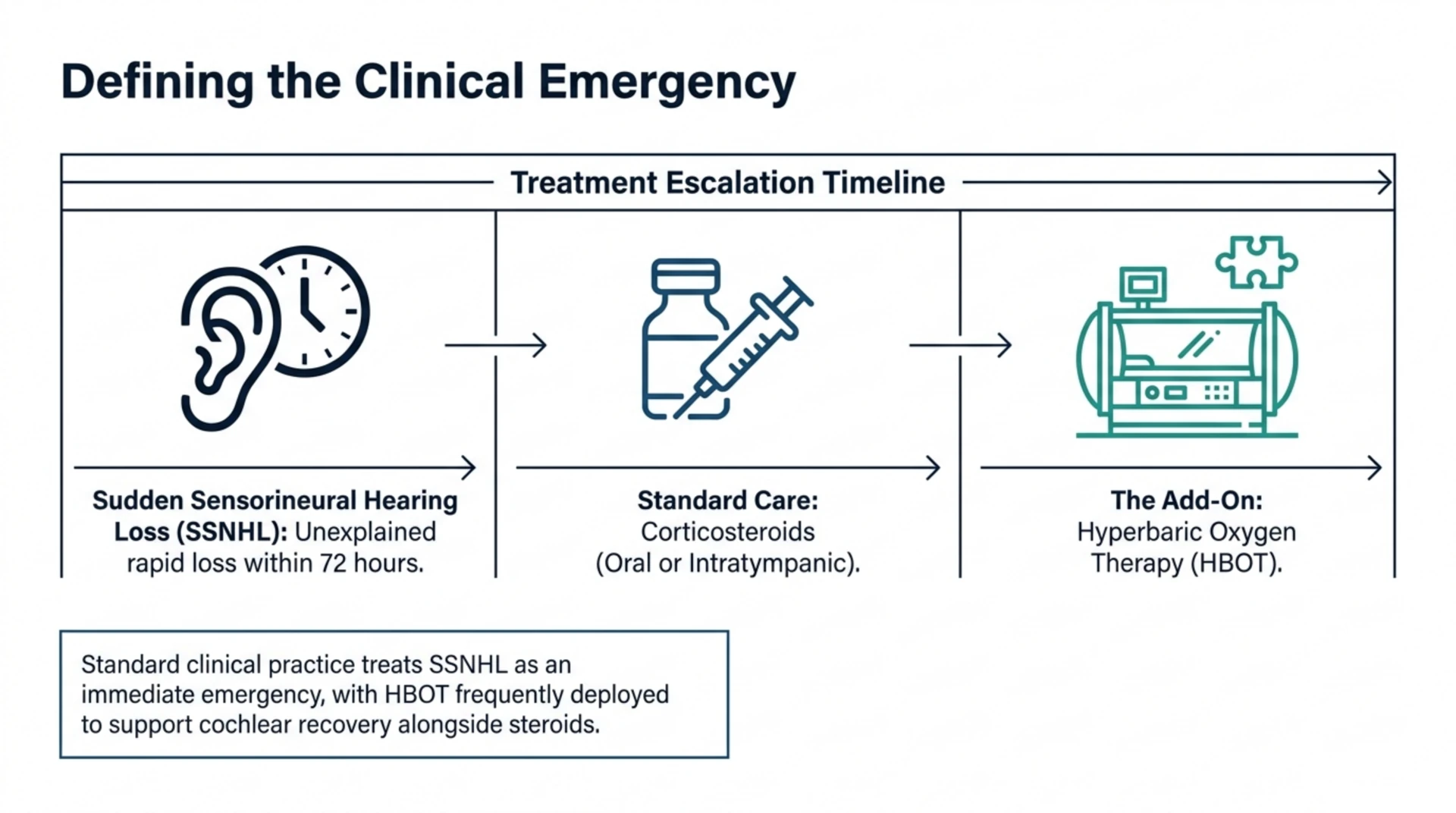
Sudden sensorineural hearing loss (SSNHL) is an unexplained, rapid loss of hearing in one or both ears, usually developing over 72 hours or less. Because the inner ear has no backup blood supply, clinicians have long assumed that acting quickly gives the best chance of recovery, and hyperbaric oxygen therapy (HBOT) is one of the interventions used alongside steroids to try to protect and support the cochlea during that early period. This review looks specifically at the HBOT treatment window for sudden sensorineural hearing loss, what the available research actually says about timing, and where the evidence runs out.
Canada Hyperbarics maintains a library of over 14,000 peer-reviewed studies on hyperbaric oxygen therapy, and the SSNHL literature is one of the more actively studied corners of that library. The picture that emerges from the most relevant studies is more complicated, and more honest, than a simple “earlier is always better” message.
What Is Sudden Sensorineural Hearing Loss?
SSNHL happens when the hearing nerve or the inner ear’s sensory cells are damaged suddenly, often with no clear cause identified. Common working theories include a viral illness, a vascular event that interrupts blood flow to the cochlea, or an autoimmune reaction, though in most cases no single cause is confirmed. Standard treatment usually starts with corticosteroids, given orally or injected directly into the middle ear (intratympanic steroids), and HBOT is sometimes added on top of that baseline.
Why Might Treatment Timing Matter?
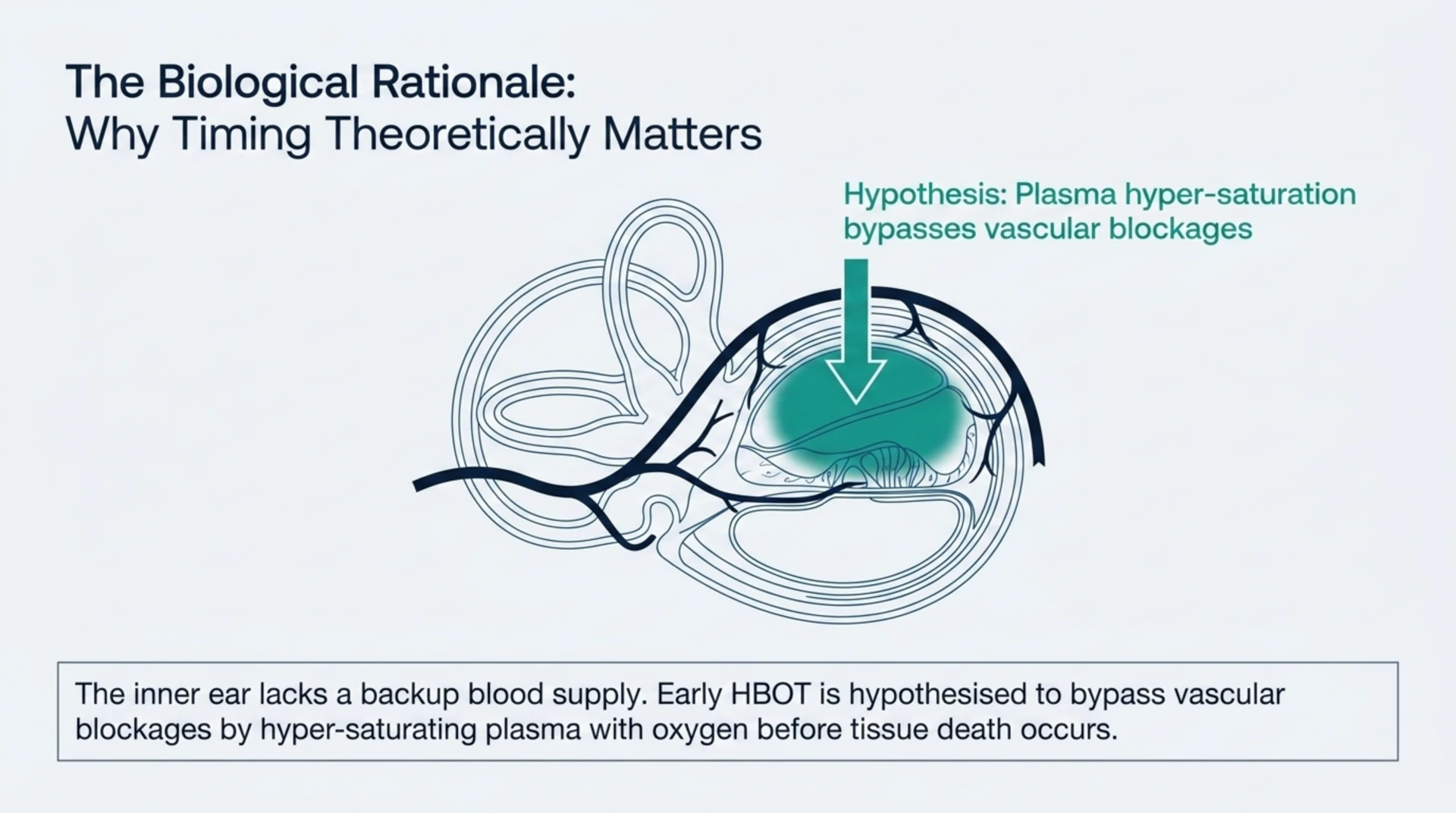
The cochlea is extremely sensitive to a drop in oxygen. Hyperbaric oxygen therapy is thought to work in SSNHL by sharply increasing the amount of oxygen dissolved in blood plasma, which may help support inner-ear tissue while it is under stress. The theory is that if hair cells and nerve fibres have not yet died, extra oxygen delivered early may help preserve them. That is a plausible mechanism, but a mechanism is not the same thing as proof that a specific number of hours or days defines a meaningful cutoff.
What Does the Timing Research Actually Show?
A Retrospective Look at Time to Treatment
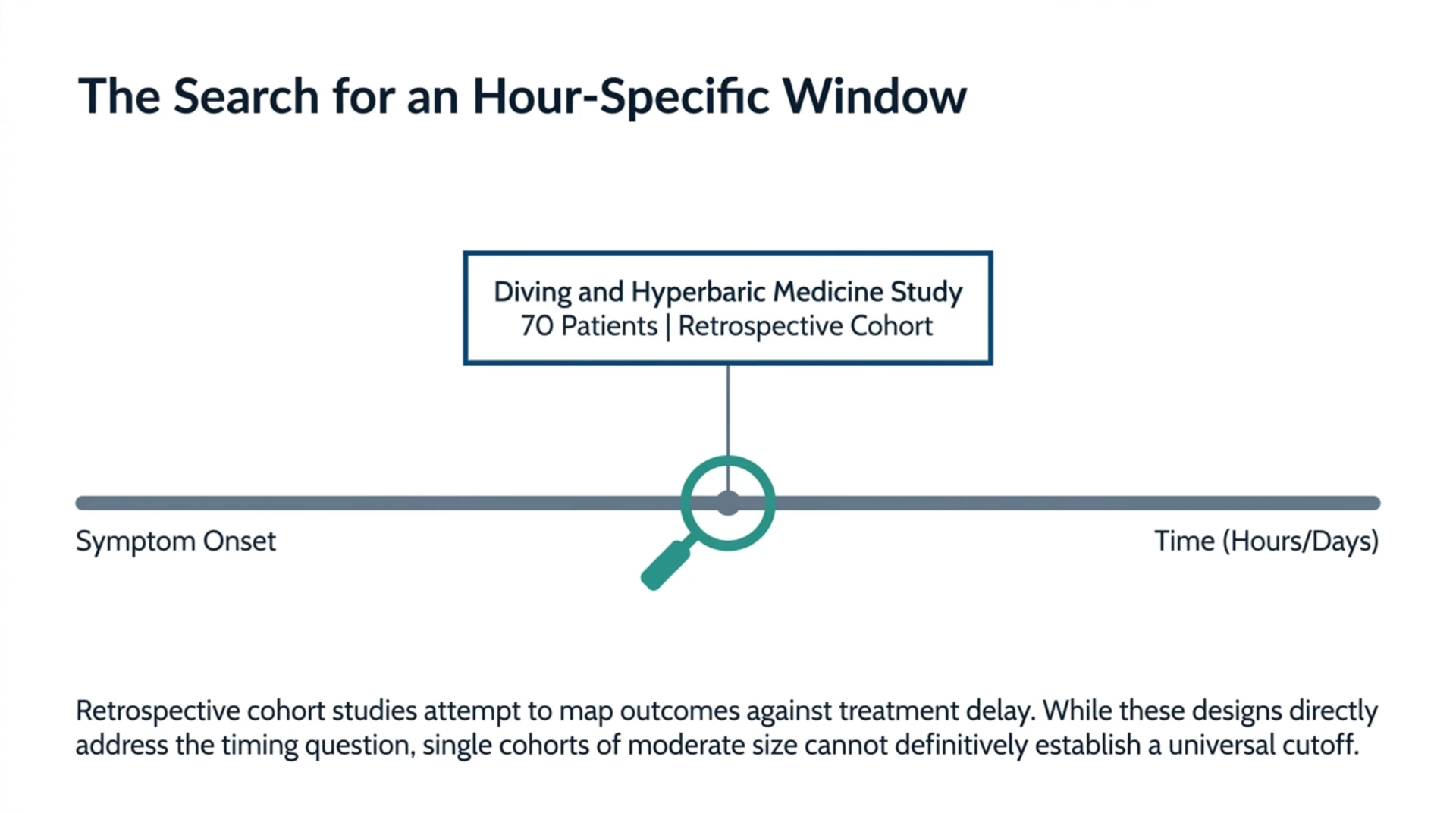
A retrospective cohort study of 70 patients with idiopathic SSNHL, published in Diving and Hyperbaric Medicine (PubMed | Our Assessment), examined how the timing of HBOT related to treatment success. Studies like this are exactly the kind of evidence needed to define a treatment window, since they compare outcomes against time from symptom onset rather than just presence or absence of HBOT. This cohort design is the closest match in the current pool to the specific question of when HBOT should be started, though as a single retrospective study of moderate size, it cannot settle the question on its own.
Does Adding HBOT to Standard Care Improve Recovery?
The Largest Pooled Analysis to Date
The most comprehensive synthesis in this pool is a systematic review and meta-analysis published in the Laryngoscope, combining 20 studies, including 16 randomised controlled trials and four non-randomised prospective studies, across 1,687 patients with sudden hearing loss (PubMed | Our Assessment). Because the majority of the pooled evidence comes from randomised trials, this review carries more weight than a purely observational synthesis would. That said, the authors were combining trials that differed in patient selection, severity at baseline, steroid regimens, and HBOT protocols, all factors that make it difficult to extract one universal answer about optimal timing from the pooled data.
Real-World Data Show a More Mixed Picture
Two more recent studies used designs built specifically to reduce bias between HBOT and non-HBOT groups, and both are more cautious about benefit than the meta-analysis alone might suggest.
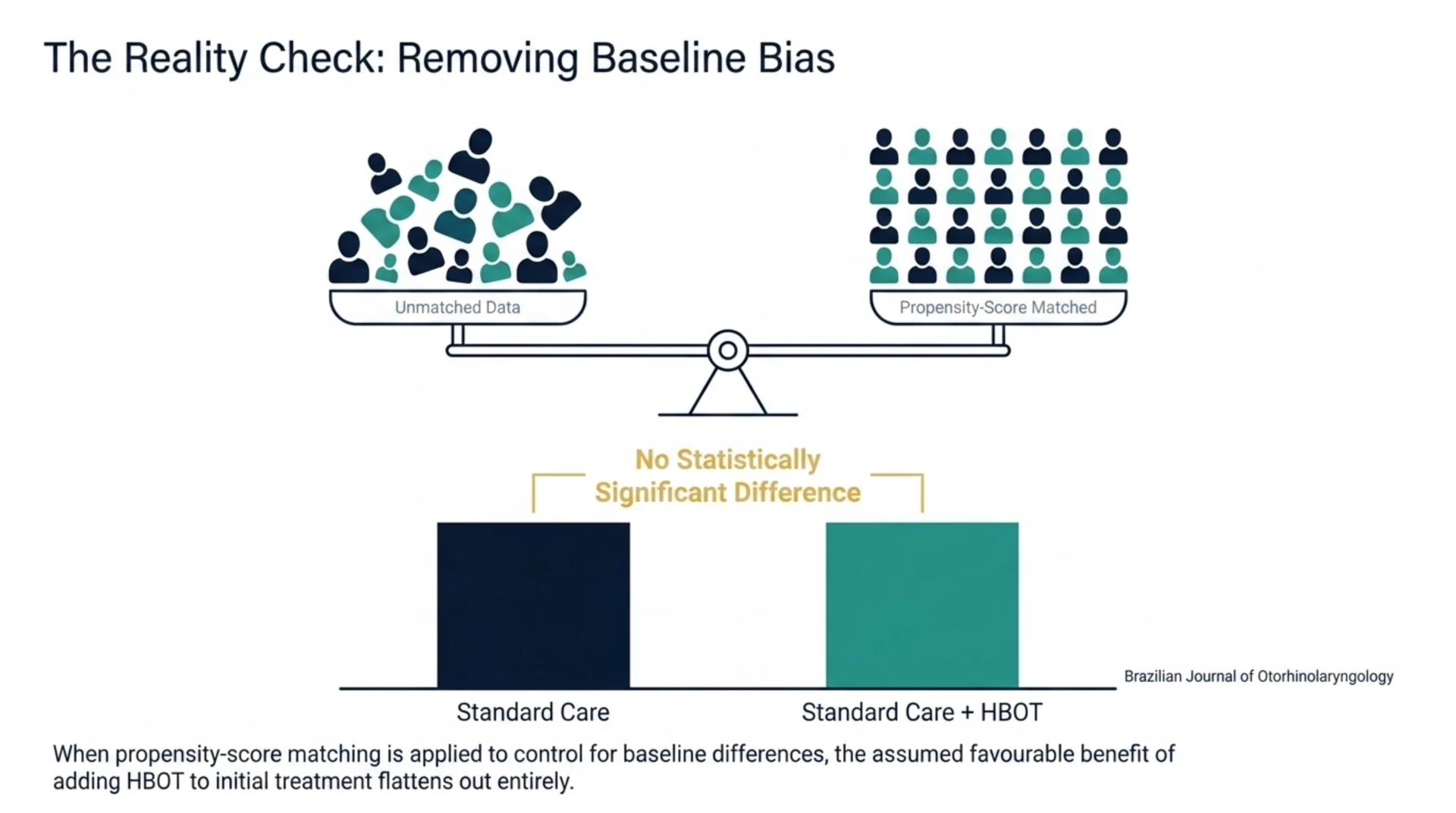
A propensity-score matched analysis of 413 patients with idiopathic SSNHL, published in the Brazilian Journal of Otorhinolaryngology (PubMed | Our Assessment), matched patients on baseline characteristics to compare HBOT as part of initial treatment against standard care alone. After matching, the study found no statistically significant difference in hearing recovery between the two groups. Propensity matching exists precisely to control for the kind of baseline differences that can make an unmatched comparison look more favourable than it really is, so this null result deserves real weight.
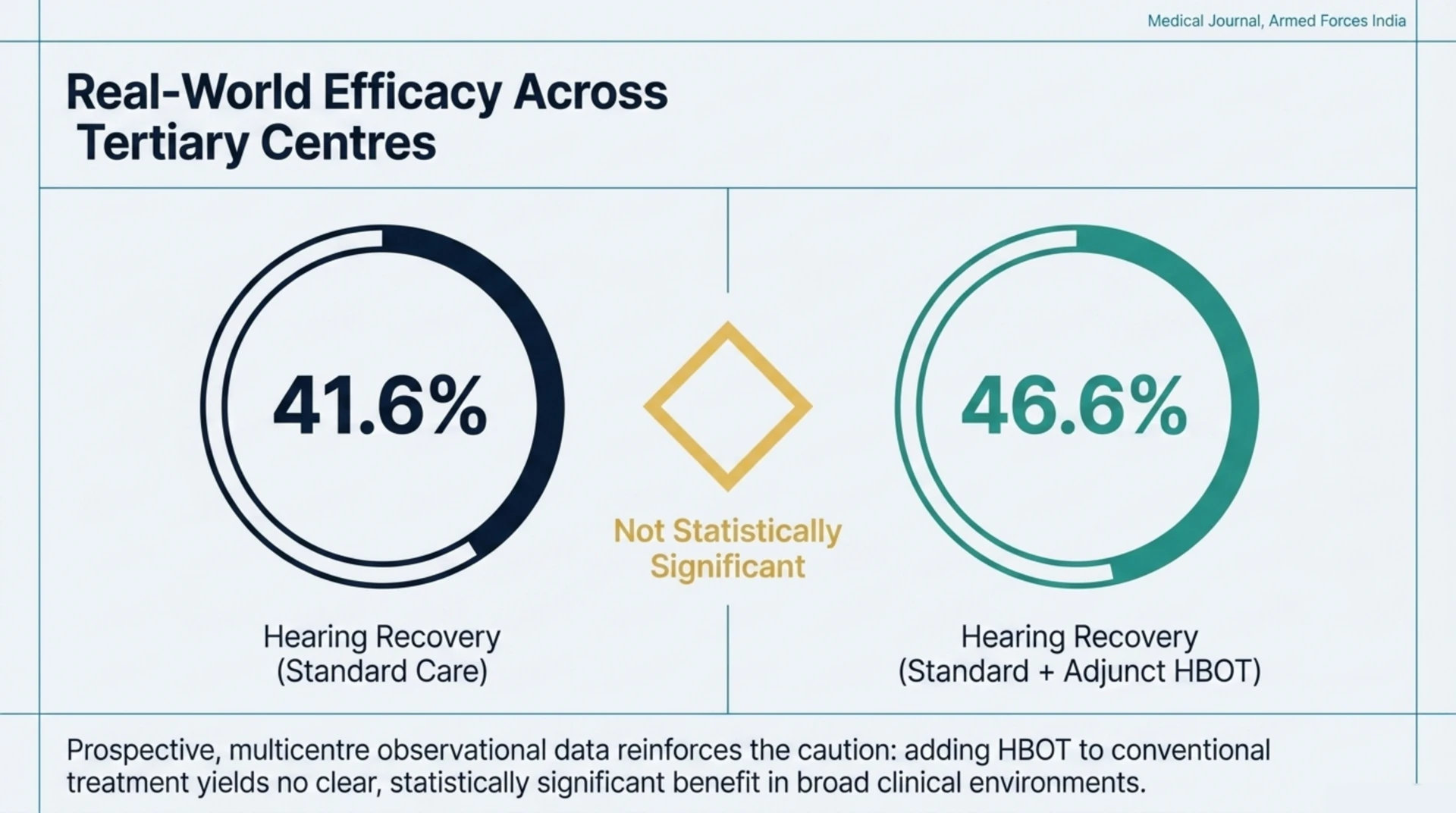
A prospective, multicentre observational study across several tertiary care hospitals, published in Medical Journal, Armed Forces India (PubMed | Our Assessment), reported hearing recovery in 46.6 percent of patients who received adjunct HBOT compared with 41.6 percent of those who did not, a difference that was not statistically significant. The study authors concluded that adding HBOT to conventional treatment did not show a clear benefit in this cohort. Read together, these two studies are the strongest caution in this pool against assuming HBOT timing alone explains recovery differences.
Are Some Patients More Likely to Benefit From HBOT?
Vestibular Involvement as a Prognostic Clue
A study of 85 patients with profound SSNHL, published in Scientific Reports (PubMed | Our Assessment), looked at whether semicircular canal dysfunction, a marker of inner-ear balance system involvement, was linked to hearing recovery and could help identify which patients are more appropriately indicated for HBOT. This kind of research matters because it points toward patient selection, not just timing, as a variable worth studying when trying to explain why some patients recover and others do not.
Refractory Cases and Combination Therapy
A retrospective study looked at whether adding a stellate ganglion block (SGB) to combined intratympanic steroid and HBOT treatment could help patients with refractory SSNHL, meaning cases that had not responded to standard combined treatment (PubMed | Our Assessment). Research into refractory cases is a useful reminder that “does HBOT help SSNHL” is really several narrower questions: does it help as first-line treatment, does it help as an add-on, and does it help when standard treatment has already failed.
Does the Cause of Hearing Loss Change the Picture?
A retrospective study compared 442 patients with sensorineural hearing loss caused by shooting noise exposure against those with blast injury, evaluating baseline characteristics and the effectiveness of combined HBOT and systemic glucocorticoids in each group (PubMed | Our Assessment). Studies like this highlight that “sudden sensorineural hearing loss” is not one uniform injury; acoustic trauma, idiopathic cases, vascular events, and infection-related cases may all behave differently, and a single treatment window is unlikely to apply equally across all of them.
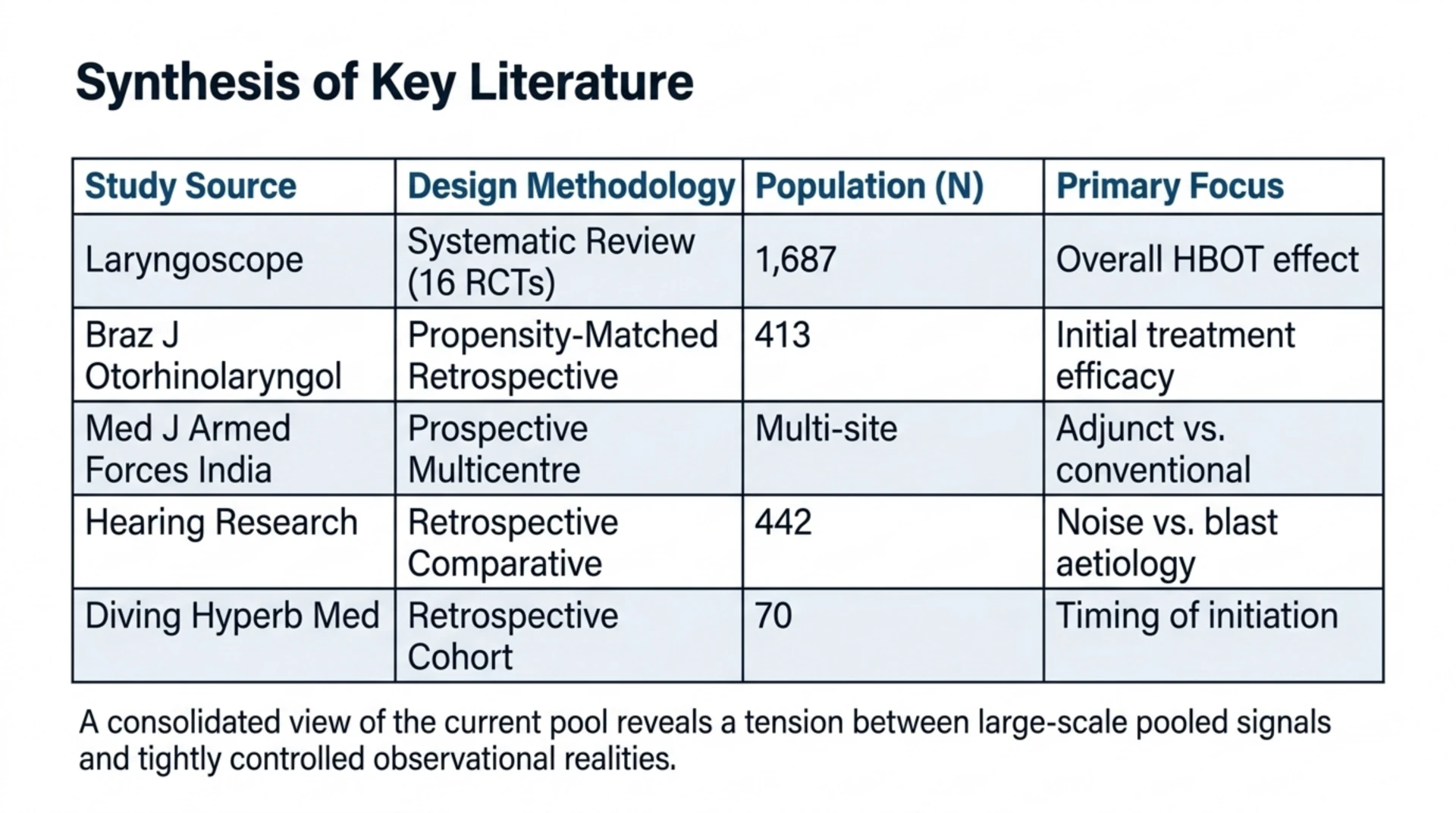
| Study | Design | Population | Main Focus |
|---|---|---|---|
| Laryngoscope meta-analysis | Systematic review (16 RCTs, 4 non-randomised) | 1,687 patients | Overall HBOT effect on hearing recovery |
| Braz J Otorhinolaryngol | Propensity-matched retrospective | 413 patients | HBOT as part of initial treatment |
| Med J Armed Forces India | Prospective multicentre observational | Multiple tertiary hospitals | Adjunct HBOT vs. conventional care |
| Diving Hyperb Med | Retrospective cohort | 70 patients | Timing of HBOT initiation |
| Hearing Research | Retrospective comparative | 442 patients | Noise vs. blast injury etiology |
What Does This Mean for the “Treatment Window”?
Putting this pool together honestly: the biological rationale for treating SSNHL quickly is sound, and one retrospective cohort study specifically examined timing against outcome. But no study in this review establishes a validated, hour-specific treatment window for HBOT in SSNHL, and the two studies designed to reduce bias between HBOT and non-HBOT groups, the propensity-matched analysis and the multicentre observational study, both found no statistically significant added benefit from HBOT over standard care. The largest meta-analysis pools mostly randomised evidence but is limited by heterogeneity between the underlying trials. Patient-level factors, such as vestibular involvement or whether a case is refractory to first-line treatment, may matter as much as, or more than, the calendar clock.
Case reports elsewhere in the literature describe HBOT being used for sudden hearing loss following unusual triggers, including stroke and bacterial meningitis, but single-patient case reports cannot establish whether timing or treatment itself drove any recovery seen, and are not a substitute for controlled comparison.
Frequently Asked Questions
What is the ideal time window for starting HBOT after sudden hearing loss?
The studies in this review do not establish a single validated hour or day cutoff. One retrospective cohort study specifically examined timing against outcome, but broader confirmation from larger controlled research is still needed.
Does HBOT reliably improve hearing recovery when added to steroids?
The evidence is mixed. A large pooled meta-analysis draws mainly on randomised trials, but two more recent bias-controlled studies, a propensity-matched analysis and a multicentre observational study, found no statistically significant benefit from adding HBOT to standard steroid treatment.
Who might benefit most from HBOT for SSNHL?
Research on vestibular (semicircular canal) involvement suggests patient-level factors may help identify who is more appropriately indicated for HBOT, though this is an area of ongoing study rather than a settled selection rule.
Is HBOT used for refractory sudden hearing loss that has not responded to steroids?
Yes, some studies look specifically at refractory cases, including combination approaches that add procedures like stellate ganglion block on top of standard intratympanic steroid and HBOT treatment.
Does the cause of sudden hearing loss change how HBOT is used?
It may. Research comparing noise-induced and blast-related hearing loss suggests that different underlying causes could respond differently to combined HBOT and steroid treatment, which argues against a one-size-fits-all timing rule.
Where can someone access HBOT for sudden hearing loss in Canada?
HBOT for medical indications like SSNHL should be accessed through hospitals and regulated facilities with appropriately trained staff, not through unregulated wellness settings.
Related Reading
- Hyperbaric Oxygen Plus Intratympanic Steroids for SSNHL
- HBOT Referral Pathway for Patients Without a Local Chamber
- How to Find a Hyperbaric Oxygen Therapy Clinic Near Me
Canada Hyperbarics reviews research like this to help clinicians and researchers weigh what the evidence can and cannot support, rather than overstating early or preliminary findings. If you are considering HBOT for sudden sensorineural hearing loss or another indication, speak with a physician and seek treatment through hospitals and regulated facilities.
This content is for informational purposes only and is not medical advice.