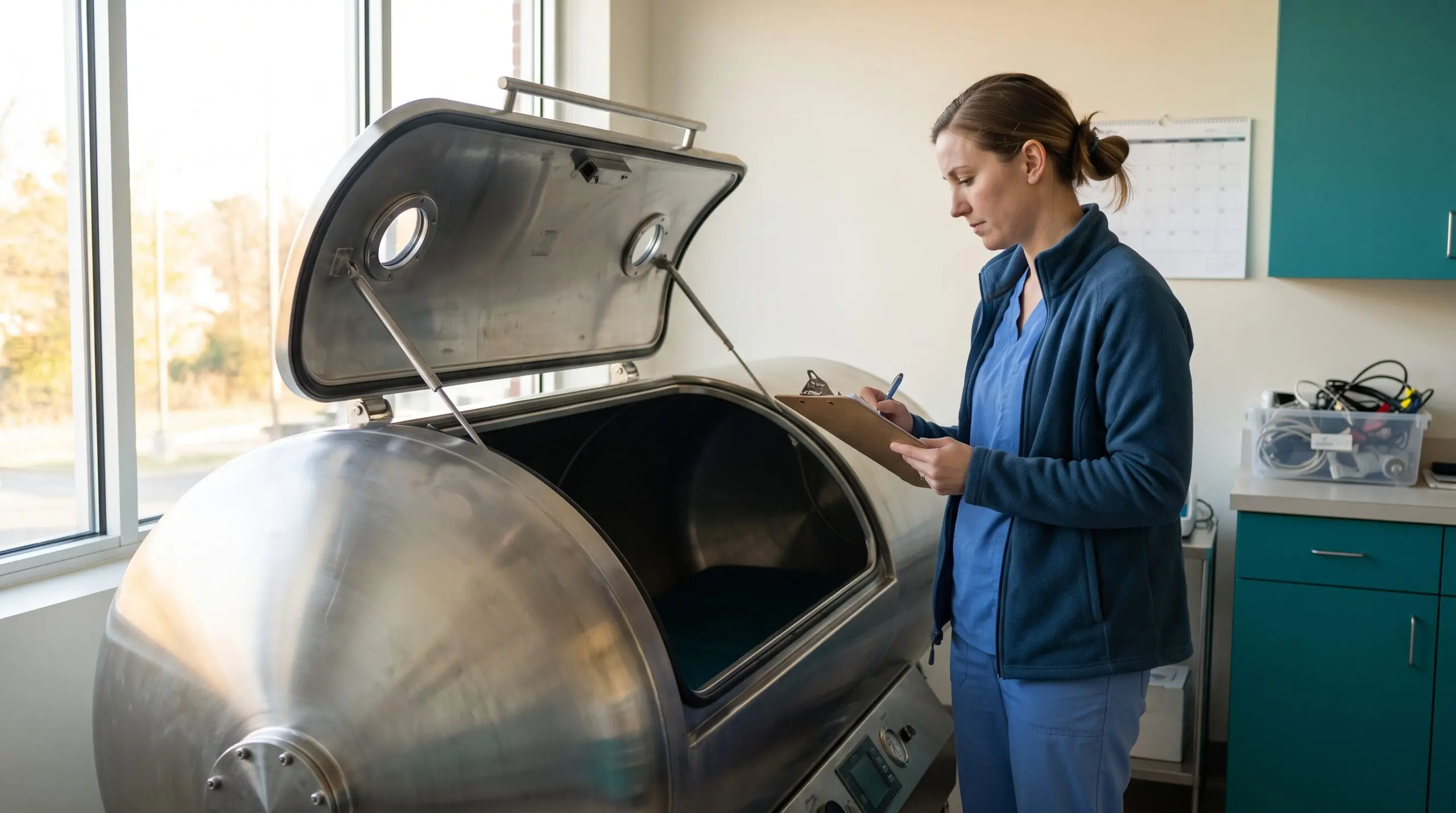
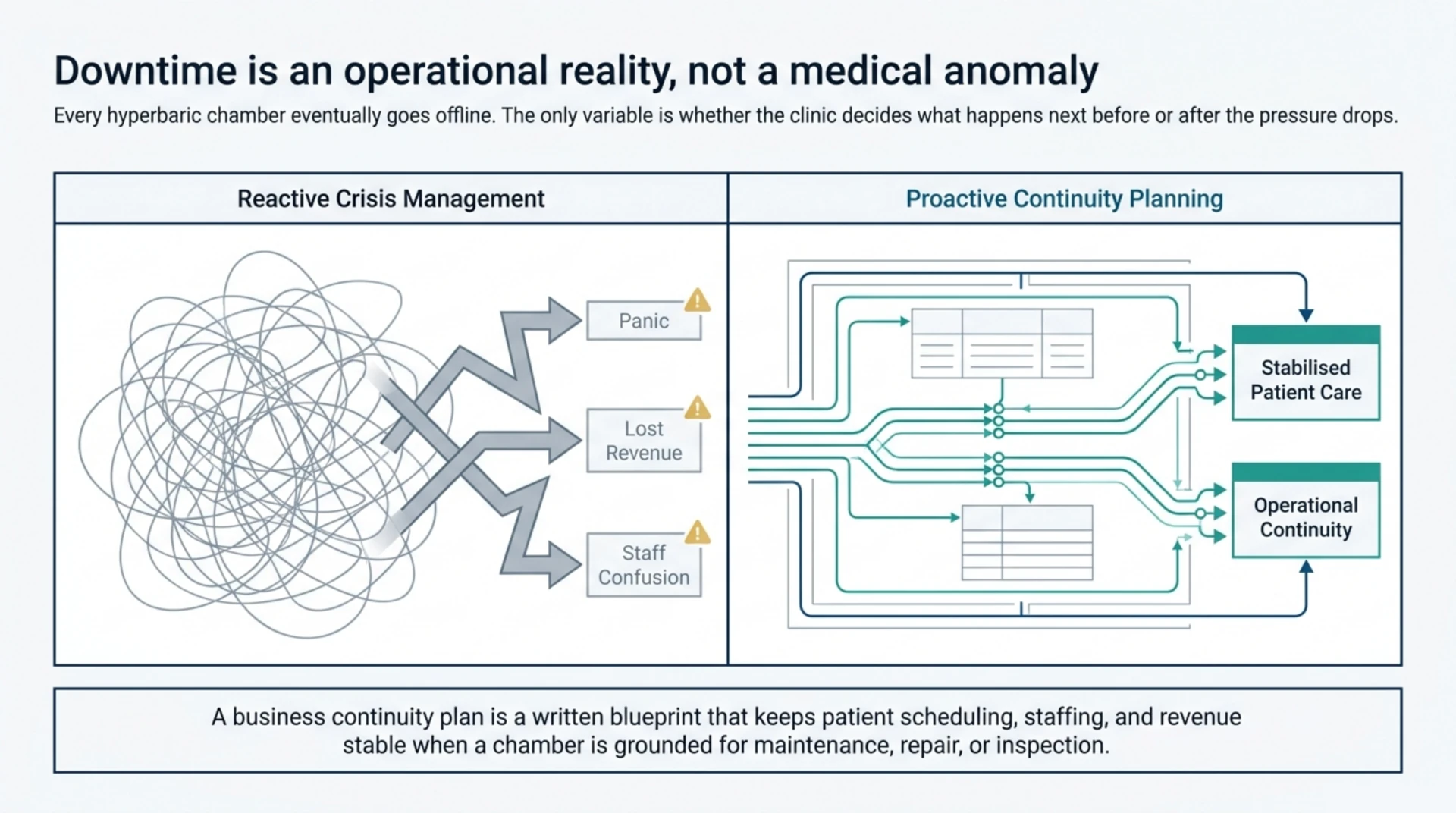
TL;DR: Hyperbaric chamber downtime business continuity planning is the process a clinic puts in place ahead of time to keep patient scheduling, staffing, and revenue stable whenever a chamber goes offline for maintenance, repair, or inspection. It is not a reaction to a crisis; it is a written plan a clinic builds before the crisis happens. A good plan covers communication scripts, patient rescheduling pathways, staffing coverage, financial buffers, and vendor relationships so a single mechanical issue never becomes a patient-safety or cash-flow emergency.
Every hyperbaric chamber eventually goes offline. Sometimes it is planned, like a scheduled service visit. Sometimes it is not, like a component failure that grounds the chamber with a full day of patients booked. Hyperbaric chamber downtime business continuity planning is how a clinic decides, in advance, exactly what happens next.
This is not a medical question. It is an operations question, and it belongs in the same category as staff scheduling, supply ordering, and facility maintenance. At Canada Hyperbarics, we hear from clinic owners and operators who built their downtime plan only after their first unplanned outage. This article is meant to help you build yours before that happens.
What Counts as Hyperbaric Chamber Downtime?
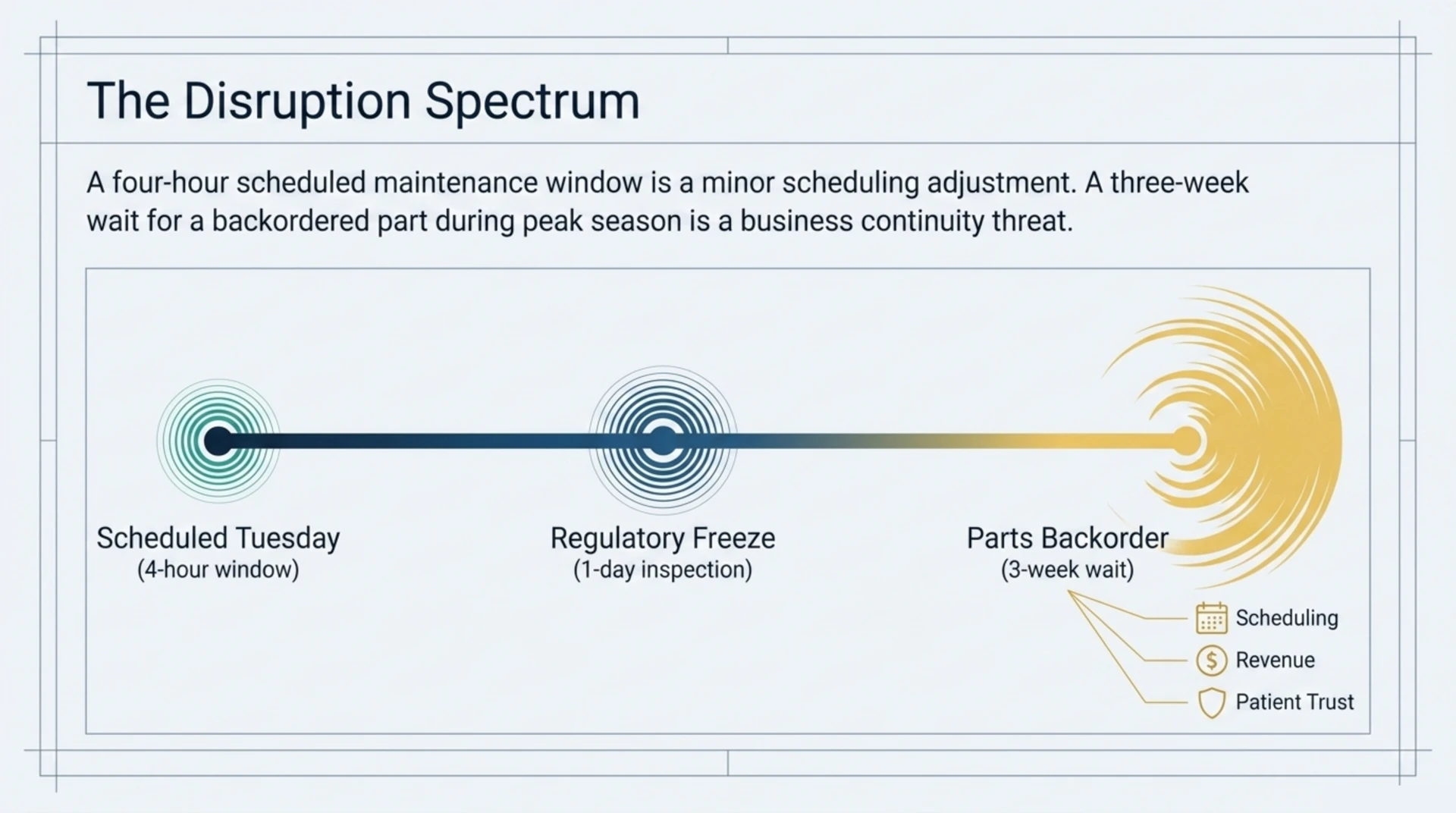
Downtime is any period where a chamber cannot safely run a session. That includes routine maintenance windows, unscheduled repairs, parts backorders, and time set aside for regulatory or safety inspections.
Not all downtime is equally disruptive. A four hour scheduled maintenance window on a slow Tuesday is a minor scheduling adjustment. A three week wait for a replacement part during your busiest season is a business problem that touches staffing, revenue, and patient trust all at once.
What Causes Hyperbaric Chamber Downtime?
Scheduled Maintenance
Manufacturers specify maintenance intervals for seals, valves, viewports, and pressure systems. Clinics that follow the manufacturer schedule closely tend to have shorter, more predictable downtime windows because the work is planned rather than reactive.
Unscheduled Repairs
Components fail outside their expected service life. A compressor, a door seal, or a control panel can require emergency attention with little warning. This is the category that causes the most damage to a clinic’s schedule because it arrives without notice.
Regulatory and Safety Inspections
Depending on your province and chamber classification, inspections may be required on a fixed cycle. These are usually predictable enough to plan around, but the clinic still needs to build a session freeze into the calendar. See our regulatory overview for how inspection requirements vary by jurisdiction.
| Downtime Type | Typical Advance Notice | Typical Duration | Primary Continuity Action |
|---|---|---|---|
| Scheduled maintenance | Weeks | Hours to one day | Batch reschedule affected sessions in advance |
| Unscheduled repair | None to hours | Days to weeks | Activate referral and communication protocol |
| Regulatory inspection | Weeks | Hours to one day | Freeze bookings for the inspection window |
| Parts backorder | Days once identified | Weeks to months | Evaluate temporary referral partnerships |
How Do You Build a Business Continuity Plan for a Hyperbaric Chamber?
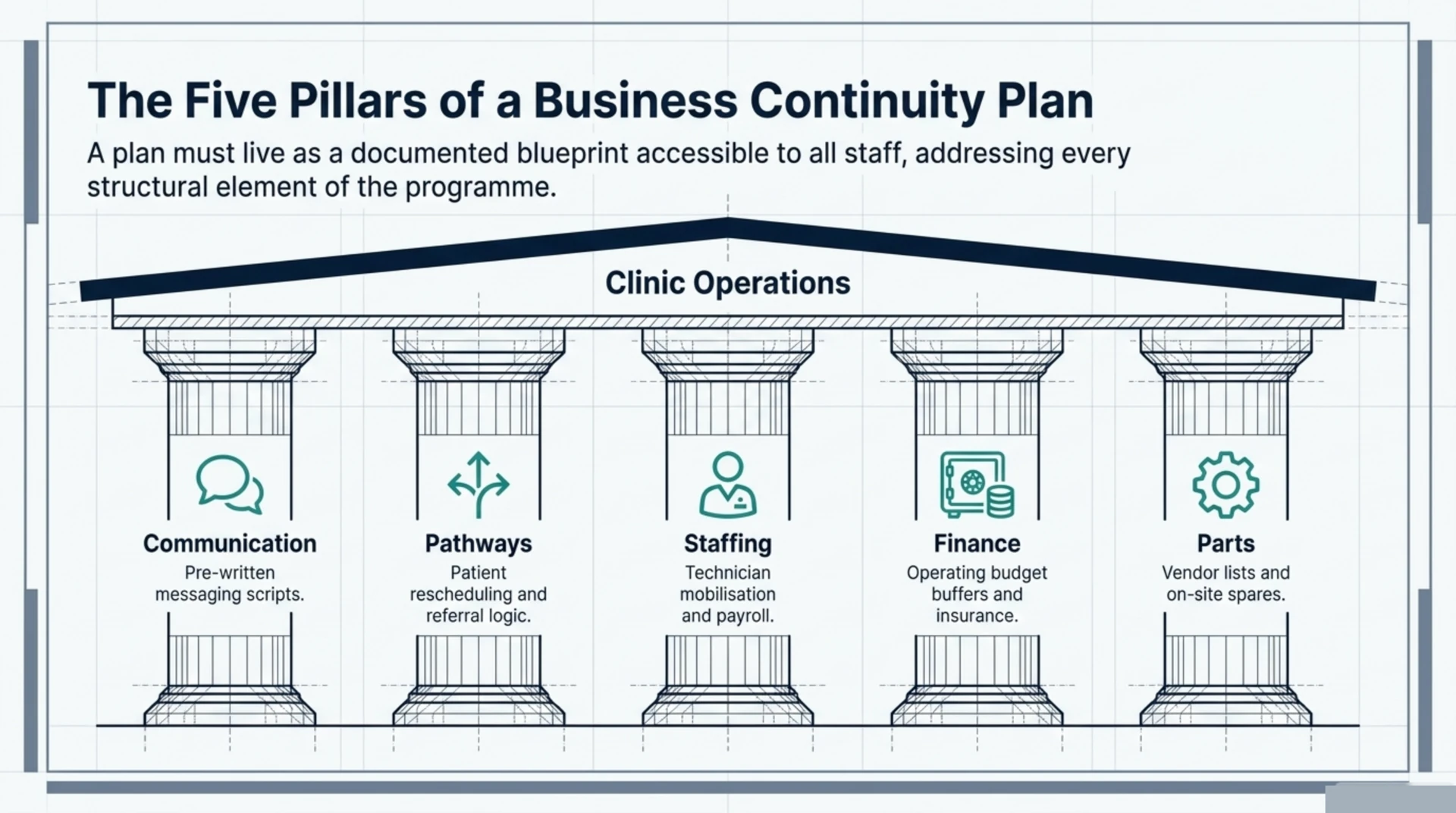
A hyperbaric chamber downtime business continuity plan is a written document, not a general intention. It should live somewhere every staff member can find it during an actual outage, not just in the owner’s head.
Communication Protocols
Write the patient message before you need it. Draft a short, calm script for phone and email that explains the chamber is temporarily unavailable and gives a next step. Having this ready in advance means front desk staff are not improvising during a stressful morning.
Decide who is authorized to notify patients, who updates the website or booking system, and who handles staff communication. Assign these roles ahead of time so nobody is guessing during the actual event.
Patient Rescheduling and Referral Pathways
Know in advance which nearby facilities could absorb urgent bookings if your chamber is down for an extended period. Building this relationship before you need it, rather than during a crisis call, makes the conversation much easier. Our facilities directory is a useful starting point for identifying other hospitals and regulated facilities in your region.
If a patient is being treated for a condition your clinic addresses, keep the discussion focused on scheduling logistics rather than clinical specifics. For background on the range of conditions clinicians may consider HBOT for, direct patients to our conditions overview rather than making claims yourself over the phone.
Staffing During Downtime
Downtime affects your technicians and safety staff too. Decide in advance whether staff are reassigned to administrative work, cross-trained tasks, or sent home, and how that affects payroll. Canada’s ongoing technician supply constraints make this planning step more important than it used to be; see our piece on the frequently asked questions page and our related reading below for more on staffing pressure.
Financial and Insurance Considerations
Build a downtime reserve into your operating budget. Even a short outage creates a revenue gap if sessions cannot be made up quickly. Clinics that treat this reserve as a fixed line item, similar to equipment depreciation, tend to weather outages with less disruption to payroll and vendor payments.
Review your equipment insurance policy for business interruption coverage specifically, not just repair cost coverage. These are often separate riders, and many clinics discover the gap only after an outage has already started. If your clinic serves patients through third-party payers, confirm how a service interruption should be documented; our coverage information page outlines how payment pathways generally work.
Spare Parts and Vendor Relationships
Ask your chamber manufacturer which components have the longest lead times, and consider stocking the highest-risk items on site. A door seal or gauge that takes six weeks to ship can turn a one day repair into a six week outage if it is not already in your parts room.
Maintain a current list of backup vendors for oxygen supply, parts, and emergency technician callouts. A single point of failure in any of these areas turns a manageable repair into an extended closure.
How Long Does Hyperbaric Chamber Downtime Typically Last?
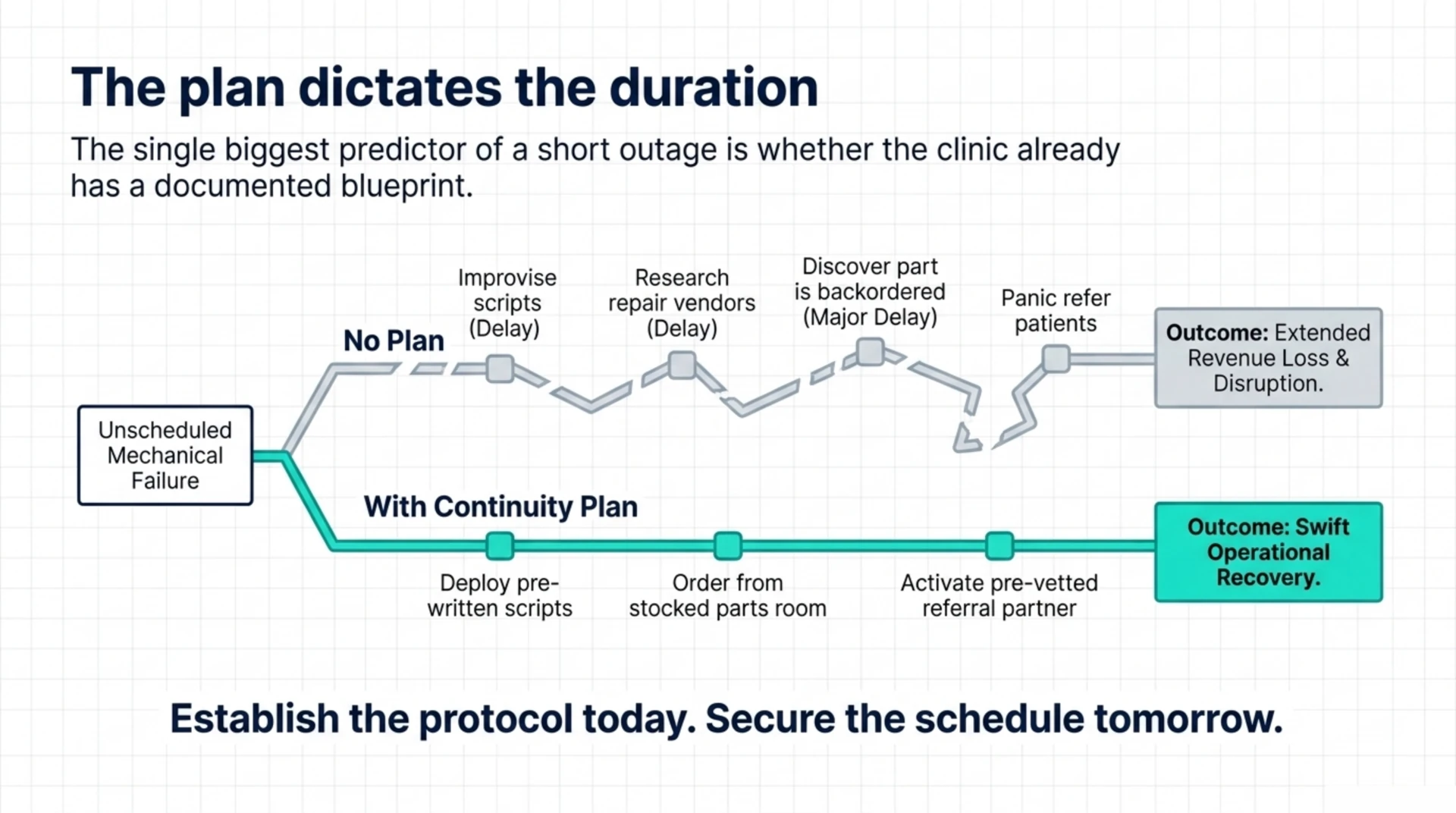
Duration depends heavily on the cause. Scheduled maintenance and regulatory inspections are usually measured in hours, while unscheduled repairs involving a backordered part can stretch into weeks. The single biggest predictor of a short outage is whether the clinic already has a plan, rather than building one during the emergency.
Clinics with a documented continuity plan tend to resume bookings faster after an unscheduled outage simply because the decisions, contacts, and scripts are already made. Nobody is starting from a blank page while patients are on hold.
When Should a Clinic Refer Patients to Another Facility?
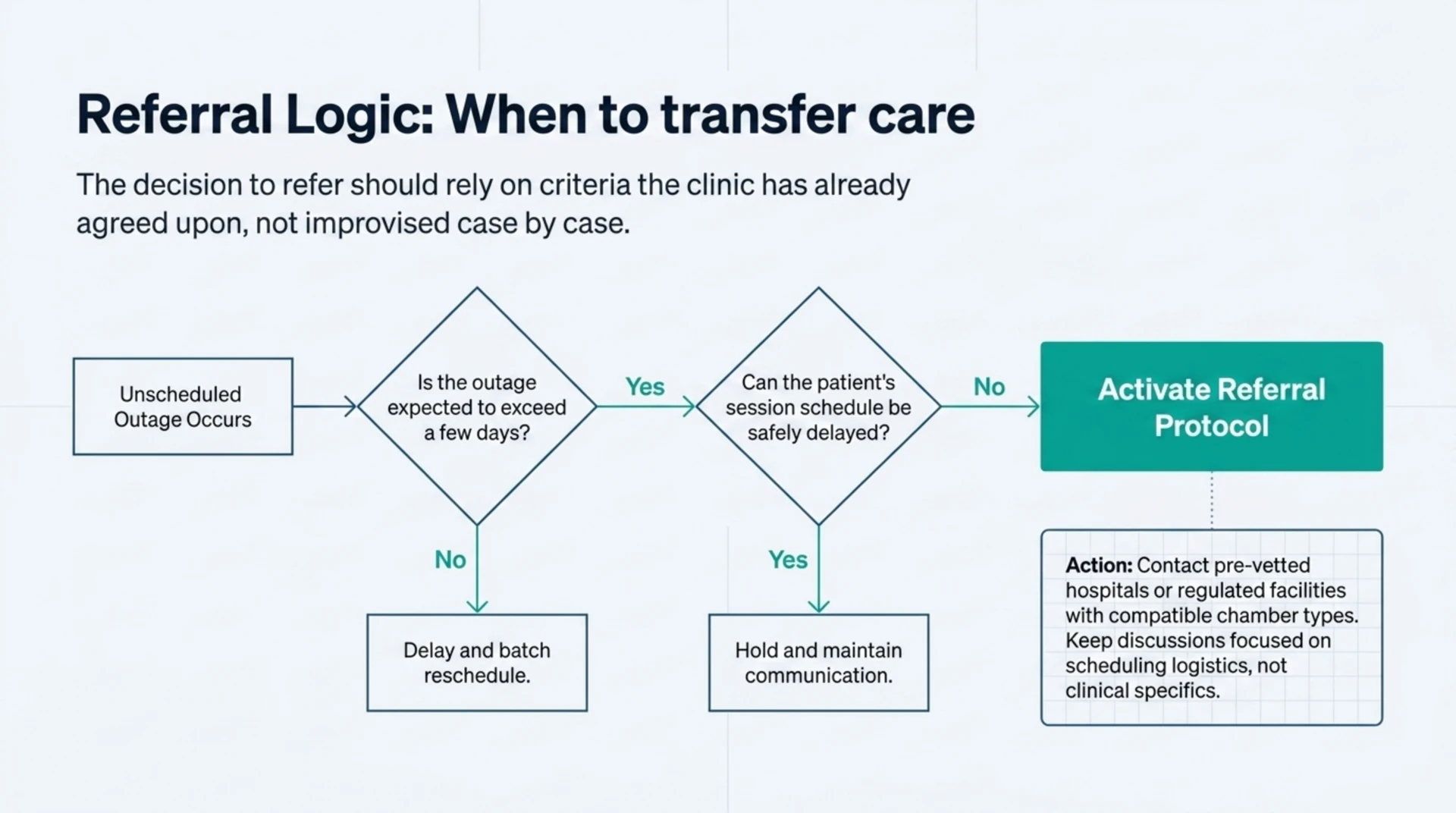
If an outage is expected to exceed a few days, and a patient’s session schedule cannot reasonably be delayed, referring them to a nearby facility keeps continuity of care intact. This decision should sit with the clinical director, using criteria the clinic has already agreed on in advance, not improvised case by case.
Keep a short list of hospitals and regulated facilities with compatible chamber types and confirm their capacity periodically, not only when you need it urgently.
Frequently Asked Questions
What is hyperbaric chamber downtime business continuity planning?
It is the advance planning process a clinic uses to keep patient care, staffing, and finances stable whenever a chamber is temporarily out of service, whether the cause is scheduled maintenance or an unscheduled repair.
How often should a continuity plan be reviewed?
Most clinics review the plan annually, or immediately after any outage, to update contact lists, vendor information, and lessons learned from the event.
Who should be involved in creating the plan?
The clinic owner or operator, the clinical director, front desk or intake staff, and the primary equipment service vendor should all contribute, since each holds a different piece of the response.
Does insurance typically cover lost revenue during chamber downtime?
It depends on the policy. Standard equipment coverage often addresses repair cost only, so clinics should ask specifically about business interruption coverage when reviewing their policy.
What is the fastest way to reduce the impact of an unscheduled repair?
Having a pre-written communication script, an identified referral facility, and key spare parts already on hand are the three factors that most consistently shorten the disruption.
Should a clinic keep spare parts on site?
For components with long manufacturer lead times, many clinics choose to stock at least one spare on site, since a delay in ordering can turn a short repair into a multi week closure.
Related Reading
- Canada’s Hyperbaric Technician Workforce Shortage
- Medical Oxygen Supply Chain in Hyperbaric Clinics
- Hyperbaric Chamber Sterilization & Infection Control
Canada Hyperbarics maintains an educational resource for clinic owners and operators navigating the operational side of running a hyperbaric program, alongside our about page for more on our mission.
This content is for informational purposes only and is not medical advice.
Ready to see how a well-run hyperbaric program operates day to day? Explore our directory of hospitals and regulated facilities to learn how established clinics structure their operations.