
TL;DR: Hyperbaric oxygen dose and pressure protocol optimization means matching chamber pressure, session length and treatment count to the condition being studied. No single systematic review in this evidence set was designed purely to answer the dosing question. Instead, recent 2025 and 2026 reviews across orthopedics, oncology, sports medicine and neurology repeatedly flag protocol variability, meaning differing pressures, session counts and durations across the source trials, as a limitation on what pooled results can tell us. Dose also matters for safety, not just efficacy: at least one review in this pool examined how hyperbaric oxygen exposure itself can cause acute lung injury.
Hyperbaric oxygen dose pressure protocol optimization is the ongoing effort by researchers to work out which chamber pressure, session duration and total number of treatments produce the best outcomes for a given condition, while keeping exposure below the threshold where oxygen itself becomes harmful. It sounds like a simple engineering question. It is not. Across the recent systematic reviews and meta-analyses summarized here, from femoral head necrosis to glioma to exercise-induced muscle soreness, the protocols used in the underlying trials differ from one study to the next, and few reviews report pressure and session data in a way that supports direct comparison. This article looks at what the current evidence base actually shows about dose and protocol, and where the gaps sit.
What Does “Dose” Mean in Hyperbaric Oxygen Therapy?
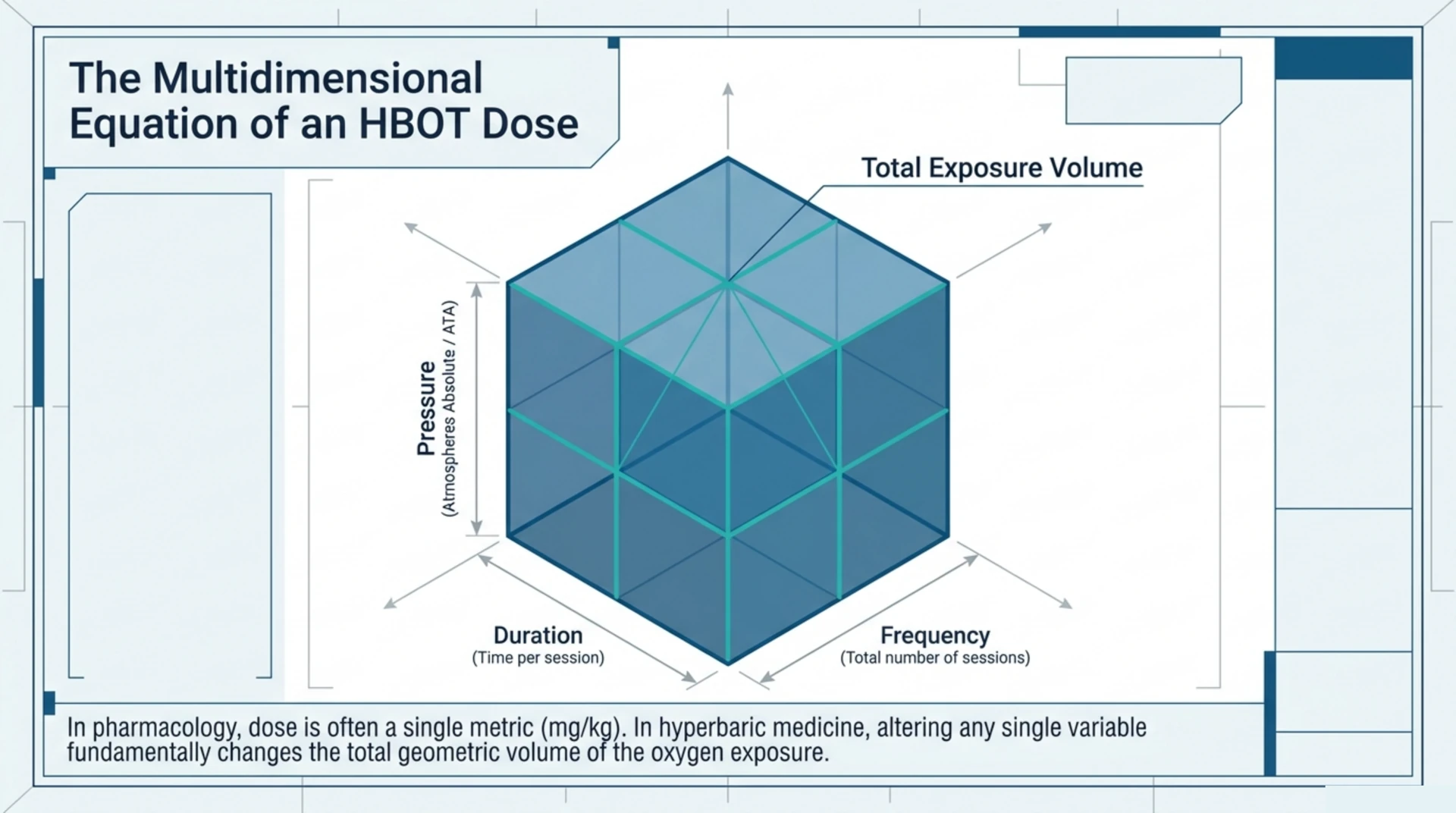
In pharmacology, dose is usually a single number: milligrams per kilogram. In hyperbaric oxygen therapy (HBOT), dose is really three variables multiplied together: the pressure of the chamber (measured in atmospheres absolute), the duration of each session, and the number of sessions over a course of treatment. Changing any one of these three variables changes the total oxygen exposure a patient receives, and different combinations can produce different physiological effects even when the “total” exposure looks similar on paper.
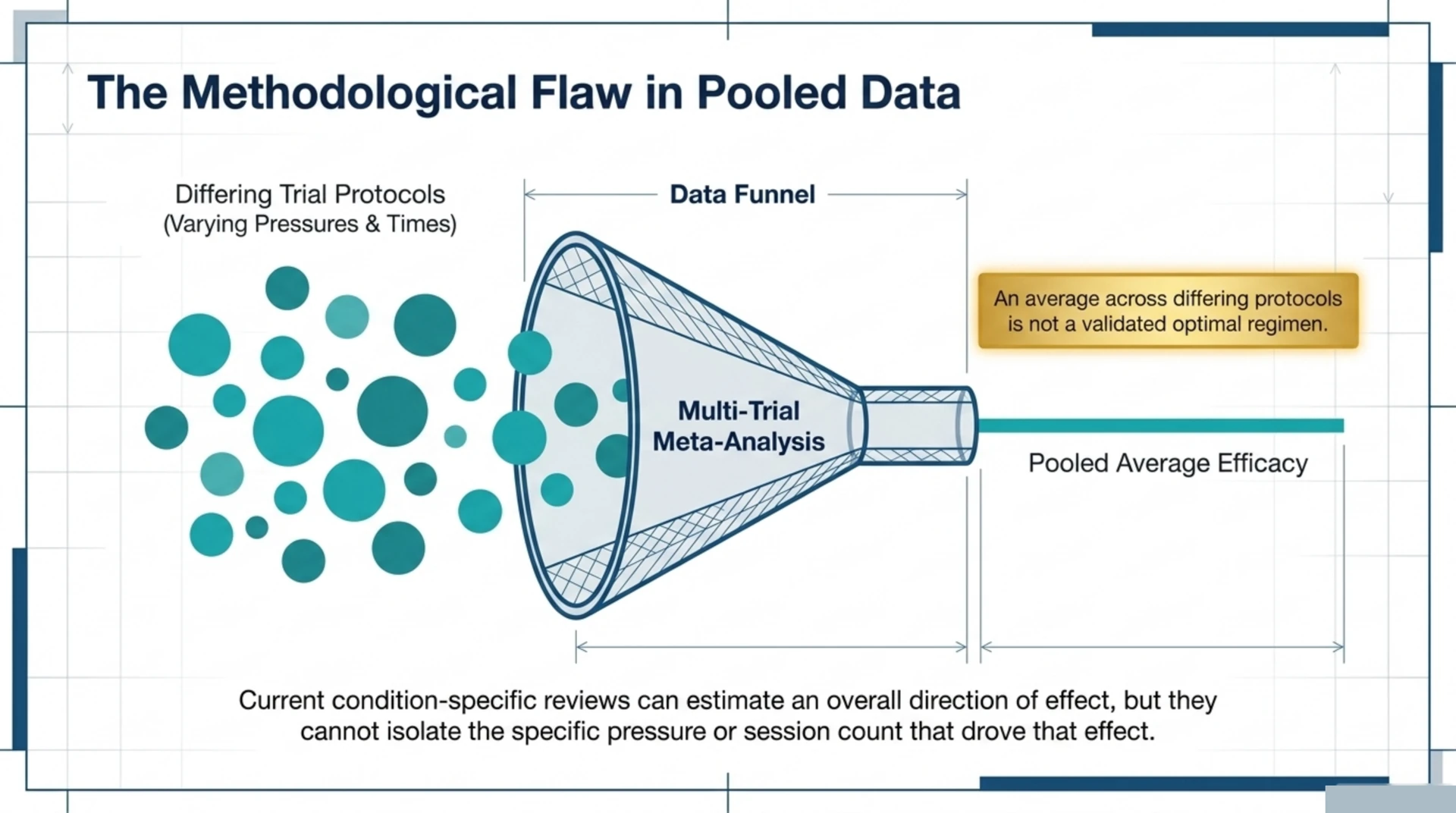
This is why researchers increasingly describe HBOT protocols the way a pharmacologist describes a drug regimen, with attention to peak exposure, cumulative exposure and timing. It is also why systematic reviews that pool trials using different protocols face a genuine methodological problem: averaging results across studies that used different pressures is not the same as identifying an optimal pressure.
Why Do Pressure and Session Protocols Vary So Much Across Conditions?
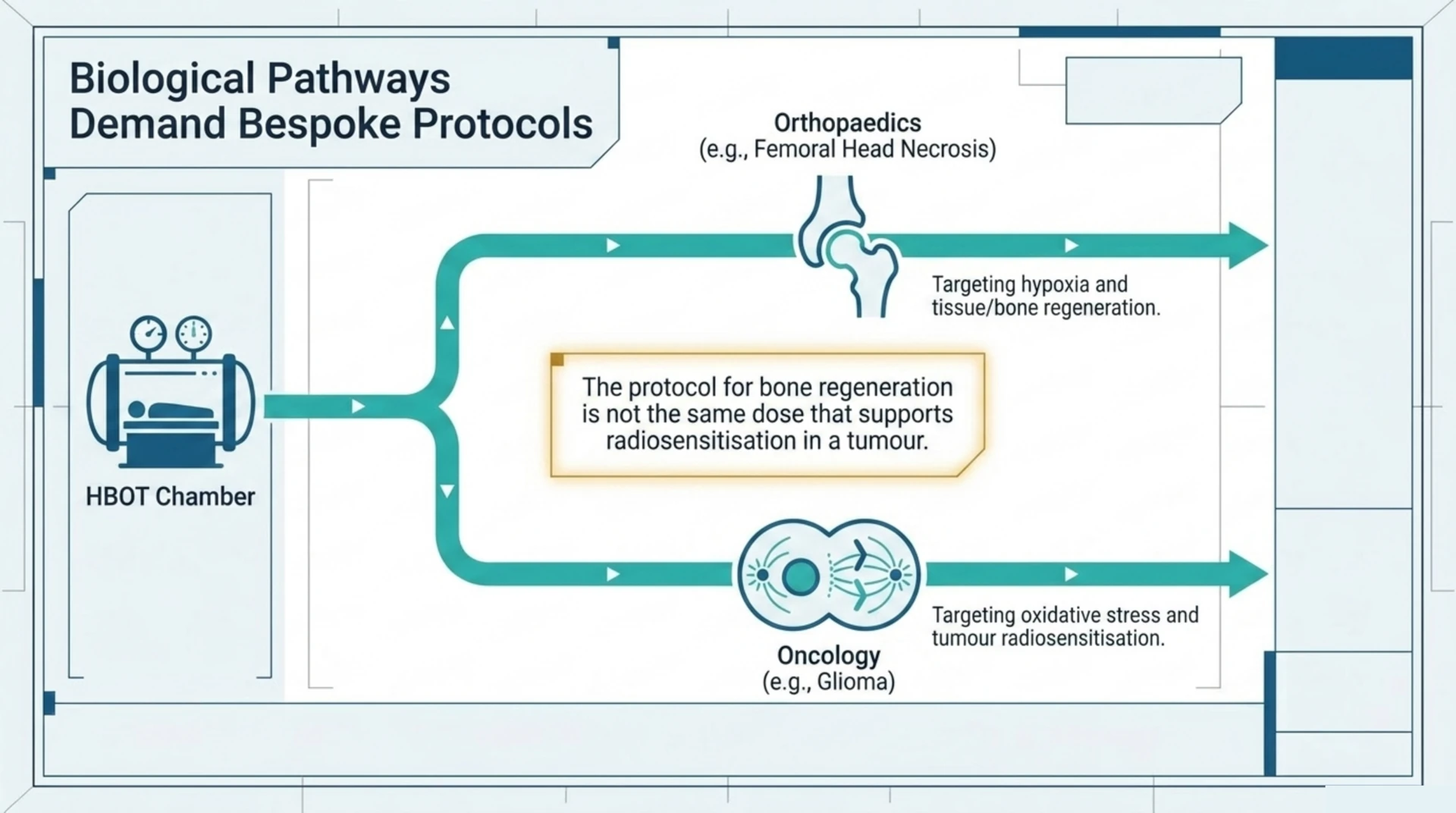
Protocols vary partly because the underlying biology differs by condition. A review of hypoxia’s role in tissue regeneration for oral and maxillofacial surgery is asking a different physiological question than a review of hyperbaric oxygen combined with chemoradiotherapy for glioma. The “right” dose for promoting bone or soft tissue regeneration is not necessarily the same dose that best supports radiosensitization in a tumour.
Protocols also vary for practical reasons: chamber availability, patient tolerance, and the treatment schedules used at the centres running each trial. Few of the reviews in this evidence set were designed to isolate dose as the primary variable of interest. Most were designed to answer a broader efficacy or safety question, with protocol details reported as background rather than as the main outcome. That gap, between what researchers want to know about dosing and what current reviews were built to measure, is itself a useful finding for anyone working in this field.
What Do Recent Systematic Reviews Say About Hyperbaric Oxygen Dose, Pressure and Protocol Optimization?
Rather than a single dedicated dosing review, the current literature offers a set of condition-specific reviews that each touch on protocol questions from a different angle. Reading them together is informative.
Orthopedics: Femoral Head Necrosis
A 2025 systematic review and meta-analysis (PubMed | Our Assessment) pooled ten studies assessing how hyperbaric oxygen therapy performs in osteonecrosis of the femoral head. Because the review draws on ten separate study cohorts, it illustrates a recurring theme in this literature: pooled analyses can estimate an overall direction of effect, but they cannot by themselves tell a clinician which specific pressure or session count drove that effect, unless the underlying trials were harmonized on protocol, which is rarely the case.
Oncology: Glioma and Chemoradiotherapy
A 2026 meta-analysis (PubMed | Our Assessment) combined nine randomised controlled trials involving 837 patients to evaluate the efficacy and safety of concurrent hyperbaric oxygen therapy with chemoradiotherapy. Nine RCTs is a relatively strong evidence base for this kind of question, but combining randomised trials that were each designed around their own local protocol still means the pooled result reflects an average across differing exposure regimens rather than a single, tested optimum.
Sports Medicine: Exercise-Induced Muscle Injury and Soreness
A 2025 systematic review and meta-analysis (PubMed | Our Assessment) combined ten randomised controlled trials totalling 299 subjects to determine whether HBOT reduces exercise-induced muscle injury and soreness in athletes and college-aged participants. This is one of the more tightly scoped reviews in the pool, and a smaller, more homogeneous evidence base like this one is generally better suited to future dose-comparison analysis than a broad multi-condition review would be.
Neurology: Intracranial Hemorrhage
A 2025 systematic review (PubMed | Our Assessment) examined 38 studies spanning animal and human research on the mechanisms, effectiveness and safety of hyperbaric and normobaric oxygen therapy. Because this review explicitly compares hyperbaric (pressurized) and normobaric (regular pressure) oxygen delivery side by side, it is one of the few in this pool that treats pressure itself as a distinct variable rather than folding it into a generic “HBOT” label.
Where Does the Evidence on Dose-Related Safety Stand?
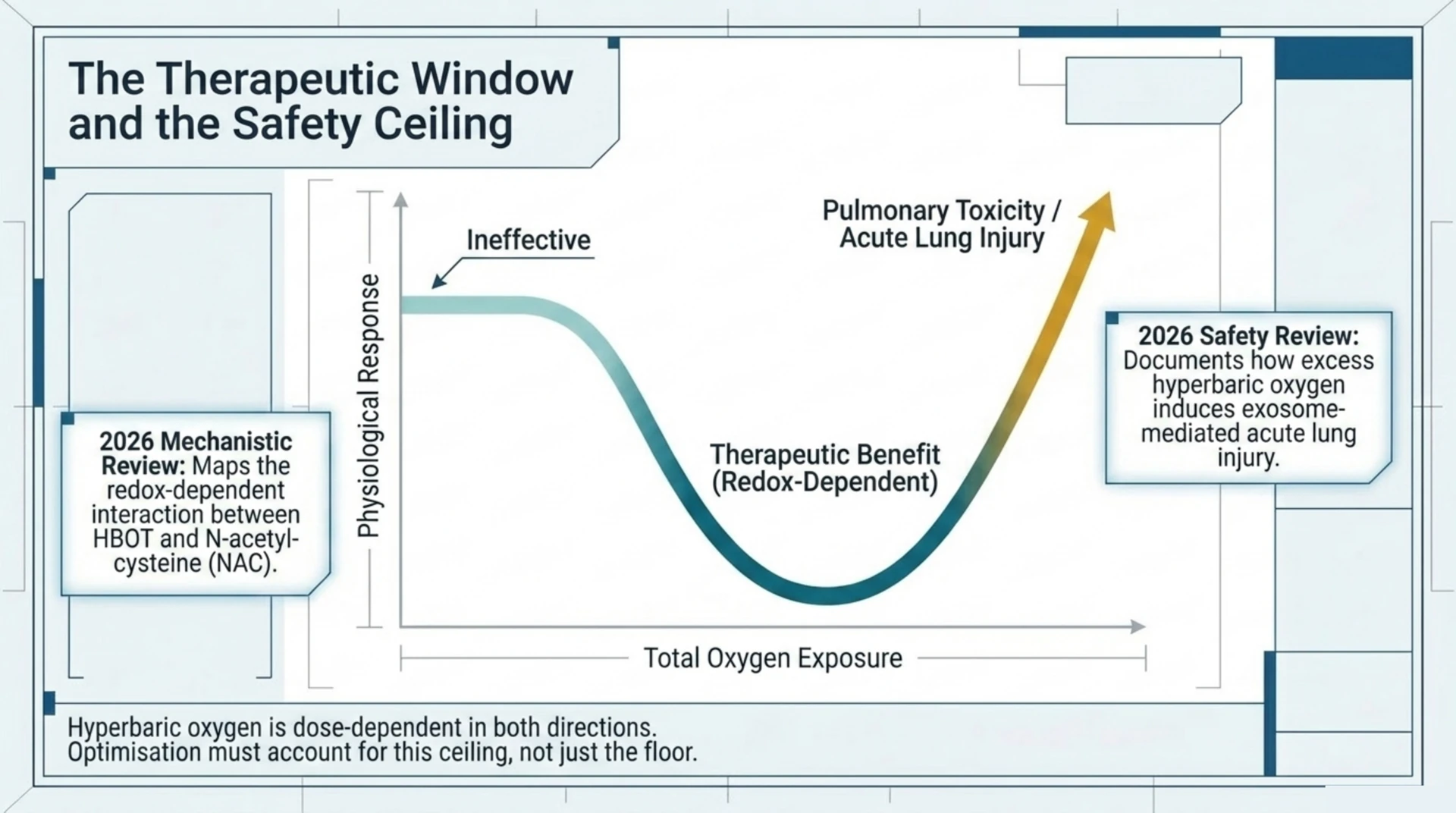
Optimization is not only about finding the most effective dose. It is also about identifying where added pressure or duration stops helping and starts causing harm. A 2026 review (PubMed | Our Assessment) surveyed the literature on how hyperbaric oxygen and other mechanical factors can induce acute lung injury, examining exosome-based mechanisms alongside more established pathways. This review is a direct reminder that hyperbaric oxygen exposure is dose-dependent in both directions: too little may be ineffective, too much carries a documented risk of pulmonary injury. Any protocol optimization discussion has to account for this ceiling, not just the floor.
A related mechanistic question comes from a 2026 review (PubMed | Our Assessment) on the redox-dependent interaction between hyperbaric oxygen and N-acetylcysteine (NAC), an antioxidant compound. The review examined how HBOT and NAC interact with the body’s oxidative stress response, a mechanism directly relevant to dosing, since HBOT’s therapeutic and adverse effects both flow through oxidative and antioxidant pathways that scale with exposure.
Clinical protocols also differ by disease mechanism, as a 2026 narrative review (PubMed | Our Assessment) on hyperbaric oxygen in sickle cell disease illustrates. The review examined the scientific rationale and clinical evidence for using HBOT in sickle cell complications, underscoring that the underlying disease mechanism, not a generic “HBOT dose,” should drive protocol design for any specific condition. For the pressures and session counts used in Canada’s currently approved indications, see our overview of hyperbaric oxygen coverage in Canada.
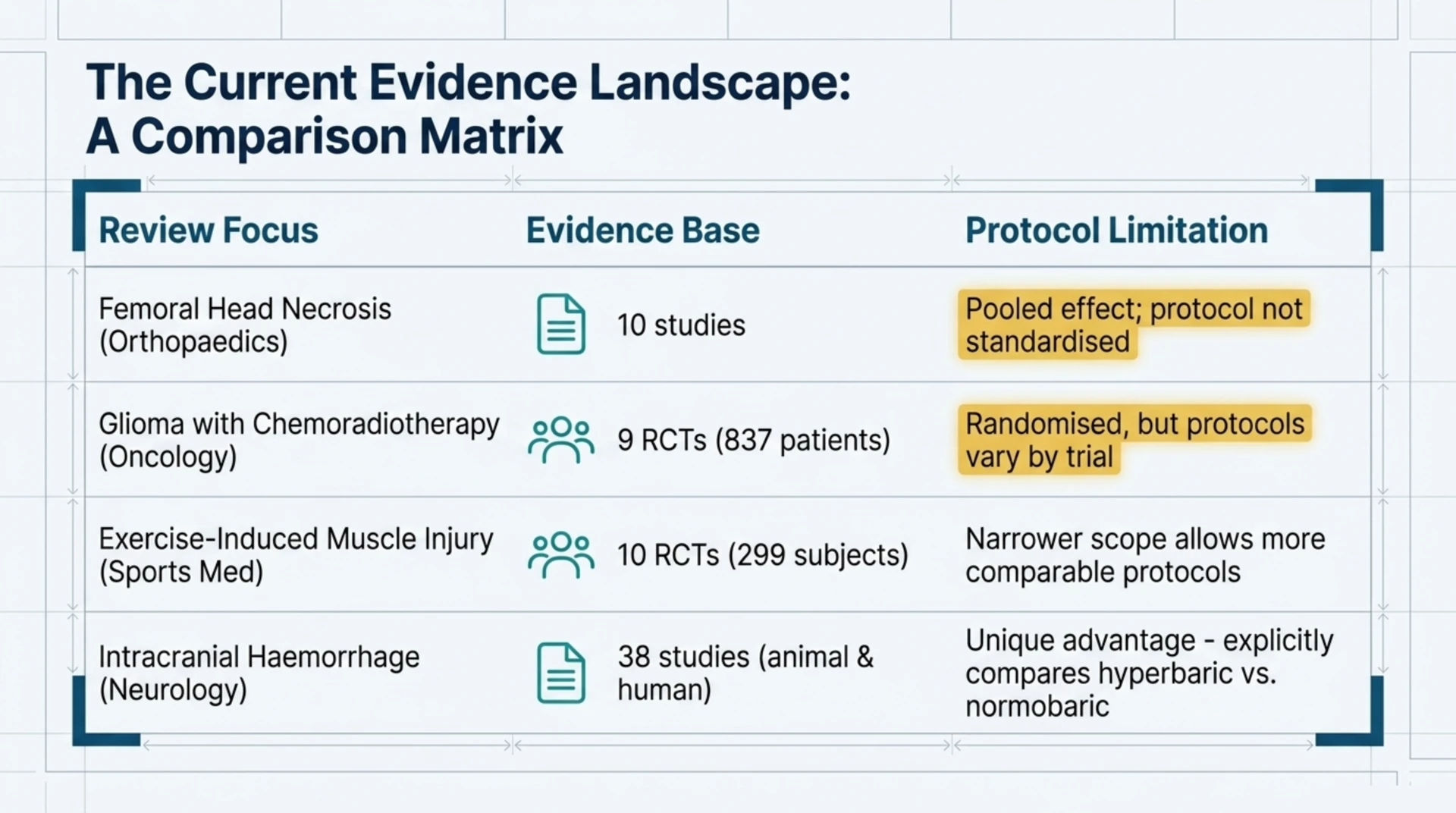
How Do These Reviews Compare on Protocol Reporting?
The table below summarizes how each review in this evidence set treats dose and protocol, based on what each publication reports about its scope and design.
| Review | Evidence Base | Condition Area | Protocol Angle |
|---|---|---|---|
| Femoral head necrosis meta-analysis | 10 studies | Orthopedics | Pooled effect across studies; protocol not standardised |
| Glioma with chemoradiotherapy meta-analysis | 9 RCTs, 837 patients | Oncology | Randomised but protocol details vary by trial |
| Exercise-induced muscle injury meta-analysis | 10 RCTs, 299 subjects | Sports medicine | Narrower scope; more comparable protocols |
| Intracranial hemorrhage systematic review | 38 studies (animal and human) | Neurology | Explicitly compares hyperbaric vs normobaric pressure |
| Acute lung injury review | Narrative literature review | Pulmonary safety | Frames pressure and duration as a dose ceiling |
| HBOT and NAC redox interaction | Mechanistic review | Oxidative stress biology | Dose-linked mechanism, not a clinical protocol trial |
What Does This Mean for Researchers and Clinicians?
Taken together, this evidence set does not support a single, universal “optimal” hyperbaric oxygen dose or pressure. What it supports is a more modest but still useful conclusion: protocol reporting and standardization remain a genuine limitation across current HBOT systematic reviews, and dose-related safety data deserve at least as much attention as dose-related efficacy data. Researchers designing new trials, and clinicians interpreting pooled results, should treat any efficacy figure from a multi-trial meta-analysis as an average across differing protocols rather than a validated single regimen. Canada Hyperbarics tracks this literature across a growing database of over 14,000 peer-reviewed studies, and protocol-optimization questions like this one are exactly where new, better-designed trials could add the most value.
Frequently Asked Questions
What is hyperbaric oxygen dose pressure protocol optimization?
It is the process of researching which combination of chamber pressure, session duration and total number of sessions produces the best balance of effectiveness and safety for a specific condition treated with hyperbaric oxygen therapy.
Is there a standard hyperbaric oxygen pressure used across all conditions?
No. The reviews summarized here span orthopedics, oncology, sports medicine and neurology, and each condition area uses its own protocols in the underlying trials. There is no single pressure or session count that applies universally across the literature reviewed here.
Can too much hyperbaric oxygen be harmful?
Yes. A 2026 review in this pool specifically examined how hyperbaric oxygen exposure can contribute to acute lung injury, which is a reminder that dose has an upper safety boundary as well as a lower effectiveness threshold.
Why do systematic reviews struggle to identify an optimal HBOT dose?
Most systematic reviews pool trials that were each designed with their own local protocol. Averaging results across studies that used different pressures and session counts can estimate an overall effect, but it does not isolate which specific protocol produced the best outcome.
Does hyperbaric oxygen dosing differ between hyperbaric and normobaric oxygen therapy?
Yes. A 2025 systematic review on intracranial hemorrhage specifically compared hyperbaric (pressurized) and normobaric (regular pressure) oxygen delivery, treating pressure as a distinct variable rather than a single generic “HBOT” category.
Where can researchers find more detail on approved HBOT protocols in Canada?
Our overview of hyperbaric oxygen coverage in Canada summarizes the pressures and session structures used for currently approved indications.
Related Reading
- HBOT for Complex Regional Pain Syndrome: The Evidence Gap
- HBOT for Chronic Fatigue Syndrome: A Service-Line Briefing
- CUHMA and the Referral Pathway for Hyperbaric Care
This content is for informational purposes only and is not medical advice.
If you are considering hyperbaric oxygen therapy for any condition, including one discussed in this article, talk to your physician about whether it is appropriate for your specific situation.