
TL;DR: Calciphylaxis is a rare and serious condition, most common in people with advanced kidney disease, in which calcium builds up in the walls of small blood vessels in the skin and fat, causing painful ulcers and tissue death. The hyperbaric oxygen calciphylaxis evidence base consists entirely of case reports and small retrospective studies rather than randomised trials, and it points to hyperbaric oxygen therapy (HBOT) as a possible adjunct to standard wound care in some patients, not a proven standalone cure, with outcomes that vary from case to case.
Hyperbaric oxygen therapy (HBOT) is a medical treatment in which a person breathes 100% oxygen inside a pressurized chamber, raising the amount of oxygen dissolved in the blood and delivered to tissue. The hyperbaric oxygen calciphylaxis evidence has grown steadily over the past two decades, almost entirely through case reports and retrospective chart reviews rather than controlled trials. This article, from the Canada Hyperbarics research library, walks through what that evidence actually shows, where it is reasonably consistent, and where it is limited or mixed.
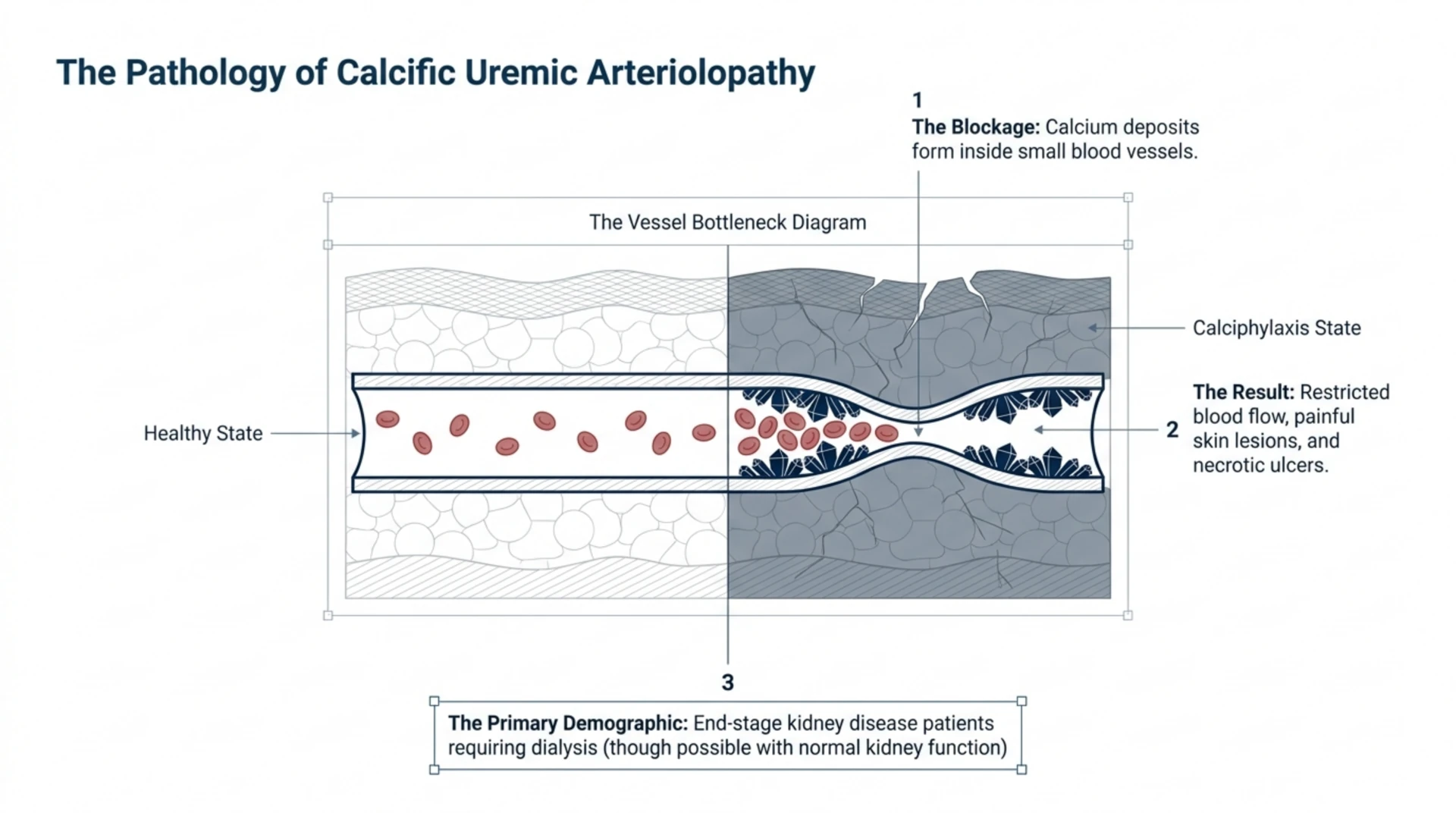
What Is Calciphylaxis?
Calciphylaxis, also called calcific uremic arteriolopathy (CUA), is a rare condition in which calcium deposits form inside the small blood vessels of the skin and fatty tissue. This restricts blood flow, leading to painful skin lesions, ulcers, and, in severe cases, tissue death. It occurs most often in people with end-stage kidney disease on dialysis, though it has also been reported in people with normal kidney function.
Calciphylaxis is associated with high rates of illness and death, and wound infection is a major driver of poor outcomes. Standard treatment typically combines sodium thiosulfate, aggressive wound care, correction of calcium and phosphate levels, and, in dialysis patients, optimized dialysis. HBOT has been used in some centres as an add-on to this standard bundle, which is the context for nearly every study in the hyperbaric oxygen calciphylaxis evidence base.
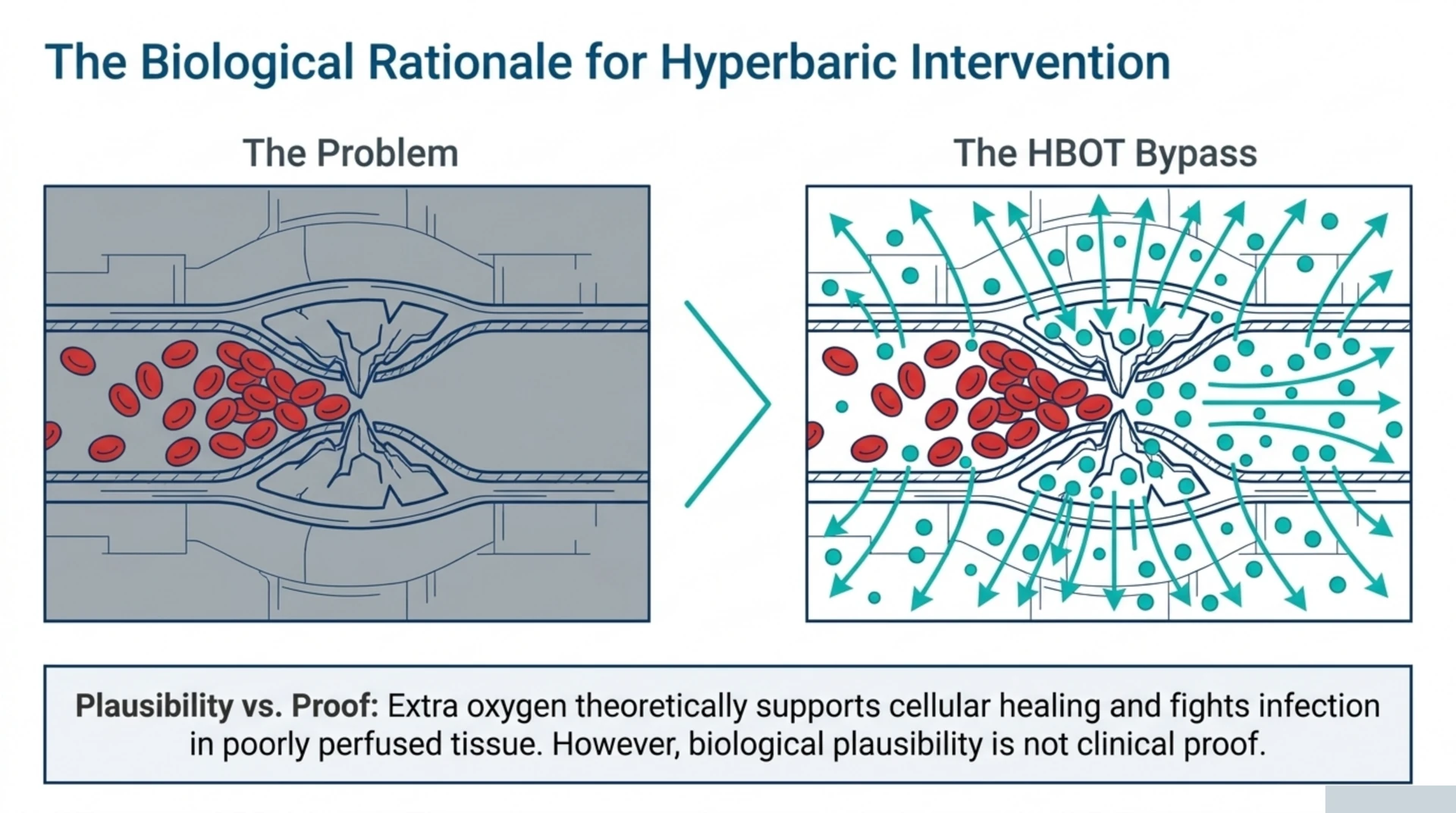
How Might Hyperbaric Oxygen Help in Calciphylaxis?
The proposed rationale is straightforward: calciphylaxis wounds form in tissue with poor blood supply, and HBOT increases the amount of oxygen that can reach oxygen-starved tissue even when blood flow is reduced. In wound care generally, this extra oxygen is thought to support the cellular processes involved in healing and to help the body fight infection in poorly perfused tissue.
That rationale is biologically plausible, but plausibility is not proof. Nearly all of the calciphylaxis-specific evidence for HBOT comes from observational designs, so what follows describes associations reported in real patients, not causation demonstrated in controlled experiments.
What Does the Retrospective Evidence Show?
The Largest Comparative Study (93 Patients)
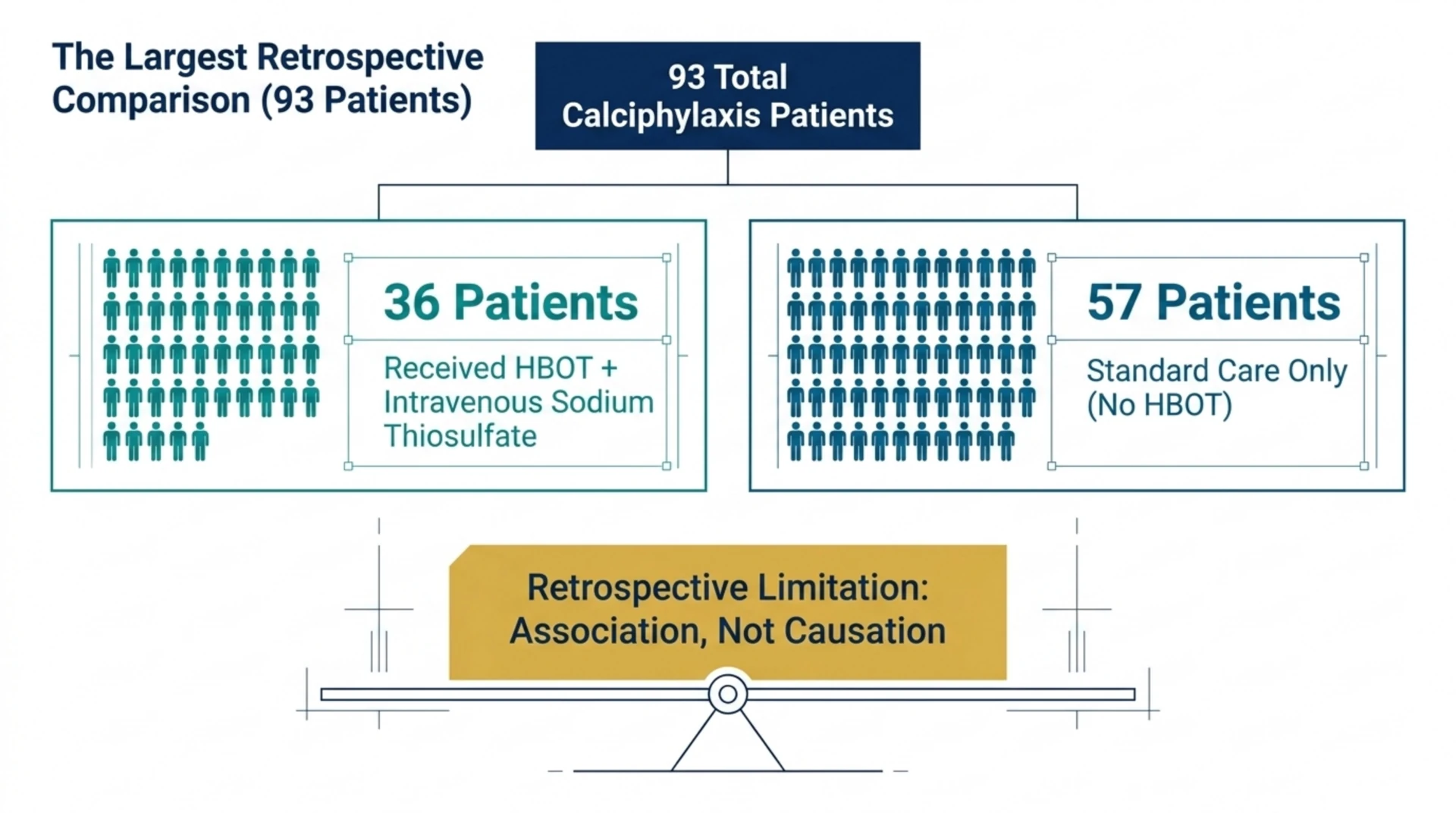
The largest retrospective comparison to date (Journal of the American Academy of Dermatology, 2024, PubMed | Our Assessment) reviewed 93 patients with calciphylaxis, 36 of whom received HBOT alongside intravenous sodium thiosulfate and 57 of whom did not, and compared mortality and wound healing between the two groups. Because the comparison was retrospective rather than randomised, differences observed between groups can only be described as associations, and cannot be read as proof that HBOT itself changed outcomes.
A Norwegian Multidisciplinary Cohort (25 Patients)
A 2025 cohort study from Norway (Clinical Nephrology, PubMed | Our Assessment) followed 25 patients treated over a decade at a single hospital where HBOT was integrated into a multidisciplinary protocol alongside sodium thiosulfate and dialysis optimization. As with other retrospective cohorts, this design cannot separate the specific contribution of HBOT from the rest of the care bundle these patients received.
Pain and Wound Healing in Chronic Wounds (18 Patients)
A French tracking study (Annales de Dermatologie et de Vénéréologie, 2024, PubMed | Our Assessment) followed 18 patients with severe, painful chronic wounds, including some with calciphylaxis, who received HBOT, and tracked how pain medication needs and wound healing changed over the treatment course. Reduced pain medication use and wound progress were reported in this small, uncontrolled group of mixed wound types, which limits how confidently any change can be attributed to HBOT alone.
What Do Reviews and Smaller Case Series Show?
Beyond individual cohorts, a narrative review (Undersea & Hyperbaric Medicine, 2020, PubMed | Our Assessment) pooled ten retrospective case series on HBOT for calciphylaxis wounds. The reviewers could not identify a randomised trial anywhere in the literature and noted that publication and referral patterns likely shaped which cases were reported in the first place.
An earlier retrospective review (Nephrology, 2015, PubMed | Our Assessment) examined patients with calcific uremic arteriolopathy who were referred for HBOT and looked for factors linked to wound healing. Diabetes was the only factor significantly associated with better healing and survival in this group, though without a comparison group of similar patients who did not receive HBOT, the review cannot show that HBOT itself drove the difference.
A smaller case series (Journal of the American College of Clinical Wound Specialists, 2016, PubMed | Our Assessment) reviewed records from eight calciphylaxis patients, five of whom received adjunctive HBOT, and looked at factors linked to healing. With only eight patients total, this study is best read as hypothesis-generating rather than conclusive.
Where Is the Evidence Limited or Mixed?
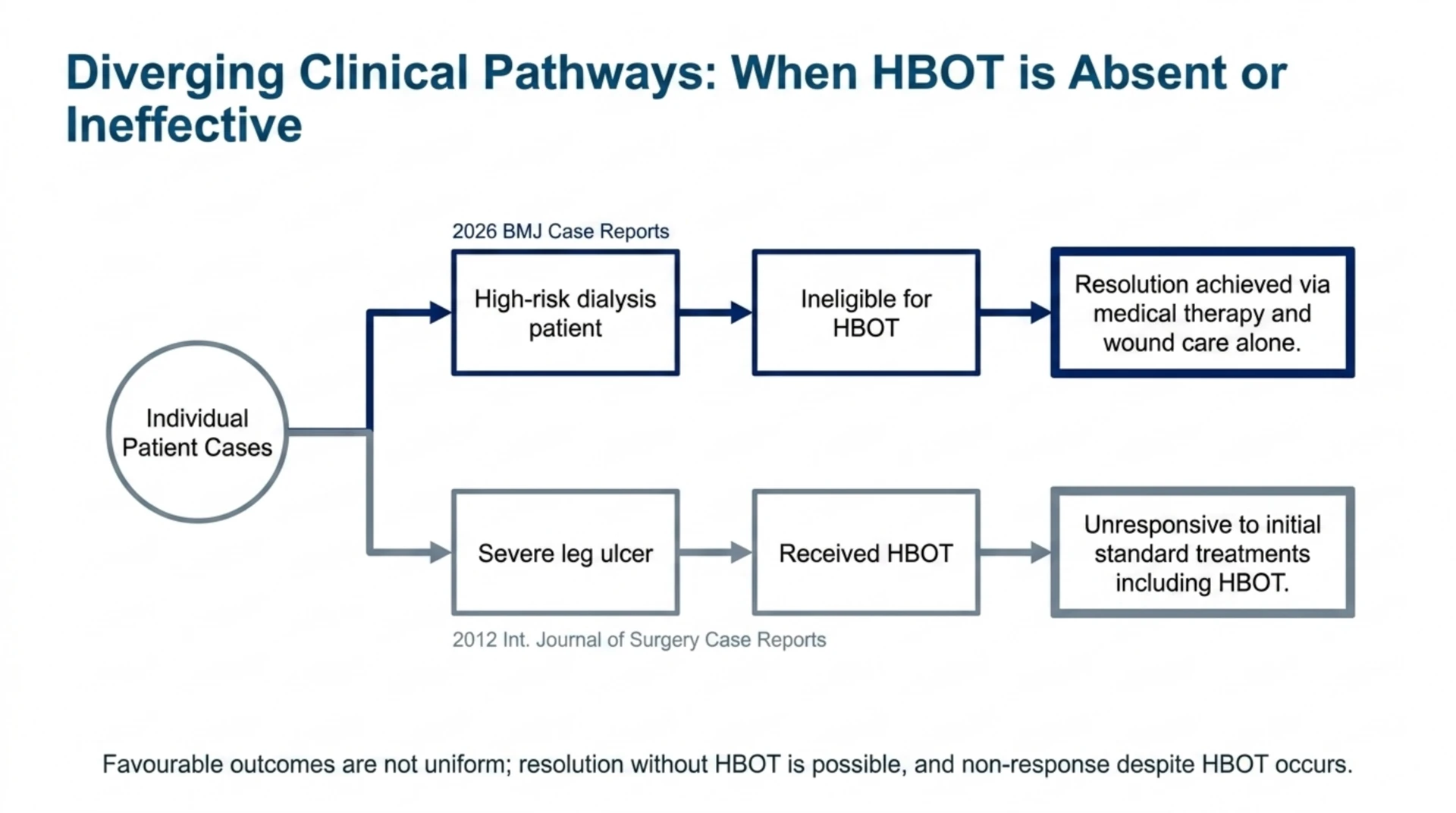
Not every recent report supports a role for HBOT, and an honest evidence review has to include the cases that complicate the picture. A 2026 case report (BMJ Case Reports, PubMed | Our Assessment) described a high-risk dialysis patient with penile calciphylaxis who was found to be ineligible for HBOT and never received it. The patient’s calciphylaxis resolved using medical therapy and wound care alone, an important reminder that HBOT is not available to, or required by, every patient, and that resolution without it is possible.
Outcomes are not uniformly favourable elsewhere in the literature either. A 2012 case report (International Journal of Surgery Case Reports, PubMed | Our Assessment) described a patient with a severe leg ulcer, eventually traced to secondary hyperparathyroidism, whose wound was initially unresponsive to standard treatments including HBOT before other measures were pursued. Reports like this are a useful corrective against reading the calciphylaxis literature as uniformly positive.
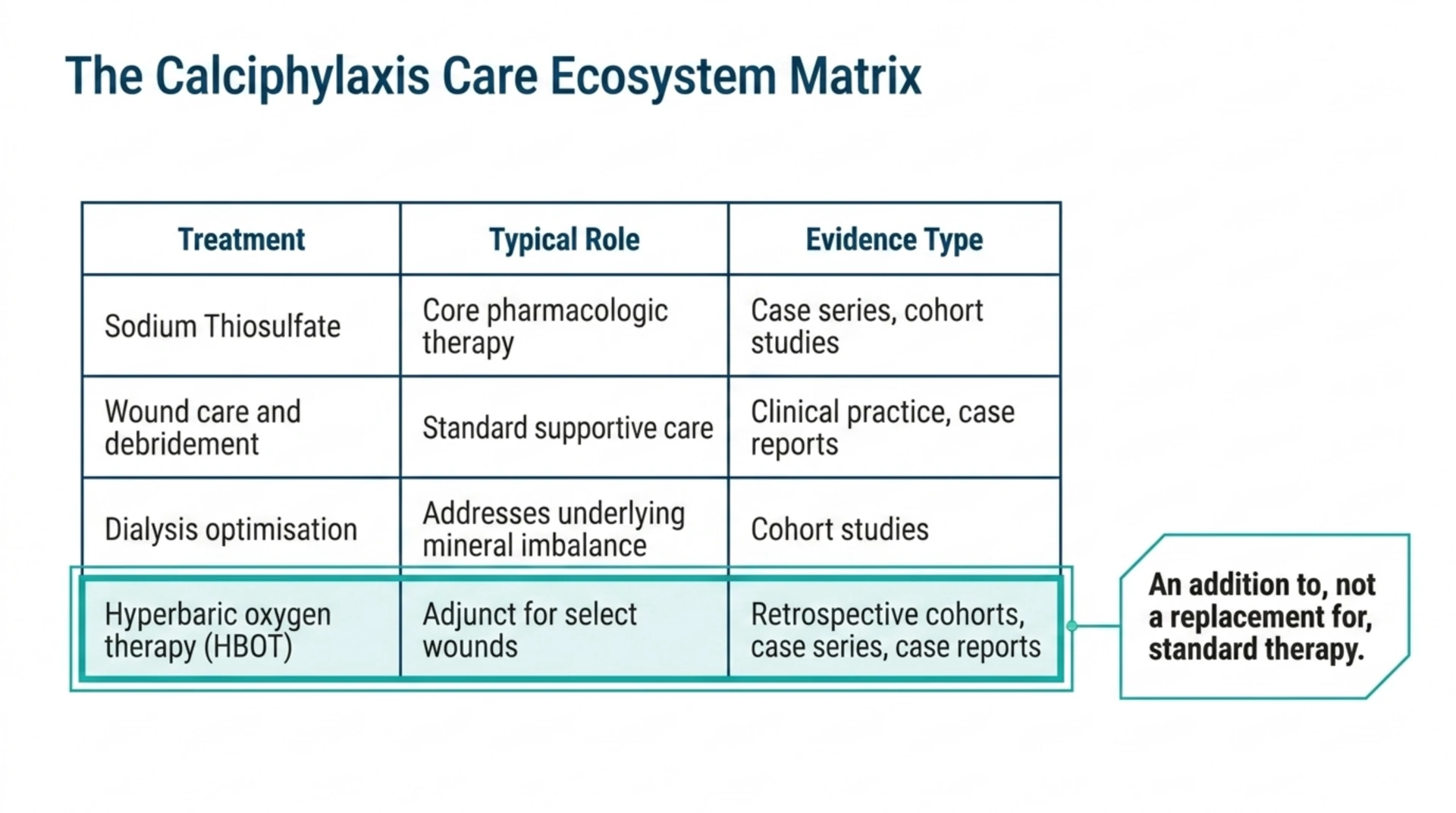
How Does HBOT Compare With Other Calciphylaxis Treatments?
Because no single trial compares every option head to head, the table below summarizes the type of evidence behind each approach as reported in the literature reviewed above, rather than ranking effectiveness.
| Treatment | Typical Role | Evidence Type |
|---|---|---|
| Sodium thiosulfate | Core pharmacologic therapy | Case series, cohort studies |
| Wound care and debridement | Standard supportive care | Clinical practice, case reports |
| Dialysis optimization | Addresses underlying mineral imbalance | Cohort studies |
| Hyperbaric oxygen therapy (HBOT) | Adjunct for select wounds | Retrospective cohorts, case series, case reports |
Across every category in the hyperbaric oxygen calciphylaxis evidence, HBOT appears as an addition to, not a replacement for, thiosulfate therapy, wound care, and dialysis management.
What Does This Mean for Patients and Clinicians?
Taken together, the studies reviewed here suggest that HBOT, when used alongside standard calciphylaxis treatment, was associated with wound healing and symptom improvement in several retrospective cohorts and case series. None of this evidence comes from a randomised controlled trial, so it cannot establish that HBOT causes better outcomes on its own, and at least two reports in the same literature describe resolution without HBOT or limited response despite it.
Patients considering HBOT coverage in Canada can find general program details at HBOT Coverage in Canada. Access to hyperbaric chambers, eligibility, and integration with a nephrology or wound care team all vary by case, which is consistent with how uneven this evidence base is.
Frequently Asked Questions
What is calciphylaxis and who gets it?
Calciphylaxis is a rare condition involving calcification of small blood vessels in the skin and fat, most often affecting people with advanced kidney disease on dialysis, though it can occur with normal kidney function.
Is hyperbaric oxygen therapy a proven treatment for calciphylaxis?
No randomised controlled trial has tested HBOT for calciphylaxis. The available evidence comes from retrospective cohorts, case series, and case reports, which can show associations but cannot prove that HBOT causes improved outcomes.
How is HBOT typically used alongside other calciphylaxis treatments?
In the studies reviewed here, HBOT was consistently used as an add-on to sodium thiosulfate, wound care, and dialysis optimization rather than as a standalone treatment.
What are the limitations of the current evidence?
Every calciphylaxis-specific HBOT study identified in the Canada Hyperbarics research library is observational, most involve fewer than 100 patients, and several lack a comparison group, which makes it difficult to isolate HBOT’s specific contribution.
Does everyone with calciphylaxis need HBOT?
No. At least one recent case report describes a patient who was ineligible for HBOT and whose calciphylaxis resolved with medical therapy and wound care alone.
Where can I read the studies behind this article?
Every study cited in this article links to both its original source on PubMed and a plain-language assessment in the Canada Hyperbarics research library, which currently covers over 14,000 peer-reviewed hyperbaric oxygen studies.
Related Reading
- Hyperbaric Oxygen for Buerger’s Disease: What Evidence Shows
- Hyperbaric Oxygen Therapy Trial Methodology: Sham Control
- Building an Academic Research Partnership for HBOT Clinics
Calciphylaxis is a serious, individualized condition, and the decision to pursue HBOT depends on eligibility, wound severity, and the rest of a patient’s treatment plan. Anyone considering it should talk to their physician about whether HBOT is appropriate for their specific situation.
This content is for informational purposes only and is not medical advice.