
TL;DR: Buerger’s disease (thromboangiitis obliterans) is a rare, tobacco-linked inflammatory blockage of small and medium blood vessels in the hands and feet. The hyperbaric oxygen therapy evidence base for this specific condition is small: a handful of retrospective audits, case series and single case reports, with no randomised controlled trials. These studies report that hyperbaric oxygen was associated with wound healing and limb preservation in some patients when added to conventional care, but the evidence is limited, dated in parts, and cannot support strong causal claims.
Buerger’s disease, also known as thromboangiitis obliterans (TAO), is a rare inflammatory disease of the small and medium arteries and veins of the hands and feet that is strongly linked to tobacco and cannabis use. It causes progressive blood vessel blockages, pain at rest, and non-healing ulcers that can lead to amputation if blood flow is not restored. Because standard treatment options for advanced disease are limited, some clinicians have investigated hyperbaric oxygen therapy for Buerger’s disease (thromboangiitis obliterans) as an adjunct to conventional care. This article reviews what the available published evidence actually shows, and where it falls short.
What Is Buerger’s Disease (Thromboangiitis Obliterans)?
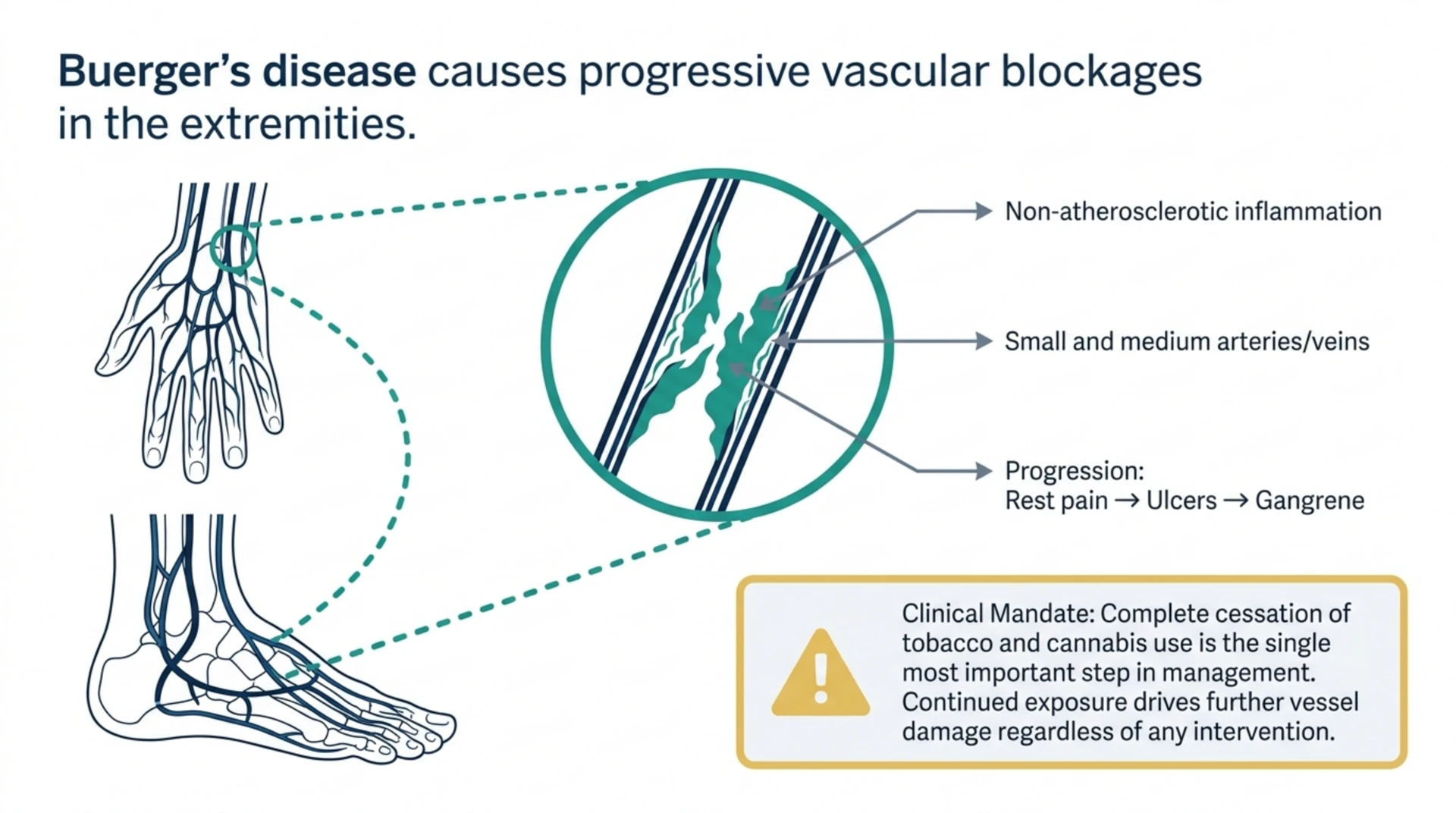
Buerger’s disease is a non-atherosclerotic inflammatory condition of the small and medium blood vessels, most often affecting the hands and feet of younger smokers. Inflammation and clotting narrow and eventually block affected vessels, reducing blood flow to the extremities.
Early symptoms include pain, numbness, and colour changes in the fingers or toes, often worsened by cold. As the disease progresses, patients can develop rest pain, ulcers, and gangrene. Stopping all tobacco and cannabis use is the single most important step in managing the disease, since continued exposure drives further vessel damage regardless of any other treatment used.
A closely related presentation, cannabis arteritis, describes arterial disease resembling Buerger’s disease in people who use cannabis, sometimes without a smoking history. A 2005 case report (PubMed | Our Assessment) described a 38-year-old man with long-standing cannabis use who developed this arterial condition, illustrating how clinically similar presentations can arise outside classic tobacco-driven Buerger’s disease.
Hyperbaric Oxygen Therapy for Buerger’s Disease (Thromboangiitis Obliterans): What the Evidence Shows
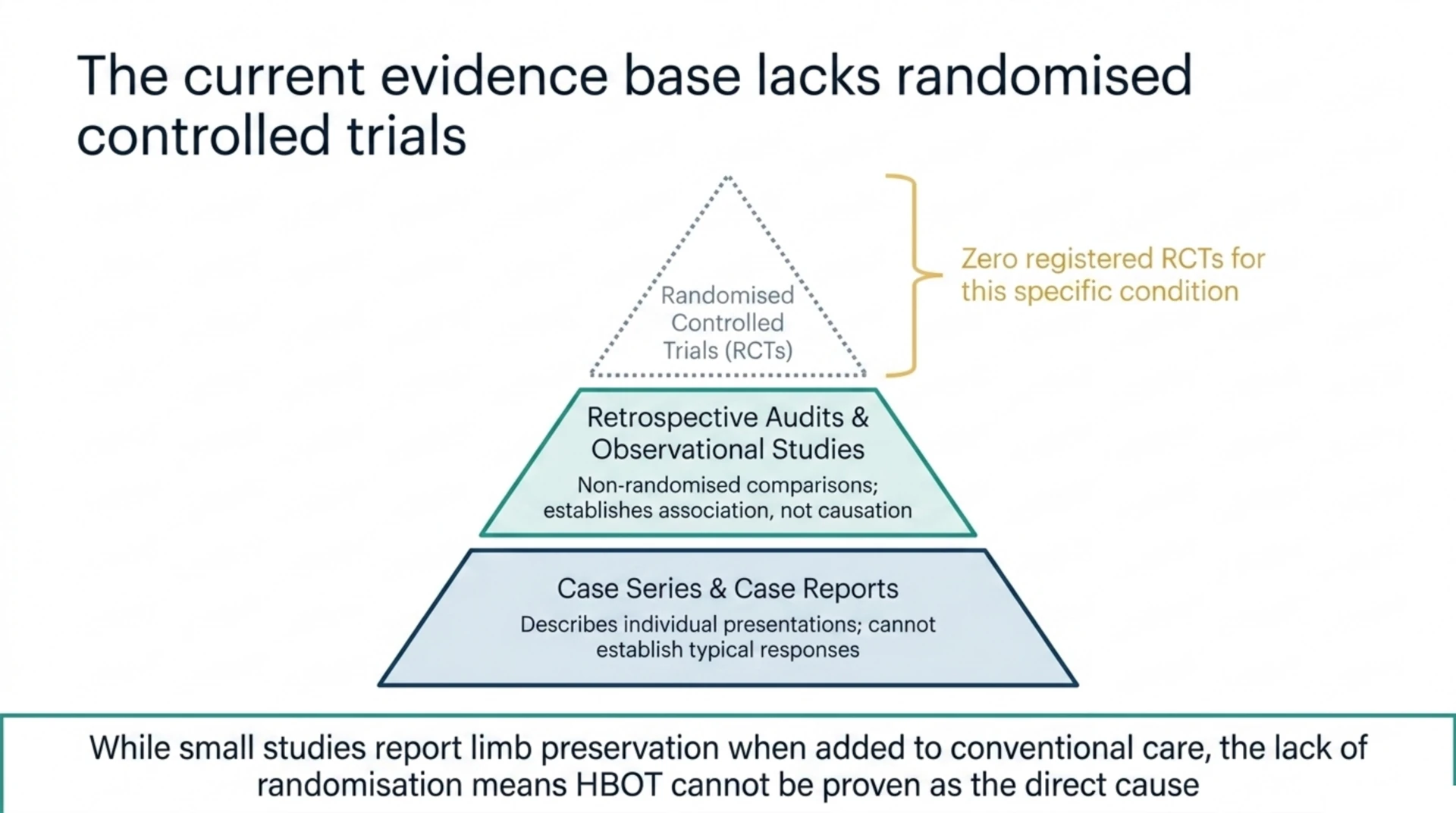
The published evidence on hyperbaric oxygen therapy for thromboangiitis obliterans is small and consists mainly of retrospective audits, small case series, and individual case reports, rather than randomised controlled trials. That distinction matters: without randomisation, these studies can show an association between hyperbaric oxygen use and an outcome, but they cannot prove that hyperbaric oxygen caused the outcome.
Retrospective Audit Evidence
A 2018 retrospective clinical audit (PubMed | Our Assessment) compared 47 patients with thromboangiitis obliterans who received hyperbaric oxygen alongside conventional care with 50 patients who received conventional care alone. Because the design was retrospective and non-randomised, any differences in outcome between the two groups can only be described as associations between hyperbaric oxygen use and the results observed, not proof that hyperbaric oxygen was responsible for them.
A related 2016 study looking specifically at Fontaine Stage IV disease, the most severe stage involving tissue loss (PubMed | Our Assessment), examined the addition of hyperbaric oxygen to standard treatment in 36 patients with ischaemic ulcerated wounds. This study focused on patients with existing tissue damage, where the clinical question is whether adjunctive oxygen therapy supports wound healing alongside standard wound care.
Case Series and Case Report Evidence
A 2007 study (PubMed | Our Assessment) investigated combining autologous bone marrow-derived cell transplantation with hyperbaric oxygen therapy in 7 patients with ischaemic limbs due to peripheral arterial disease, including thromboangiitis obliterans. With only 7 patients and two therapies delivered together, this study cannot isolate the specific contribution of hyperbaric oxygen from that of the cell transplantation.
A 1993 case report (PubMed | Our Assessment) described a single 35-year-old man with Buerger’s disease and non-healing toe ulcers who did not respond to hyperbaric oxygen or several other therapies (topical care, nifedipine, pentoxifylline, intravenous antibiotics, whirlpool); he continued smoking, became septic, and required amputation of a toe and, later, his leg below the knee. Single case reports like this one are useful for describing how a condition can present and how one patient responded to treatment, but they cannot establish how typical that response would be in other patients.
Related Ischaemic Limb Evidence
A 1988 study (PubMed | Our Assessment) applied repeated hyperbaric oxygenation together with sympathetic block, warfarin, and insulin-bath oxygen bubbling to patients with intractable toe and finger trauma from diabetes mellitus and peripheral ischaemic disease. This study did not focus specifically on thromboangiitis obliterans, and it combined several therapies at once, so it offers only indirect, general context on hyperbaric oxygen use in ischaemic extremity disease rather than direct evidence for Buerger’s disease itself.
How Might Hyperbaric Oxygen Support Tissue in Critical Limb Ischemia?
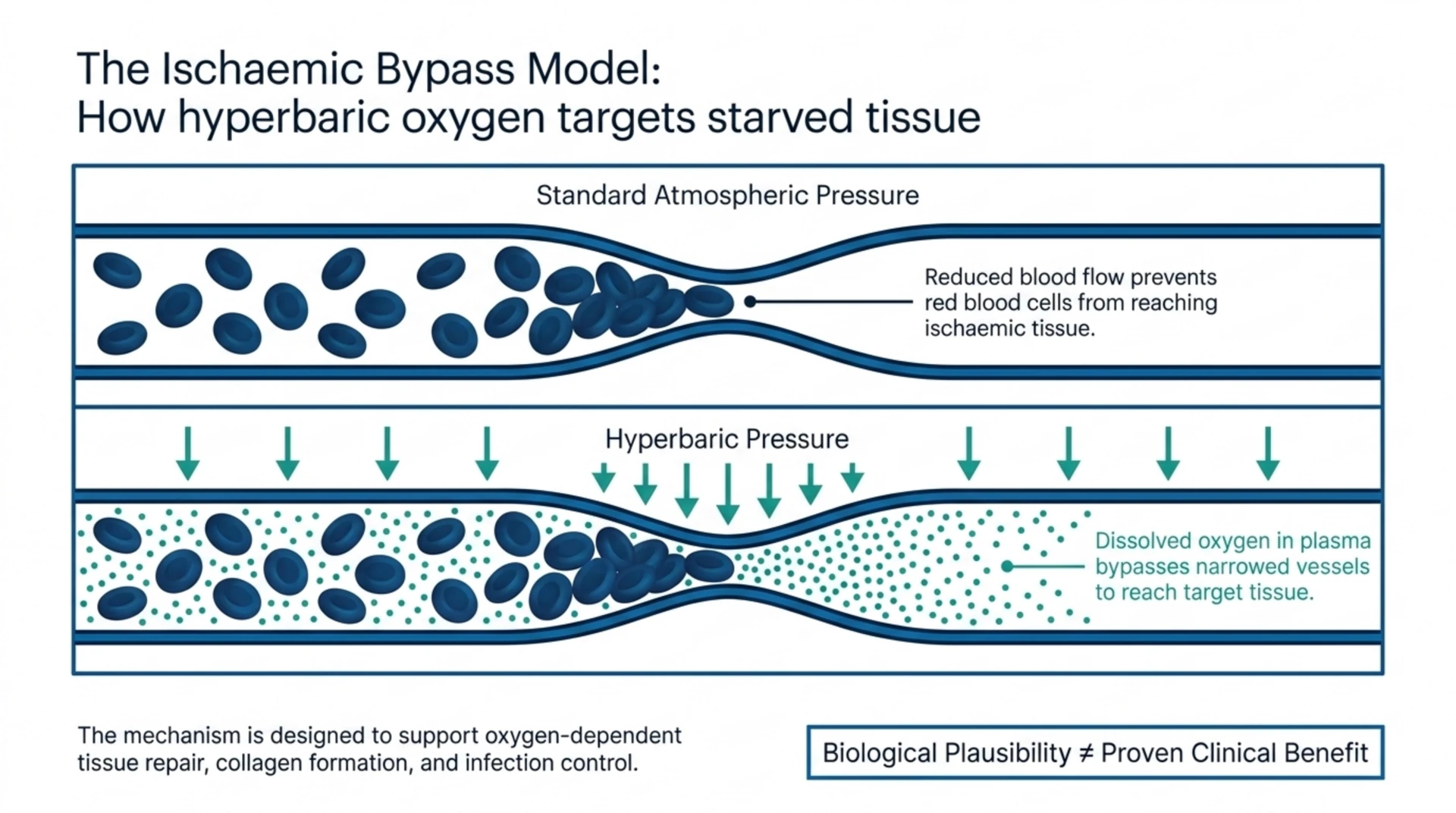
The proposed rationale for hyperbaric oxygen in severe limb ischaemia is straightforward: breathing oxygen at increased atmospheric pressure raises the amount of oxygen dissolved in blood plasma, which can reach tissue even when blood flow through narrowed or blocked vessels is reduced. In wound care generally, this mechanism is thought to support the oxygen-dependent processes involved in tissue repair, such as collagen formation and infection control.
This mechanism is biologically plausible, but plausibility is not the same as proven clinical benefit for thromboangiitis obliterans specifically. The studies above describe outcomes in small, mostly non-randomised groups of patients with advanced disease, so they support cautious interest rather than firm clinical conclusions.
How Do These Studies Compare?
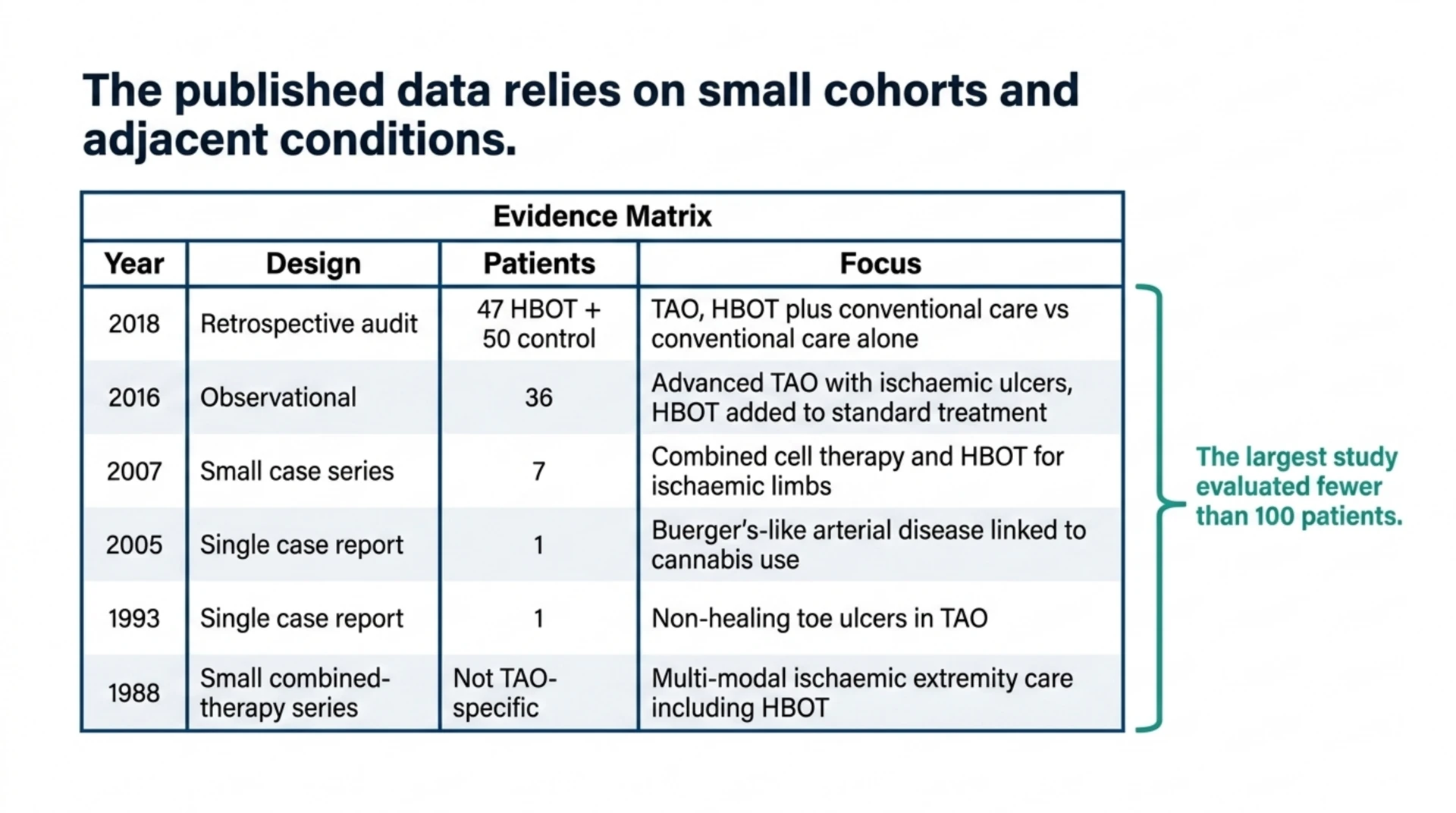
| Study | Year | Design | Patients | Focus |
|---|---|---|---|---|
| Retrospective clinical audit | 2018 | Retrospective, non-randomised comparison | 47 HBOT + 50 control | TAO, HBOT plus conventional care vs conventional care alone |
| Fontaine Stage IV TAO study | 2016 | Observational | 36 | Advanced TAO with ischaemic ulcers, HBOT added to standard treatment |
| Bone marrow transplant + HBOT | 2007 | Small case series | 7 | Combined cell therapy and HBOT for ischaemic limbs |
| Case of Buerger’s disease | 1993 | Single case report | 1 | Non-healing toe ulcers in TAO |
| Cannabis arteritis | 2005 | Single case report | 1 | Buerger’s-like arterial disease linked to cannabis use |
| Diabetic and ischaemic toe/finger trauma | 1988 | Small combined-therapy series | Not TAO-specific | Multi-modal ischaemic extremity care including HBOT |
What Are the Limitations of This Evidence?
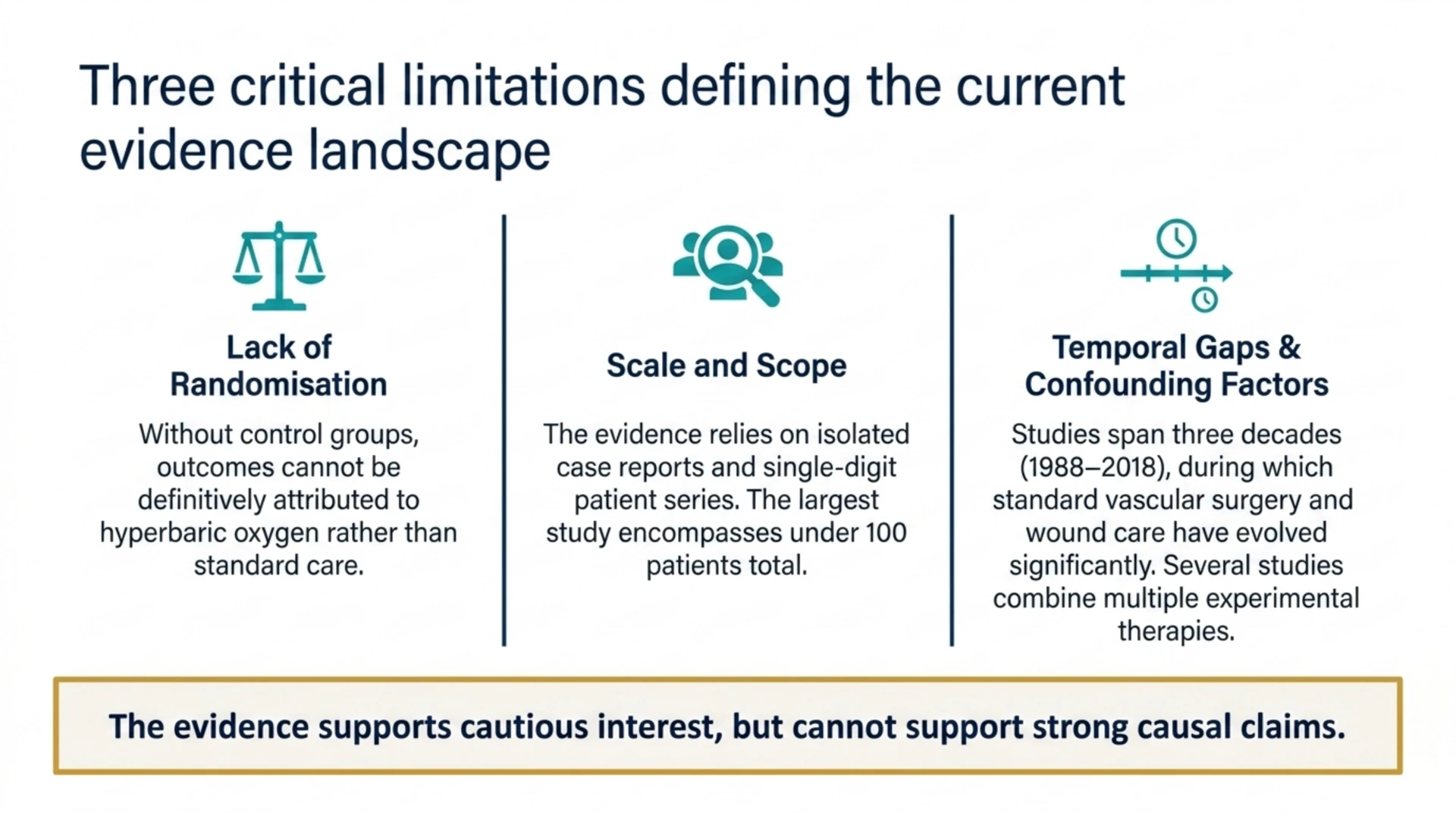
Several limitations should shape how this evidence is read. None of the available studies is a randomised controlled trial, so none can establish that hyperbaric oxygen therapy directly causes improved healing or limb salvage in Buerger’s disease. The largest study involved fewer than 100 patients in total, and several studies involved single-digit patient counts or a single case.
The studies also span three decades, from 1988 to 2018, during which wound care, vascular surgery, and smoking-cessation support have all changed considerably. Two of the six studies, the cannabis arteritis report and the diabetic and ischaemic toe trauma study, are not direct evidence for classic thromboangiitis obliterans, but rather closely related or adjacent presentations that provide indirect context. In Canada, hyperbaric oxygen therapy for Buerger’s disease is not a Health Canada-approved indication; readers can review approved and studied uses on our HBOT coverage in Canada page.
Frequently Asked Questions
Is hyperbaric oxygen therapy an approved treatment for Buerger’s disease in Canada?
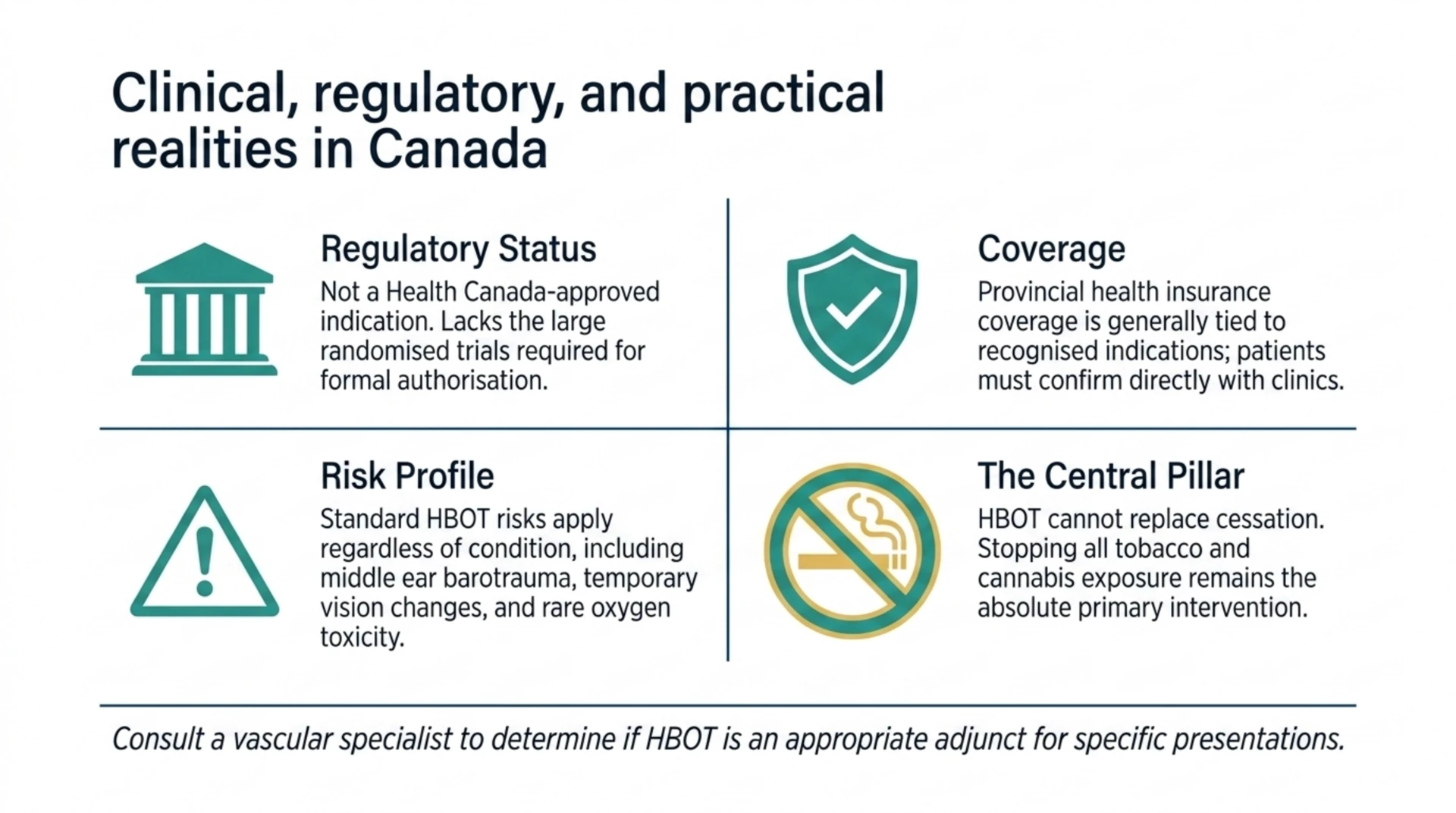
No. Hyperbaric oxygen therapy is not a Health Canada-approved indication for Buerger’s disease or thromboangiitis obliterans. The published evidence consists of retrospective and case-based studies, not the large randomised trials typically required for formal approval.
What is the difference between Buerger’s disease and cannabis arteritis?
Buerger’s disease classically develops in tobacco users, while cannabis arteritis describes a clinically similar pattern of small and medium vessel disease reported in people who use cannabis. The 2005 case report in our pool describes one such patient, and researchers have noted the clinical resemblance between the two conditions.
How many hyperbaric oxygen sessions were used in these studies?
The available summaries do not provide consistent, detailed session counts across studies, and protocols varied by study and by disease severity. Anyone considering hyperbaric oxygen therapy should discuss a specific protocol with a treating physician rather than relying on figures from any single study.
Can hyperbaric oxygen therapy replace smoking cessation in Buerger’s disease?
No. Complete cessation of tobacco and cannabis use is considered the central pillar of managing Buerger’s disease. None of the studies reviewed here suggest that hyperbaric oxygen can substitute for stopping the exposure that drives the disease.
Is hyperbaric oxygen therapy covered by provincial health insurance for Buerger’s disease?
Coverage varies by province and is generally tied to Health Canada-recognised indications, which do not currently include Buerger’s disease. Patients should confirm current coverage details directly with their provincial health plan or treating clinic.
What are the risks of hyperbaric oxygen therapy for someone with Buerger’s disease?
Hyperbaric oxygen therapy carries general risks such as middle ear barotrauma, temporary vision changes, and rare oxygen toxicity effects, which apply regardless of the underlying condition being treated. A physician can assess whether these risks are reasonable given an individual patient’s vascular and overall health status.
Are there ongoing clinical trials studying hyperbaric oxygen for Buerger’s disease?
The studies reviewed here do not include any registered randomised controlled trials for this specific condition. Patients interested in current research opportunities should ask their vascular specialist or academic medical centre about active trial recruitment.
Related Reading
- Hyperbaric Oxygen Therapy Trial Methodology: Sham Control
- Hyperbaric Oxygen Dose, Pressure and Protocol Optimization
- HBOT for Complex Regional Pain Syndrome: The Evidence Gap
Our library currently holds more than 14,000 peer-reviewed studies on hyperbaric oxygen therapy across many conditions, and we continue to review new publications on thromboangiitis obliterans as they appear. If you or someone you know is living with Buerger’s disease, the most useful next step is to talk with your physician or vascular specialist about whether hyperbaric oxygen therapy could be appropriate alongside standard care in your specific situation.
This content is for informational purposes only and is not medical advice.