
TL;DR: Malignant otitis externa is a severe, bone-invading ear infection that can progress to skull base osteomyelitis in older adults with diabetes or weakened immune systems. The evidence for hyperbaric oxygen therapy (HBOT) as an add-on treatment comes entirely from retrospective case series and systematic reviews, not randomised trials, but this body of observational research consistently reports improved outcomes when HBOT is added to antibiotics and surgical debridement in difficult, slow-resolving cases.
Hyperbaric oxygen for malignant otitis externa and skull base osteomyelitis is one of the older, more established niche indications in hyperbaric medicine, with case reports stretching back more than four decades. Malignant otitis externa (MOE), sometimes called necrotizing otitis externa, begins as a common ear canal infection but can erode through cartilage and bone to reach the skull base, threatening cranial nerves and, in severe cases, life. Because the condition is rare, researchers have never been able to run a large randomised trial. What exists instead is a long, fairly consistent record of case series and reviews, which this article works through directly.
What Is Malignant Otitis Externa and How Does It Reach the Skull Base?
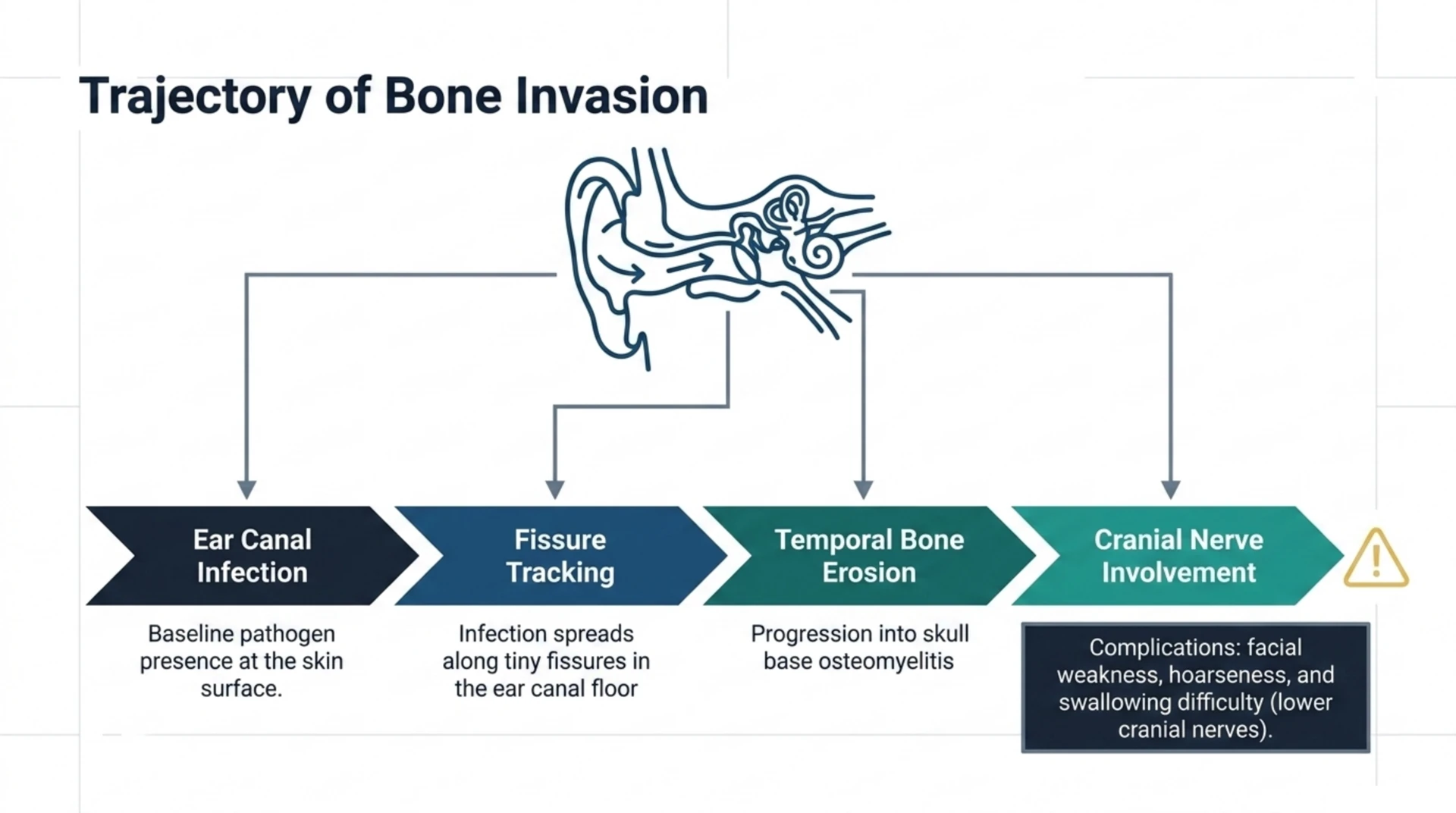
Malignant otitis externa is an aggressive infection of the outer ear canal that spreads into the surrounding bone, most often caused by Pseudomonas aeruginosa and, less commonly, fungal organisms such as Aspergillus. It almost always occurs in people with diabetes or another cause of immune compromise, which impairs the body’s ability to contain the infection at the skin surface.
Left untreated, the infection tracks along tiny fissures in the ear canal floor into the temporal bone, producing skull base osteomyelitis. From there it can involve the facial nerve and lower cranial nerves, causing facial weakness, hoarseness, or swallowing difficulty. A 2011 case report of bilateral disease (PubMed | Our Assessment) illustrates just how far the disease can advance, describing an elderly man with recurrent infection on both sides and lower cranial nerve involvement. A 2005 case series (PubMed | Our Assessment) similarly described elderly diabetic patients whose inadequately treated MOE recurred as atypical skull base osteomyelitis, underscoring how easily this diagnosis can be missed or under-treated at first presentation.
Standard treatment centres on prolonged intravenous or oral antibiotics, control of blood glucose, and surgical debridement when there is dead bone. HBOT has been used for decades as an adjunct in cases that respond slowly or involve extensive bone disease.

What Does the Evidence Say About Hyperbaric Oxygen for Malignant Otitis Externa?
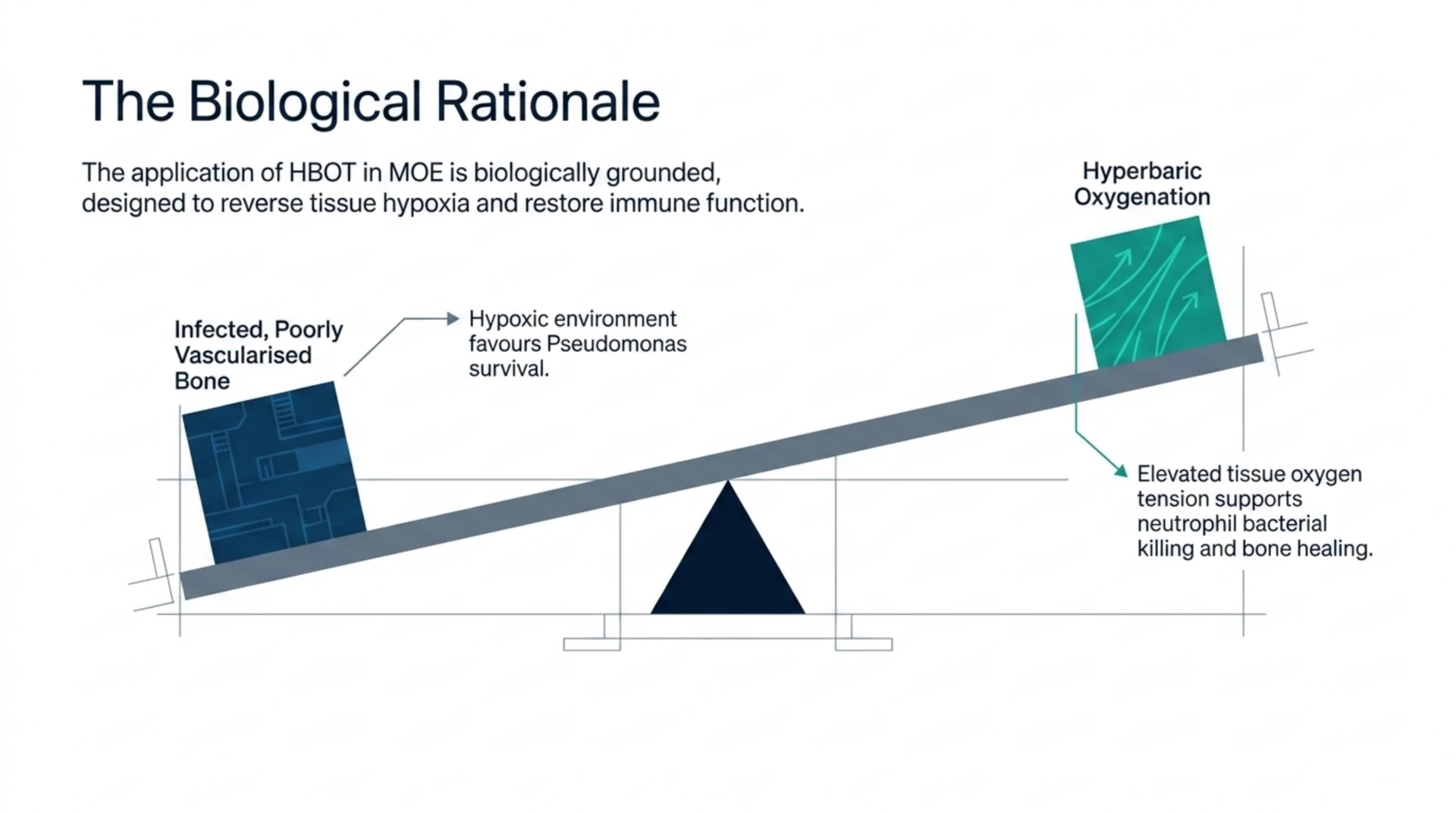
The rationale for HBOT in this setting is biological rather than purely empirical: infected, poorly vascularized bone is hypoxic, and Pseudomonas thrives in low-oxygen tissue while neutrophil bacterial killing depends on oxygen tension. Raising tissue oxygen levels is thought to improve the immune system’s ability to clear infection and support bone healing alongside antibiotics. Whether that mechanism translates into a measurable clinical benefit is the question the case literature has tried to answer.
Case Series and Retrospective Cohorts
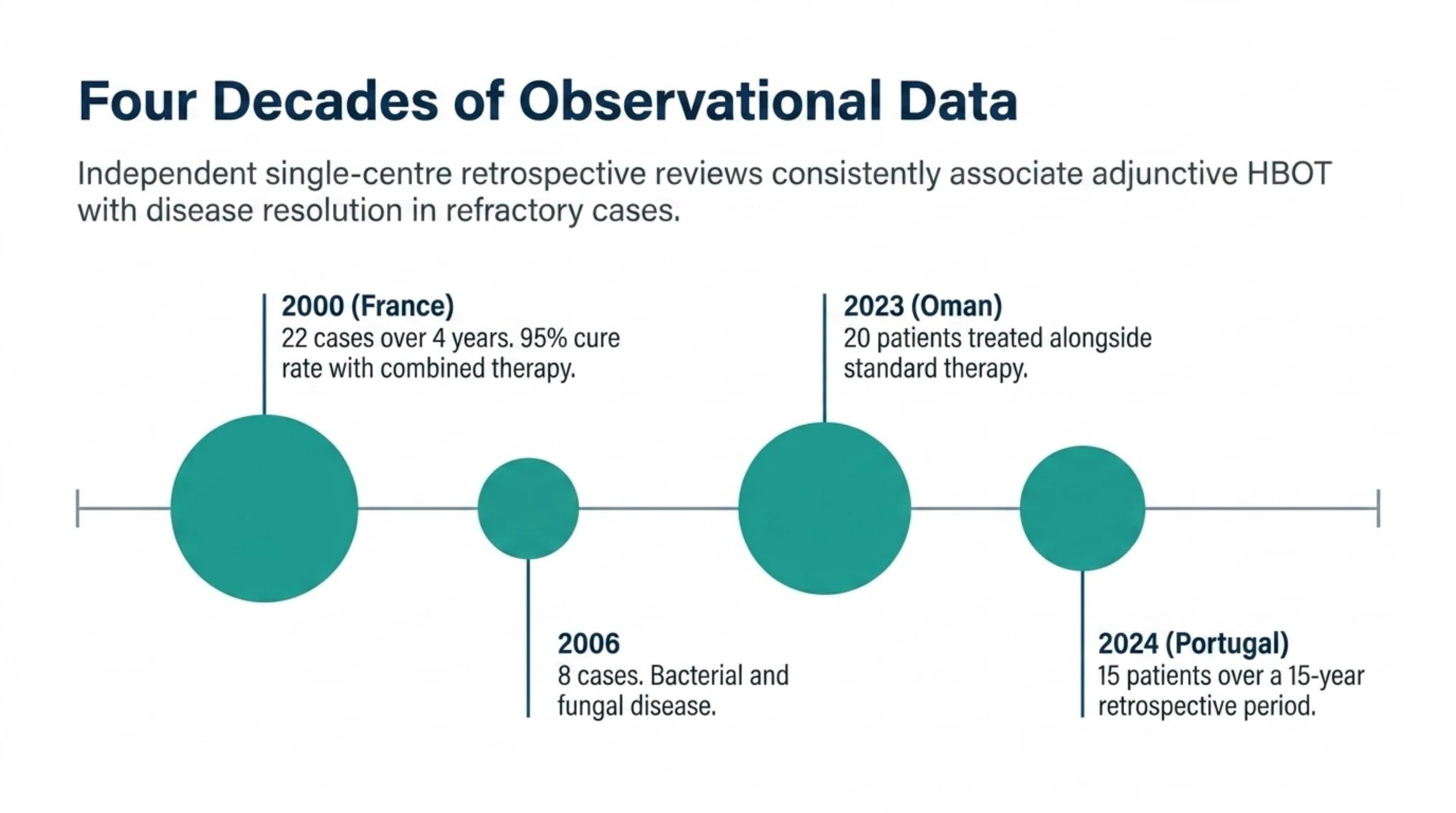
Most of the direct evidence comes from single-centre retrospective reviews. A 2024 retrospective analysis published in the European Archives of Otorhinolaryngology (PubMed | Our Assessment) tracked 15 patients treated with adjunctive HBOT over 15 years at a single Portuguese hospital, adding to a long line of similar cohorts. A 2023 case series from Oman (PubMed | Our Assessment) followed 20 patients treated with HBOT alongside standard therapy, and a 2019 report from a single hyperbaric centre (PubMed | Our Assessment) reviewed that centre’s cumulative experience treating the condition.
An earlier French series reviewing 22 cases of malignant or necrotizing otitis externa (PubMed | Our Assessment) reported a 95 percent overall cure rate in a cohort predominantly managed with antibiotics, with hyperbaric oxygen added where not contraindicated, over a four-year period, one of the more favourable figures in this literature. A smaller 2006 series of eight patients treated with adjunctive HBOT for bacterial and fungal disease (PubMed | Our Assessment) reported similarly encouraging results in a small, harder-to-treat group.
Taken together, these case series consistently associate adjunctive HBOT with disease resolution in patients who had not fully responded to antibiotics and debridement alone. Because none of them included an untreated comparison group, they can describe outcomes but cannot prove HBOT caused them.
Systematic Reviews and the Cochrane Assessment
The strongest, most cited attempt to formally weigh this evidence is a Cochrane systematic review (PubMed | Our Assessment), which set out to evaluate adjunctive HBOT for MOE against the highest evidentiary bar Cochrane applies. Consistent with the state of the field, the reviewers were limited to observational and case-series data, since no randomised controlled trial of HBOT for this condition has ever been conducted or registered.
A more recent systematic review (PubMed | Our Assessment) pooled 16 studies covering 58 patients specifically to evaluate the role of adjuvant HBOT in MOE, giving researchers the closest thing available to a summary estimate across the published case literature. A 2018 comprehensive review of skull base osteomyelitis presentations more broadly (PubMed | Our Assessment) situates HBOT within the wider management picture for this diagnosis, alongside antibiotics, glycemic control, and surgical debridement.
How Does Fungal Malignant Otitis Externa Change the Picture?
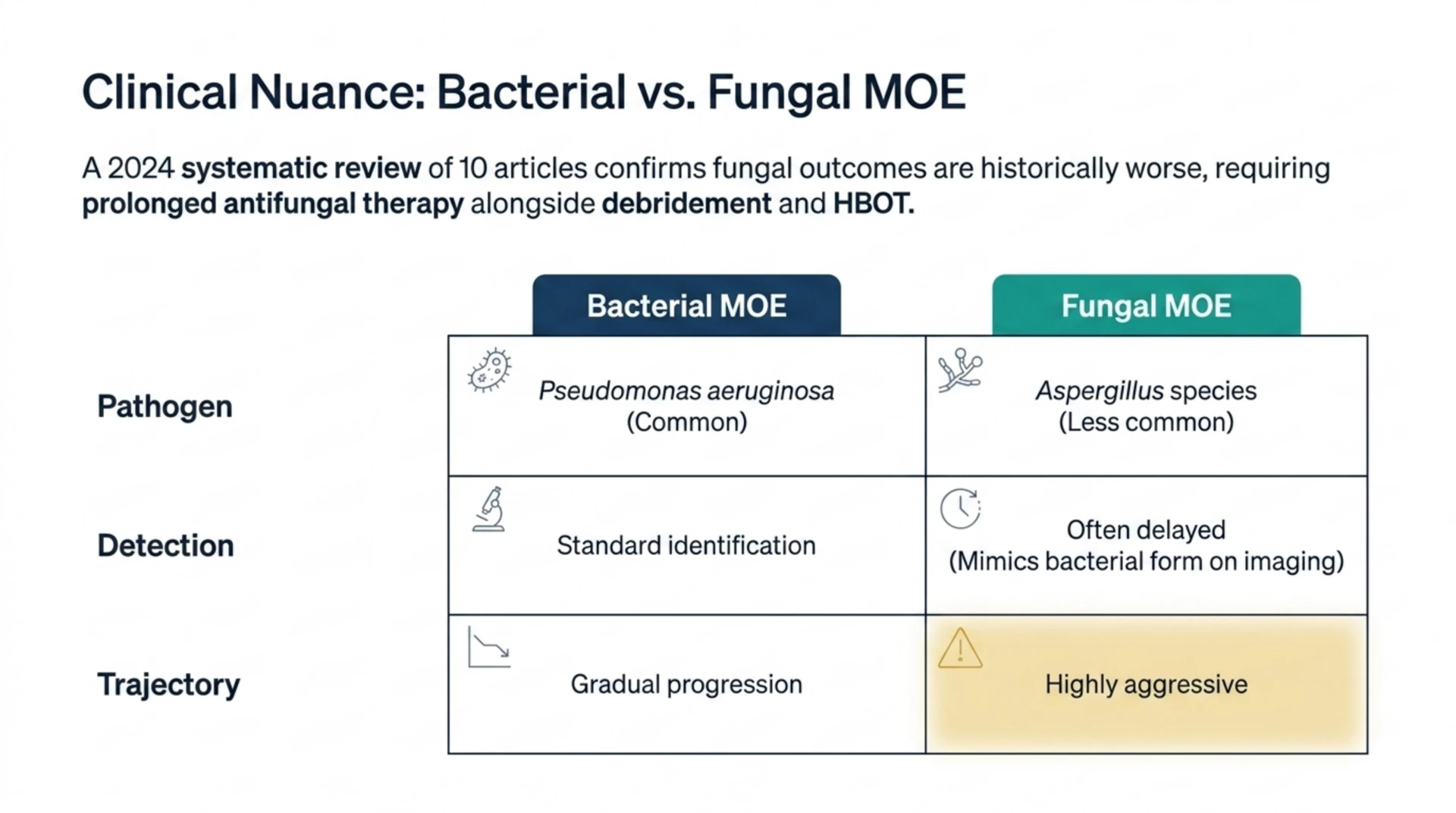
Fungal MOE, caused mainly by Aspergillus species, is less common than bacterial disease but tends to be more aggressive and harder to diagnose, since it can mimic the bacterial form on imaging. A 2024 systematic review of fungal MOE (PubMed | Our Assessment) pooled 10 articles to characterize the causes, patient profile, and treatment approaches for this variant, including the role of antifungal therapy and adjunctive measures.
The general pattern across the fungal literature is that outcomes have historically been worse than for bacterial MOE, with delayed diagnosis a recurring theme. Where HBOT is used, it is layered onto prolonged antifungal therapy and debridement rather than substituting for either.
Where Does HBOT for Skull Base Infection Fit in the Broader Wound-Healing Literature?
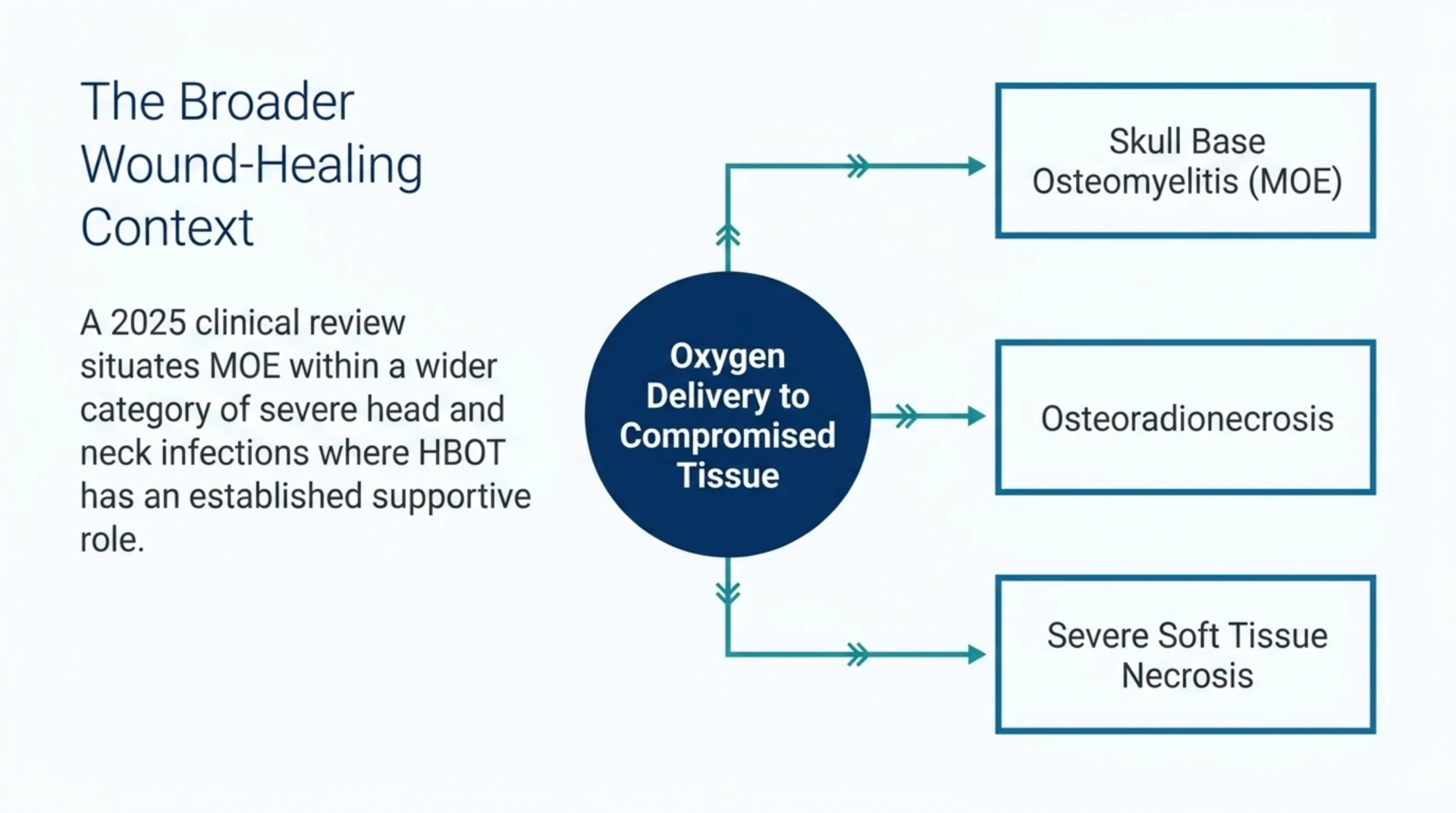
MOE and its skull base complications sit within a wider category of severe head and neck infections and wounds where HBOT has an established supportive role. A 2025 clinical review of HBOT for wounds of the face, head, and neck (PubMed | Our Assessment) situates MOE alongside osteoradionecrosis, soft tissue necrosis, and other severe infections as indications where oxygen delivery to compromised tissue is the shared mechanism of benefit.
| Study | Year | Design | Scope |
|---|---|---|---|
| Portuguese single-centre review | 2024 | Retrospective cohort | 15 patients, 15-year period |
| Omani case series | 2023 | Case series | 20 patients |
| Single hyperbaric centre experience | 2019 | Retrospective review | Single-centre HBOT cases |
| Systematic review of the literature | 2021 | Systematic review | 16 studies, 58 patients |
| Cochrane review | 2013 | Systematic review | No RCTs identified |
| French case series | 2000 | Case series | 22 cases, 4-year period |
What Are the Limits of the Current Evidence?
Researchers evaluating this literature should weigh several consistent limitations. Every study identified in this pool is observational, either a retrospective cohort, case series, or case report, and no randomised controlled trial of HBOT for MOE has been published. That means the reported associations between HBOT and resolution cannot rule out that patients who received hyperbaric referral also received more aggressive antibiotic courses or closer follow-up, which could independently explain better outcomes.
Sample sizes are small throughout, typically in the range of a handful to twenty patients per centre, and outcome definitions vary between studies. Publication bias is also a realistic concern in a field built largely on case reports, since centres are more likely to publish favourable outcomes than treatment failures.
Because of these limits, associational language is appropriate when summarizing this literature: adjunctive HBOT has been associated with disease resolution in refractory MOE cases across multiple independent case series, rather than shown to reduce or cure the disease in a controlled comparison. Canada Hyperbarics presents this research to help clinicians and researchers understand exactly where the evidence stands, not to overstate it.
Frequently Asked Questions
What is malignant otitis externa?
Malignant otitis externa is a severe bacterial or fungal infection of the ear canal that spreads into the surrounding skull base bone, occurring almost exclusively in people with diabetes or compromised immunity.
Is hyperbaric oxygen a first-line treatment for malignant otitis externa?
No. Standard first-line treatment is prolonged antibiotics, glycemic control, and surgical debridement when needed. HBOT has been studied as an adjunctive therapy, added when the disease is extensive or slow to respond.
Has hyperbaric oxygen been tested in a randomised trial for this condition?
No randomised controlled trial for HBOT in malignant otitis externa has been published or identified by systematic reviewers, including the Cochrane review in this pool. The evidence base consists of retrospective case series and case reports.
Does fungal malignant otitis externa respond the same way as bacterial disease?
Fungal MOE tends to be diagnosed later and has historically shown worse outcomes than bacterial disease, based on the case literature and systematic reviews summarized above. Treatment still combines prolonged antifungal therapy with debridement, with HBOT used adjunctively in some reported cases.
What happens if malignant otitis externa is left untreated?
Untreated infection can progress to skull base osteomyelitis, threaten the facial and lower cranial nerves, and become life-threatening, as illustrated in case reports of advanced and bilateral disease within this evidence pool.
Who is most at risk for malignant otitis externa?
The condition occurs almost exclusively in older adults with diabetes or another cause of immune compromise, based on the patient populations described consistently across the case series reviewed here.
Related Reading
- Hyperbaric Oxygen Therapy for ALS: The Evidence
- Hyperbaric Chamber Sterilization & Infection Control
- Medical Oxygen Supply Chain in Hyperbaric Clinics
Canada Hyperbarics maintains a library of over 14,000 peer-reviewed studies to help researchers and clinicians assess evidence like this on its actual terms, strengths and limits included. For patients and referring physicians researching where hyperbaric oxygen therapy is delivered safely in Canada, Canada Hyperbarics maintains a directory of hospitals and regulated facilities offering supervised treatment.
This content is for informational purposes only and is not medical advice.