
TL;DR: PIPEDA compliance for a hyperbaric clinic means having clear consent, limited collection, secure storage, and a breach response plan for every piece of patient data the clinic touches, from intake forms to chamber session logs. This post walks clinic owner-operators through what PIPEDA requires, how it overlaps with provincial health privacy rules, and practical steps to build a compliant intake and records process.
PIPEDA compliance for a hyperbaric clinic means meeting the federal Personal Information Protection and Electronic Documents Act’s requirements for how private-sector organizations collect, use, and disclose patient data. For a Canadian hyperbaric oxygen therapy (HBOT) facility, this covers everything from the intake questionnaire a new patient fills out to the appointment records a front-desk system stores between visits. Getting PIPEDA compliance for hyperbaric clinic patient data right is a business fundamental, not an optional extra, and it shapes how a clinic designs its booking system, its consent forms, and its staff training from day one.
This is a process and logistics guide for clinic owner-operators, not a clinical or evidence review. Canada Hyperbarics publishes this kind of operational content alongside our broader educational resources so that facility staff and administrators have a plain-language reference for the privacy side of running a hyperbaric practice.
What Is PIPEDA and Why Does It Apply to Hyperbaric Clinics?
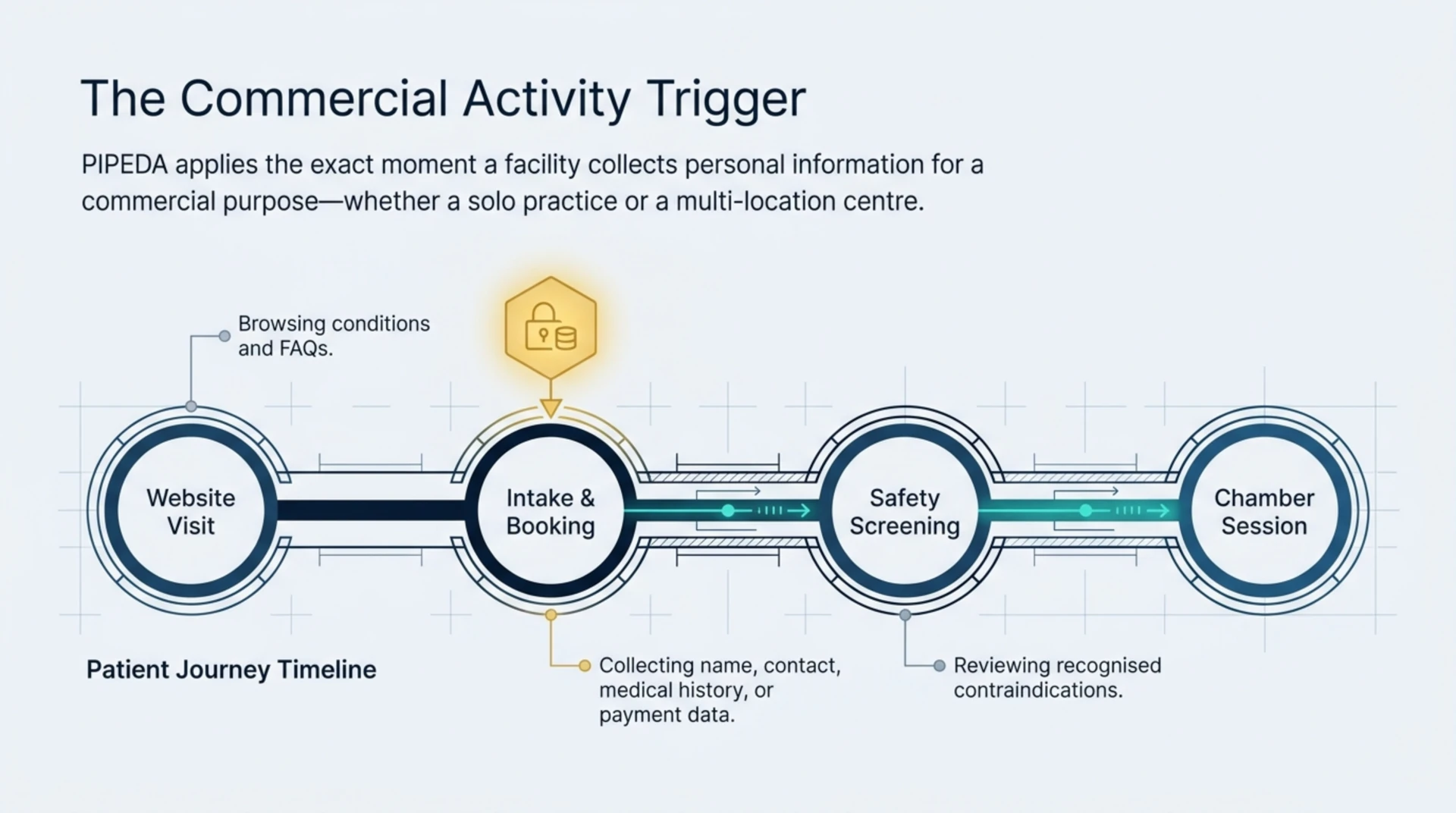
PIPEDA is Canada’s federal private-sector privacy law. It applies to any organization that collects, uses, or discloses personal information in the course of commercial activity, and a hyperbaric clinic that charges for sessions, bills insurers, or takes payment for wellness services fits squarely within that definition.
A hyperbaric clinic is subject to PIPEDA the moment it starts collecting a patient’s name, contact details, medical history, or payment information for a commercial purpose. That includes solo practices, multi-location chains, and wellness-focused chambers that operate outside a hospital setting. Some provinces (Alberta, British Columbia, and Quebec among them) have their own substantially similar private-sector privacy legislation that applies instead of PIPEDA within that province, so a clinic’s obligations can shift depending on where it operates. Checking which regime applies is a first step, not a formality.
What Patient Data Do Hyperbaric Clinics Collect?
Before building a compliance process, it helps to map exactly what personal information moves through a typical clinic. A short-format audit usually turns up more data points than owners expect.
Intake and Registration Data
Name, date of birth, address, phone number, email, emergency contact, and government health card number where applicable.
Health History Data
Referring physician details, relevant medical history, medications, and any conditions a clinician may consider hyperbaric oxygen therapy for. This category is sensitive and deserves the strictest handling; for background on which conditions are studied in relation to HBOT, our conditions overview is the right resource for patients and referring clinicians, not the clinic’s internal file.
Operational and Payment Data
Session scheduling records, attendance logs, insurance claim numbers, and billing or payment card information.
Facility and Safety Data
Pre-session screening checklists, incident reports, and any chamber-specific safety documentation tied to an individual patient.
Each category above carries different sensitivity and retention needs, and a clinic’s privacy policy should say so explicitly rather than treating all patient data as one undifferentiated file.
How Should a Clinic Build a PIPEDA-Compliant Intake Process?
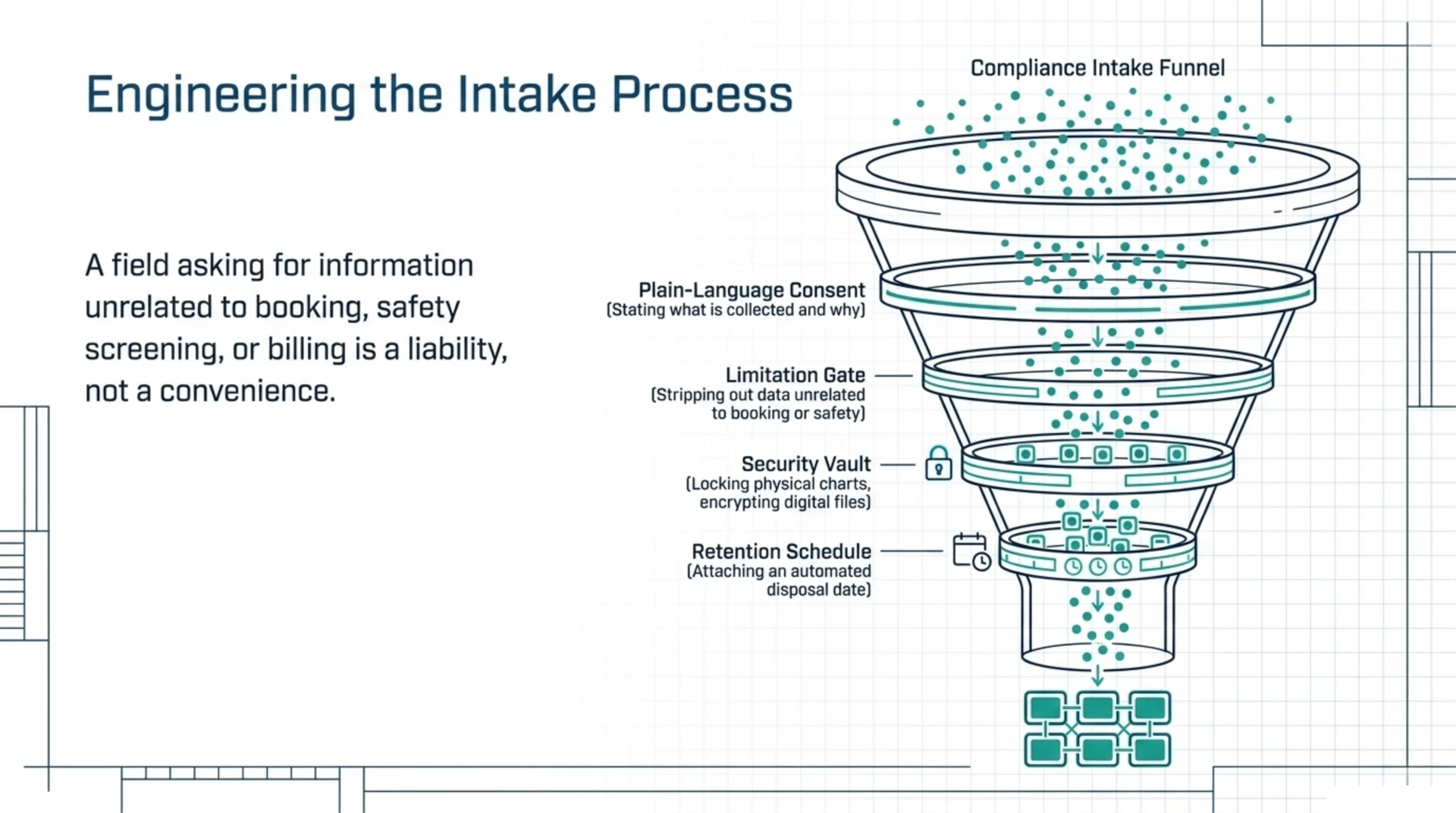
A compliant intake process is built around four practical habits, each tied to a PIPEDA principle.
- Ask for consent in plain language. The intake form should state what information is being collected, why, and who it may be shared with (a referring physician, an insurer, a billing processor) before the patient signs.
- Collect only what the clinic needs. A field asking for information unrelated to booking, safety screening, or billing is a liability, not a convenience.
- Store records securely. Paper charts belong in locked cabinets; digital records belong behind access controls and, ideally, encryption at rest and in transit.
- Set a retention and disposal schedule. Data kept indefinitely is data that can be breached indefinitely. A written retention schedule, reviewed annually, closes that gap.
Front-desk staff are usually the first point of contact for this process, so training them on what they can and cannot say about a patient’s file, even informally, is worth building into onboarding rather than leaving to instinct.
What Are the Ten PIPEDA Fair Information Principles, Applied to a Hyperbaric Clinic?
PIPEDA is built around the ten fair information principles set out in Schedule 1 of the Act, as summarized by the Office of the Privacy Commissioner of Canada. The table below maps each one to a concrete action a hyperbaric clinic can take.
| PIPEDA Principle | What It Means for a Hyperbaric Clinic |
|---|---|
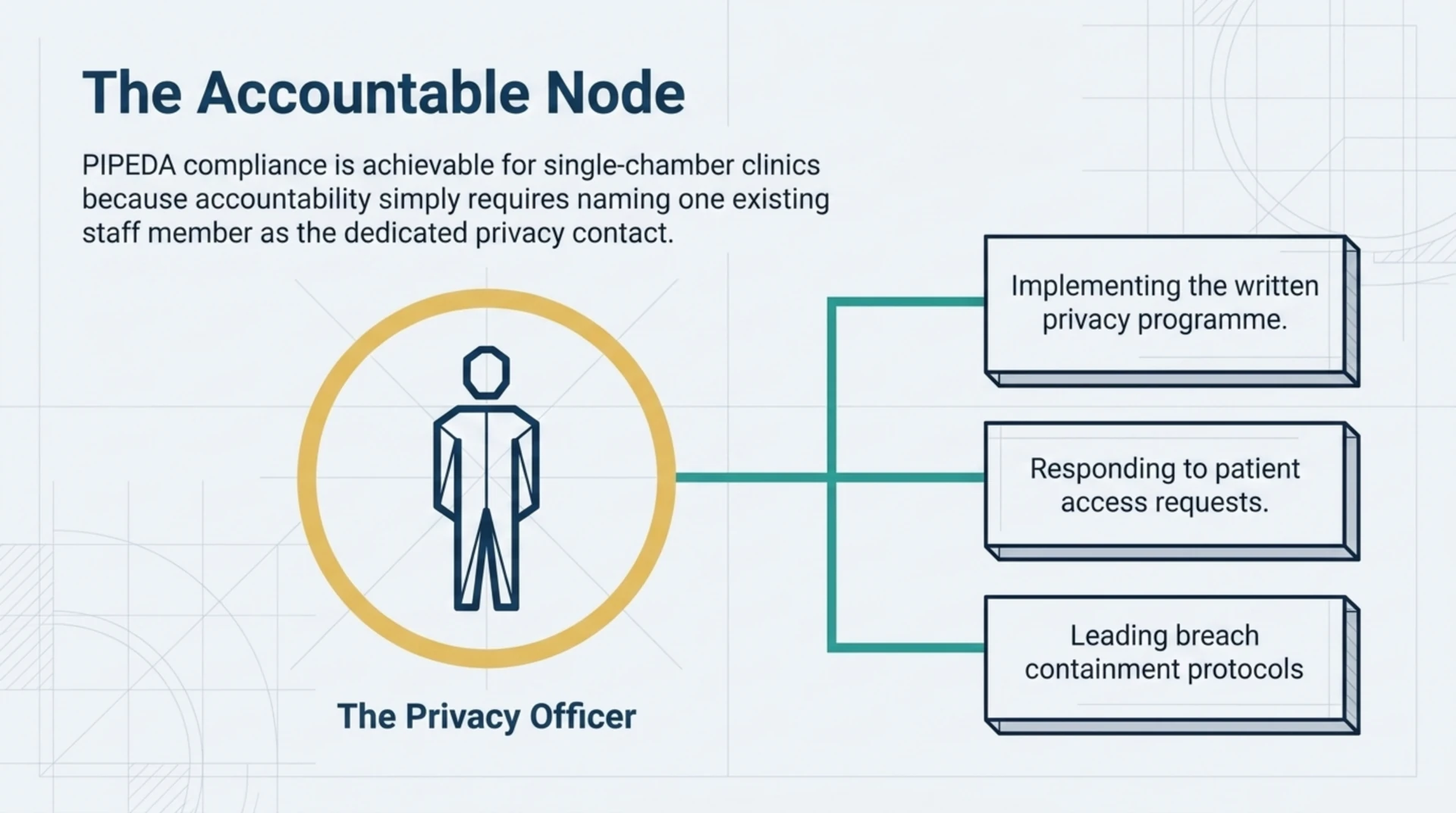
| Accountability | Name one staff member as the privacy officer responsible for compliance. |
| Identifying Purposes | State on the intake form exactly why each piece of information is collected. |
| Consent | Get explicit, informed consent before collecting or sharing patient data. |
| Limiting Collection | Only ask for fields the clinic actually uses for booking, safety, or billing. |
| Limiting Use, Disclosure, Retention | Use data only for its stated purpose and set a disposal date. |
| Accuracy | Give patients an easy way to update outdated contact or health information. |
| Safeguards | Lock physical files and encrypt or password-protect digital ones. |
| Openness | Publish a plain-language privacy policy patients can read before booking. |
| Individual Access | Let patients request a copy of their own records within a reasonable time. |
| Challenging Compliance | Give patients a named contact for privacy complaints. |
Every one of these ten principles can be handled with a written policy and a single accountable staff member, which is why PIPEDA compliance is achievable for even a small, single-chamber clinic.
How Does PIPEDA Interact With Provincial Health Privacy Laws?
Most Canadian provinces layer their own health-specific privacy legislation on top of PIPEDA (or, in a few provinces, in place of it for private-sector organizations). Ontario’s Personal Health Information Protection Act (PHIPA), for example, governs health information custodians and can apply alongside or instead of PIPEDA depending on how a clinic is structured.
For clinics that operate inside or alongside a regulated facility such as a hospital, additional institutional privacy policies may also apply. Our regulatory overview page walks through how these federal and provincial layers fit together for hyperbaric operators specifically, and is worth reviewing alongside this post rather than treating PIPEDA as the only rulebook in play.
What Happens If a Clinic Has a Data Breach?
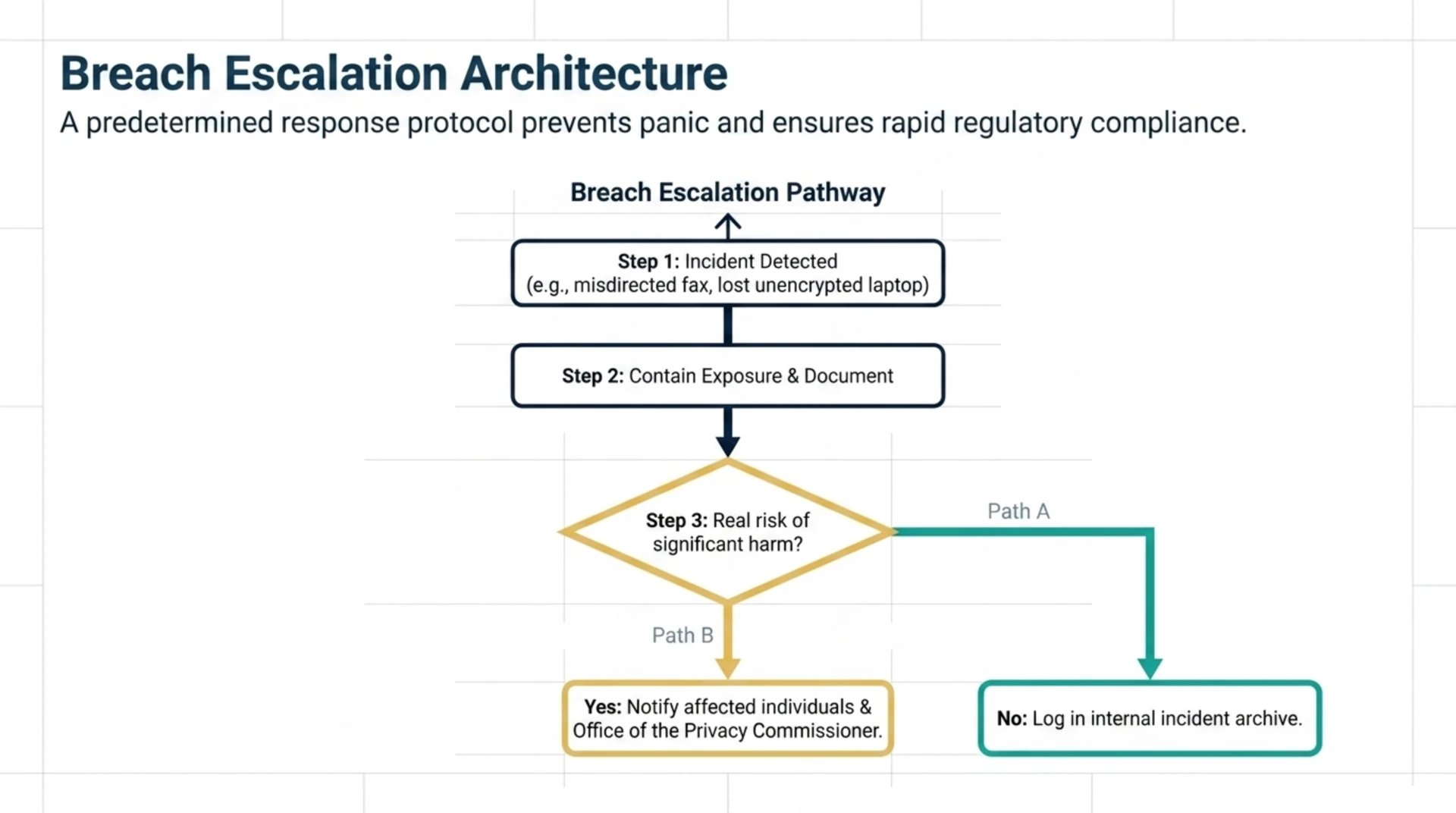
PIPEDA requires organizations to report any breach of security safeguards that creates a “real risk of significant harm” to the Office of the Privacy Commissioner of Canada, and to notify affected individuals, as soon as feasible after the clinic becomes aware of it. A breach can be as simple as a misdirected fax containing a patient’s intake form or a lost laptop with an unencrypted booking database.
A written breach response plan, agreed on before an incident happens, is what turns a stressful event into a manageable one. At minimum, that plan should name who investigates, how affected patients are notified, and how the clinic documents the incident for its own records and for any regulator that asks.
How Can Clinics Prepare Patients Before Their First Appointment?
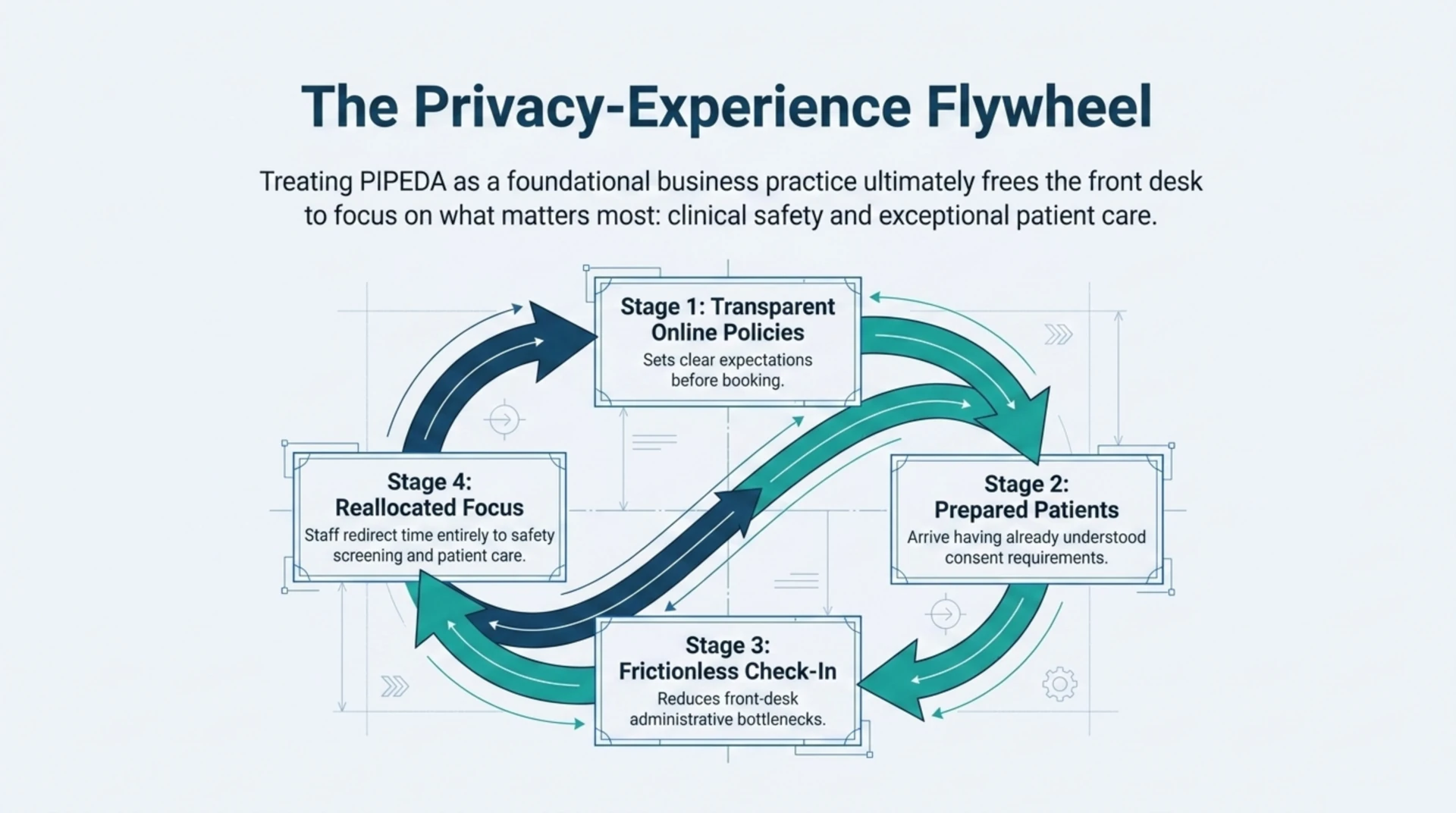
Good privacy practice also improves the patient experience. A clear intake form that explains what data is collected and why tends to reduce wait times at check-in, since patients arrive having already read and understood the consent language rather than working through it at the front desk. Clinics that post their privacy policy and FAQ online in advance also see fewer phone calls asking basic intake questions, which frees front-desk staff to focus on scheduling and safety screening. Our own FAQ page and about page are examples of the kind of plain-language, publicly available information that helps set expectations before a patient ever calls to book.
For clinics wondering how privacy documentation interacts with billing and insurance disclosure specifically, our coverage page outlines how payment and insurance information typically flows through a hyperbaric practice, which is useful context when drafting consent language for billing data.
Frequently Asked Questions
Does PIPEDA apply to a small, single-location hyperbaric clinic?
Yes. PIPEDA applies based on commercial activity, not clinic size, so a single-chamber practice has the same core obligations as a multi-location chain.
Do I need a dedicated privacy officer?
PIPEDA requires accountability for privacy practices, which in a small clinic can simply mean naming one existing staff member, such as the clinic manager, as the privacy contact.
Can a hyperbaric clinic share patient records with a referring physician without separate consent?
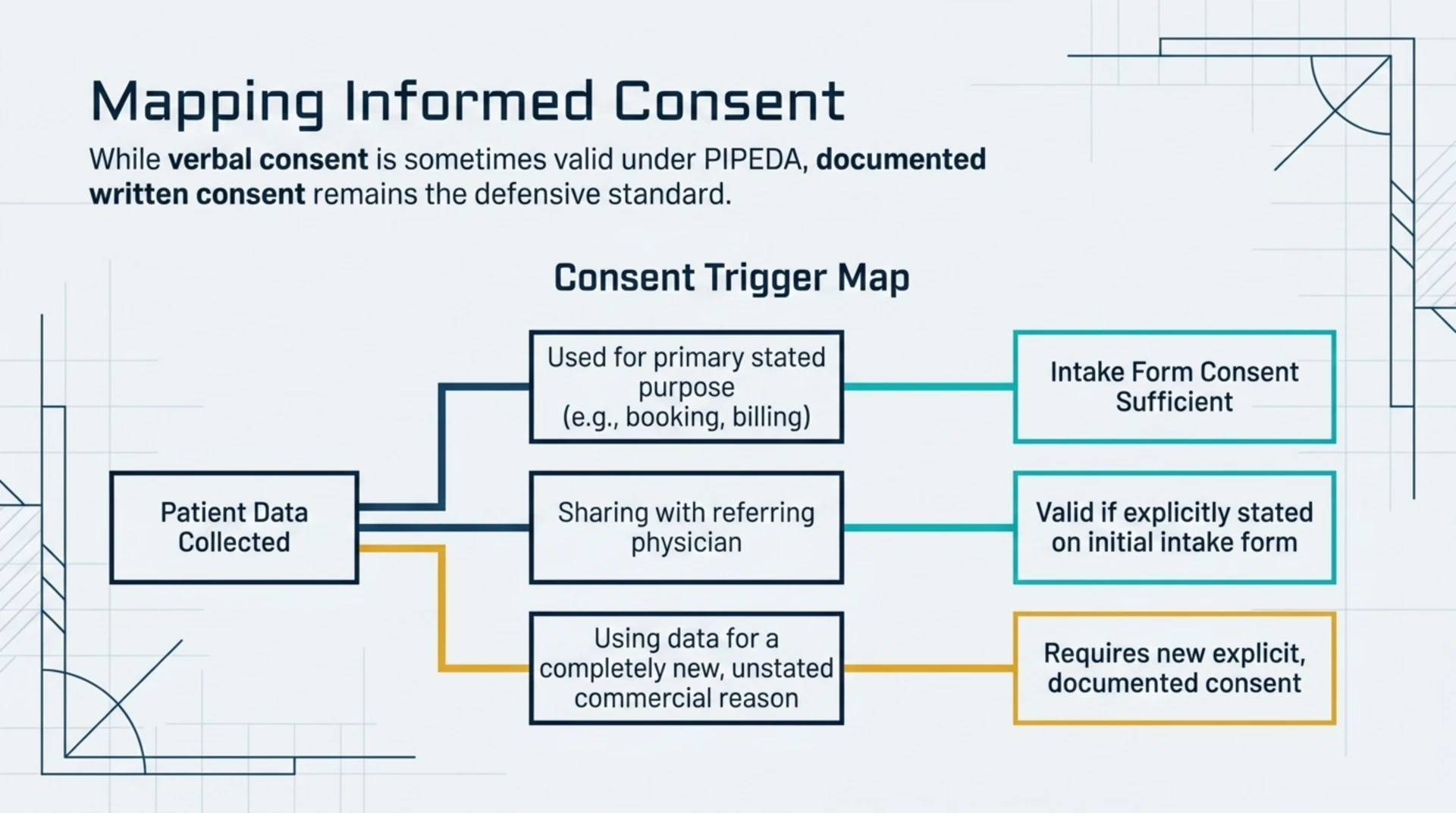
Generally, sharing with a referring physician for the purpose of coordinated care falls within the original consent given at intake, provided the intake form clearly states that this sharing may occur.
How long should a hyperbaric clinic keep patient records?
PIPEDA does not set a fixed number, but requires that records be kept only as long as needed for the stated purpose; many clinics align retention periods with provincial health record regulations, which is a detail worth confirming with a privacy advisor.
What is the difference between PIPEDA and PHIPA-style provincial laws?
PIPEDA is federal and applies broadly to commercial organizations, while provincial health privacy laws like Ontario’s PHIPA apply specifically to health information custodians and can set additional or overlapping requirements within that province.
Is verbal consent enough for collecting patient information?
Verbal consent can be valid under PIPEDA in some circumstances, but written, documented consent is easier to demonstrate if a patient later disputes what they agreed to, so most clinics use written intake forms as the default.
What should a clinic do first if it suspects a data breach?
Contain the exposure immediately, document what happened, and assess whether the breach creates a real risk of significant harm, which determines whether reporting to the Privacy Commissioner and affected patients is required.
Related Reading
- CUHMA and the Referral Pathway for Hyperbaric Care
- Is Hyperbaric Oxygen Therapy Covered by Insurance?
- HBOT for Chronic Fatigue Syndrome: A Service-Line Briefing
Canada Hyperbarics publishes operational and regulatory guidance like this alongside our clinical resources because running a compliant clinic depends on both. Whether you are opening your first chamber or reviewing an existing intake process, treating PIPEDA compliance as a foundational business practice, not paperwork, protects both patients and the clinic.
This content is for informational purposes only and is not medical advice.
To find hospitals and regulated facilities offering hyperbaric oxygen therapy in Canada, visit our facilities directory.