
TL;DR: Telehealth pre-screening for HBOT candidacy is a short virtual intake call that a clinic uses to collect health history, flag potential contraindications, and confirm scheduling logistics before a patient books an in-person hyperbaric oxygen therapy (HBOT) consultation. A structured telehealth pre-screening HBOT candidacy clinic workflow can shorten booking delays, cut down on wasted in-person visits, and prepare both the patient and the clinical team for a more focused first appointment.
Telehealth pre-screening for HBOT candidacy is the practice of using a phone or video call, before any in-person visit, to gather a patient’s health history and confirm that a hyperbaric oxygen therapy consultation is a reasonable next step. For clinic owners and operators, building this into a formal clinic workflow means fewer surprises at intake, better use of consultation time, and a smoother path from first contact to first appointment. This guide walks through how to design a telehealth pre-screening HBOT candidacy clinic workflow that fits a Canadian regulated facility.
What Is Telehealth Pre-Screening for HBOT Candidacy?
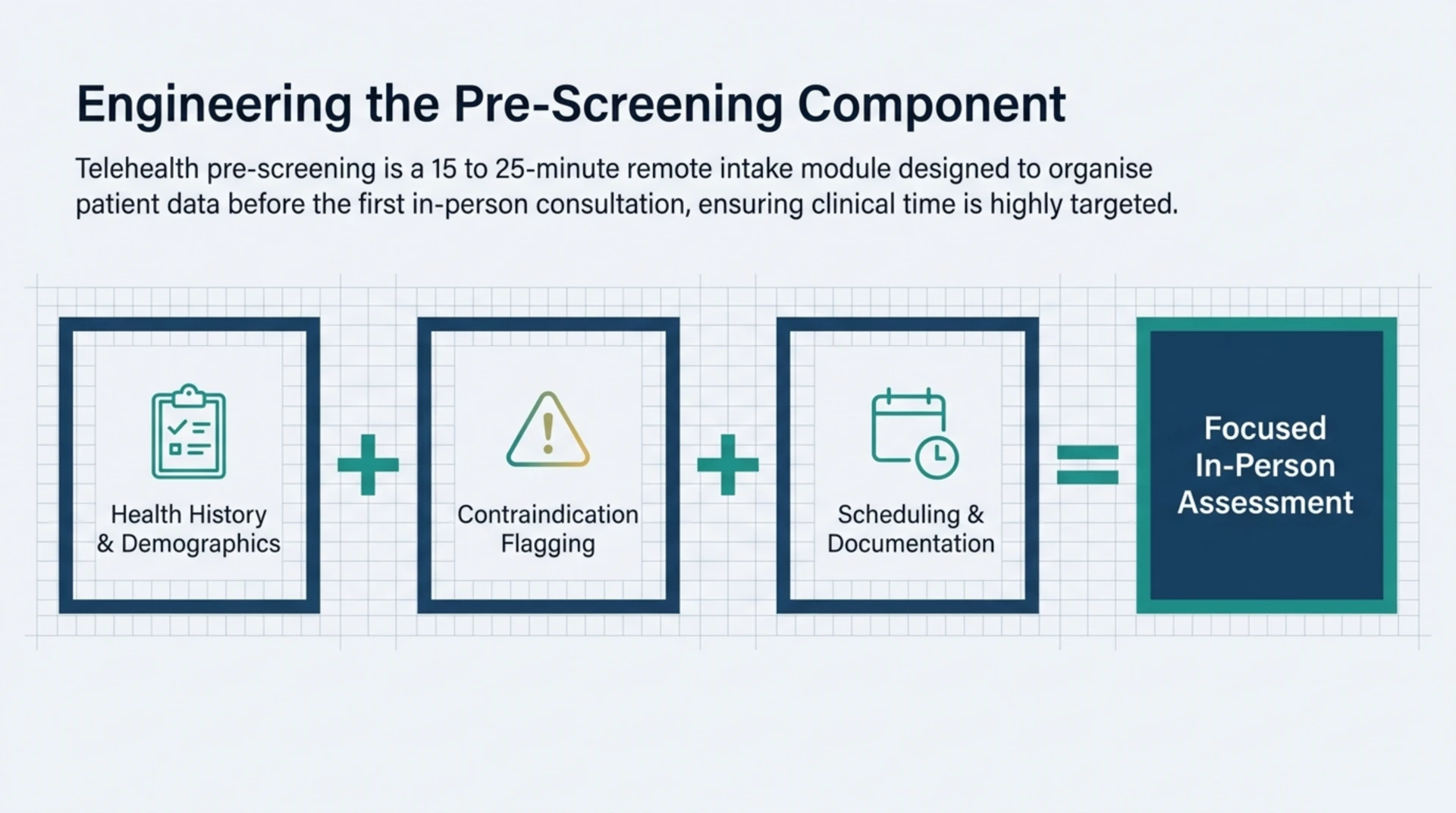
Telehealth pre-screening is a remote conversation, usually 15 to 25 minutes, conducted before a patient ever sets foot in the clinic. A trained staff member or clinician reviews the patient’s medical history, current medications, and reason for interest in hyperbaric oxygen therapy.
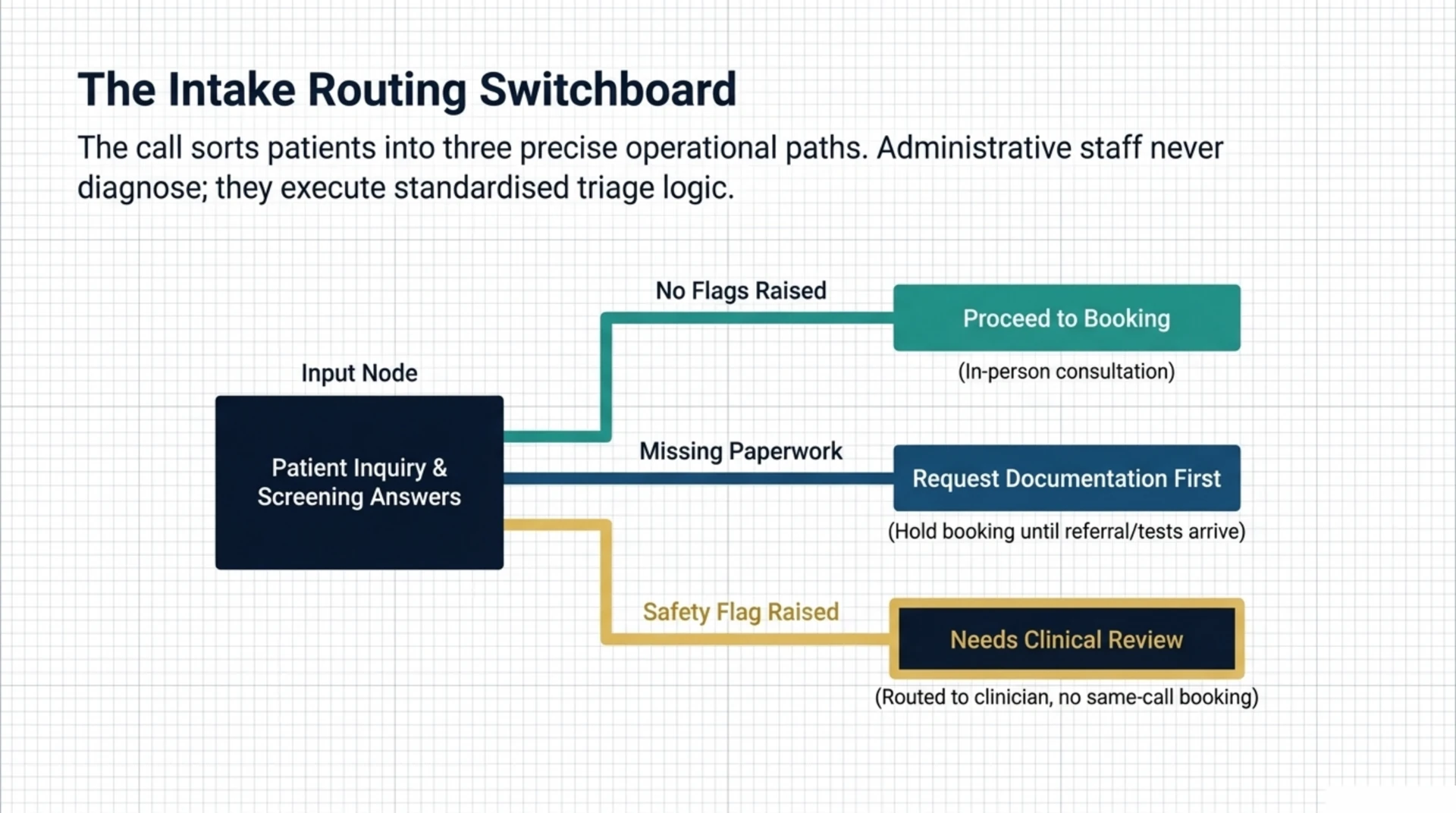
The goal is not to diagnose or approve treatment remotely. It is to organise information so that an in-person consultation with the clinical team can be efficient and focused. The call sorts patients into three general paths: proceed to booking, request more documentation first, or refer elsewhere.
Why Add a Telehealth Pre-Screening Step to Your Clinic Workflow?
Many clinics historically booked the first hyperbaric consultation as an in-person visit by default. That approach works, but it can mean a patient travels a long distance only to learn that the clinic needs records the clinic does not yet have, or that a specialist referral is required first.
A telehealth pre-screening step addresses that gap directly. It reduces wasted in-person visits and shortens the overall time from first inquiry to a productive consultation. For clinics that serve patients from smaller communities or rural areas, this matters even more, since travel itself is a real cost for the patient.
Pre-screening also gives front-desk and intake staff a consistent script to follow, rather than an ad hoc conversation that varies by whoever answers the phone that day.
What Happens During the Pre-Screening Call?
A well-run pre-screening call follows a repeatable structure. Below is a typical sequence a Canadian hyperbaric clinic might use.
Intake and Health History
The call usually opens with basic demographic information, the reason the patient is inquiring about hyperbaric oxygen therapy, and who referred them (self-referral, physician, or another clinician). Staff record current medications and any recent hospitalisations or surgeries.
Contraindication Screening Questions
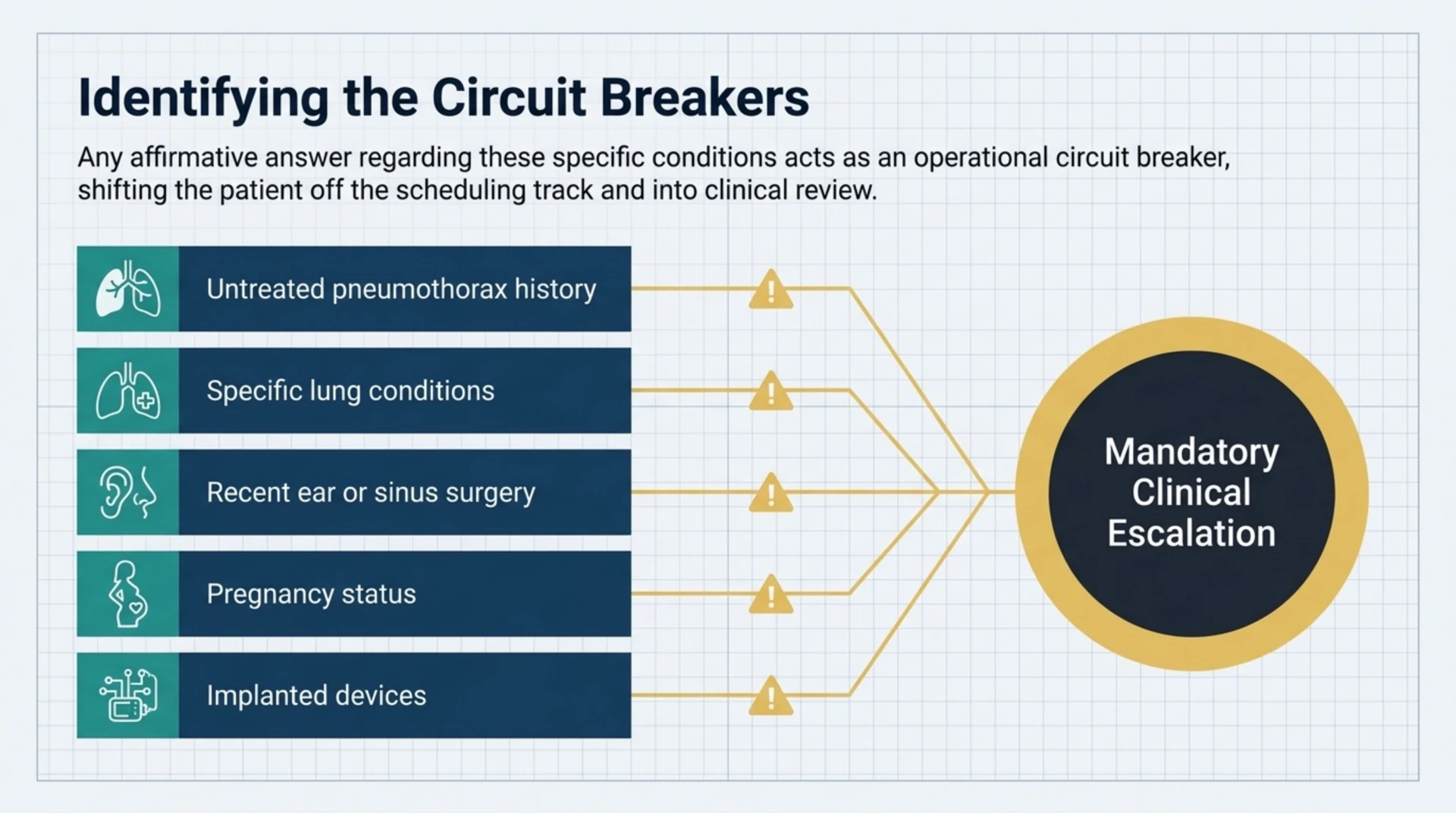
This is the core of the call. Staff ask a standard set of questions covering areas such as untreated pneumothorax history, certain lung conditions, recent ear or sinus surgery, pregnancy status, and any implanted devices. Any flagged answer moves the patient to a “needs clinical review before scheduling” path rather than a same-call booking. A general overview of conditions clinicians may consider HBOT for, and where more evidence-based detail lives, is available on our conditions overview.
Documents to Request Before the Call Ends
Before wrapping up, staff let the patient know what paperwork to gather: a referral letter if one exists, recent relevant test results, and a current medication list. Requesting these early means the in-person consultation is not spent waiting on faxed records.
How Do You Structure the Workflow From Referral to First Visit?
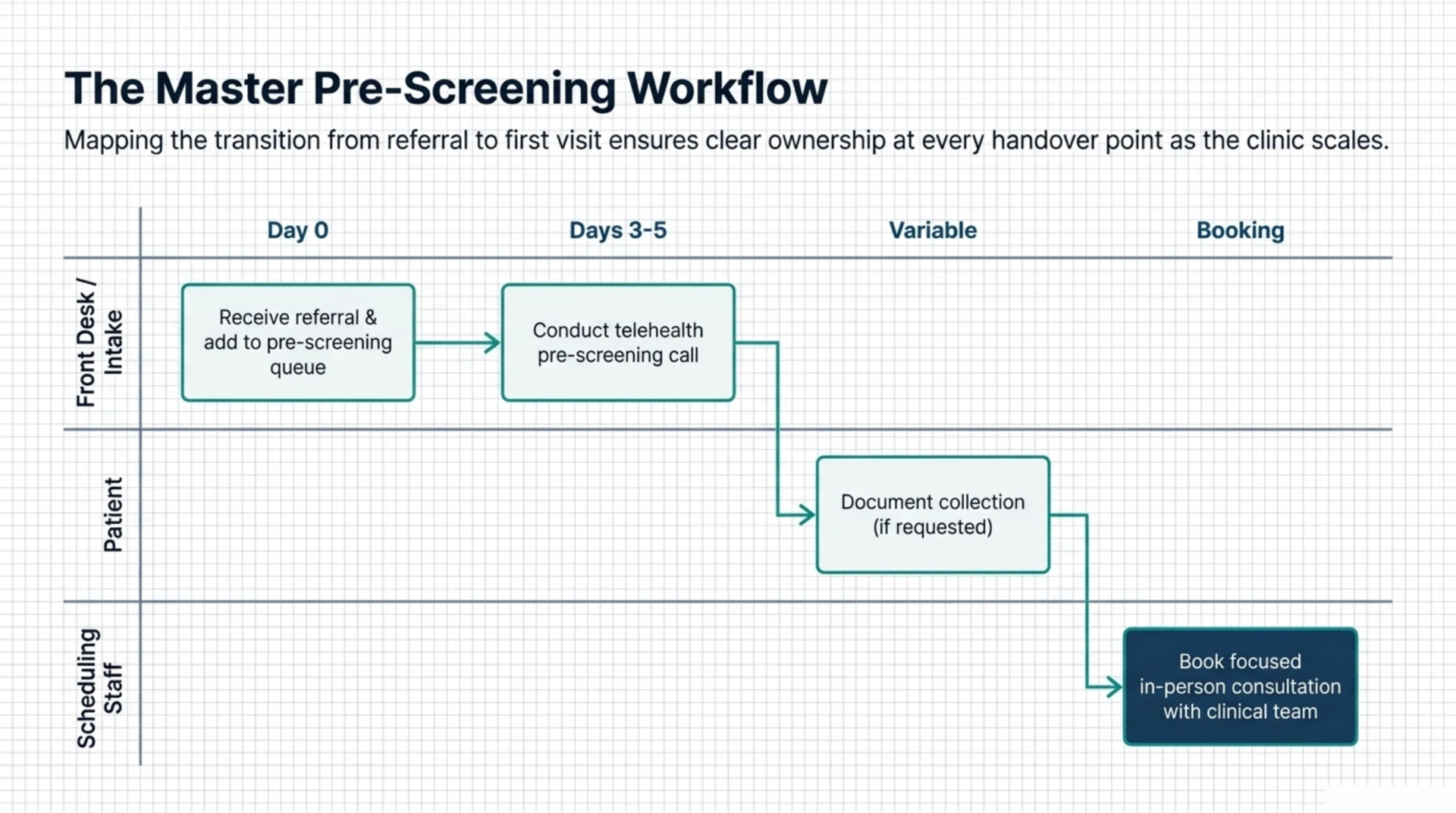
A telehealth pre-screening HBOT candidacy clinic workflow generally moves through four stages. Mapping these stages, and assigning clear ownership for each, is what turns pre-screening from a nice idea into a repeatable process.
| Stage | Who Handles It | Typical Timing | Outcome |
|---|---|---|---|
| Initial inquiry or referral received | Front desk / intake coordinator | Day 0 | Patient added to pre-screening queue |
| Telehealth pre-screening call | Intake staff or clinician | Within 3 to 5 business days | Path decided: book, request documents, or refer out |
| Document collection (if needed) | Patient plus intake coordinator | Variable, patient-dependent | Records ready for the clinical team |
| In-person consultation booked | Scheduling staff | After pre-screening path confirmed | Focused first visit with the clinical team |
Writing this sequence down, and reviewing it with new staff during onboarding, keeps the workflow consistent even as your team grows.
Which Conditions Should Trigger a Closer Look Before Scheduling?
Some inquiries are straightforward. Others involve a condition where the clinical team wants more information, or a referral, before booking an in-person consultation. Rather than making a clinical call on the phone, pre-screening staff are trained to flag these cases for clinician review.
Because the right next step depends on the specific condition and the patient’s full history, this is exactly what the clinical team, not a phone script, should decide. Patients and referring providers who want to understand where hyperbaric oxygen therapy is currently being studied can review our conditions overview, which summarises the areas of active research without making treatment promises on their behalf.
How Does Pre-Screening Support Regulatory and Privacy Requirements?
Any process that collects health information over the phone needs to handle that information carefully. Staff conducting telehealth pre-screening should be trained on what can and cannot be recorded, how call notes are stored, and how long records are retained.
In Canada, this intersects with provincial health information rules and, for federally regulated aspects of a clinic’s operations, PIPEDA. Clinic owners building or auditing a telehealth pre-screening workflow should confirm their intake script and data handling practices align with current requirements; our regulatory information page is a useful starting point for that review.
What Should Reception Staff Know About Coverage Questions?
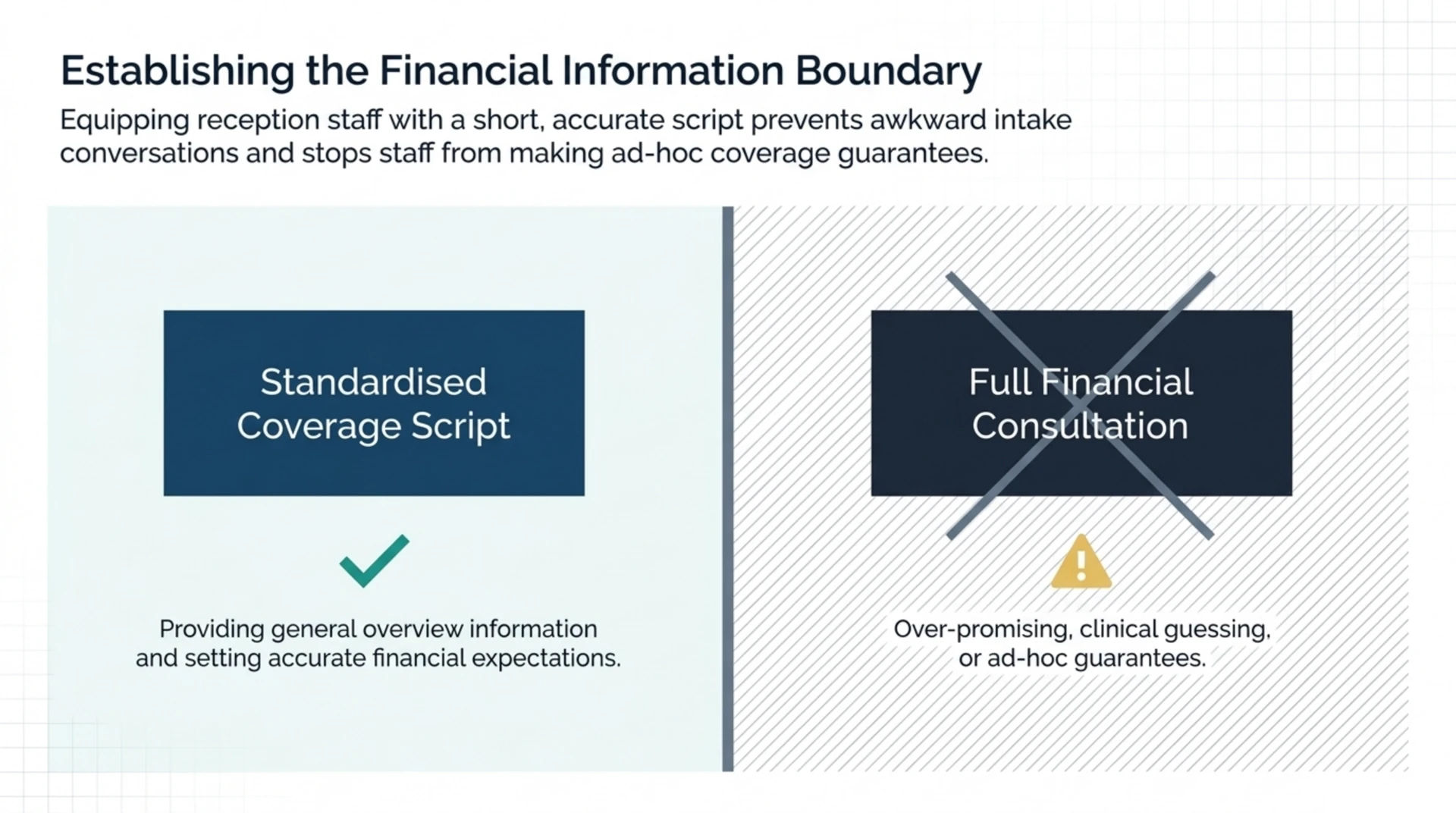
Patients frequently ask about cost and coverage during the pre-screening call, even though the call itself is not the venue for a full financial consultation. Giving staff a short, accurate script for coverage questions prevents both over-promising and an awkward “I don’t know” at intake.
Staff should be equipped to point patients to general coverage information rather than guessing. Our coverage overview outlines how coverage typically works so that front-line staff can set accurate expectations during the call.
Frequently Asked Questions
How long does a telehealth pre-screening call usually take?
Most calls run 15 to 25 minutes, though a call involving a more complex history can take longer. Clinics that build a structured script tend to keep calls closer to the shorter end of that range.
Who should conduct the pre-screening call, a clinician or administrative staff?
Many clinics use trained administrative or intake staff for the initial call, with a clear escalation path to a clinician whenever the answers raise a flag. The key is that whoever conducts the call is working from a standardised script and knows exactly when to escalate.
Does telehealth pre-screening replace the in-person consultation?
No. Pre-screening is a preparatory step, not a substitute for an in-person assessment by the clinical team. It exists to make that in-person visit more efficient, not to remove it.
What if a patient does not have a physician referral?
Workflows vary by clinic and by province, so this is a policy question each clinic should set in advance. Documenting the answer clearly in the pre-screening script prevents inconsistent handling from one call to the next.
How should a clinic document a “needs clinical review” outcome from the call?
The pre-screening notes, including the specific flag raised, should be logged in the patient’s file and routed to the clinician responsible for review, with a clear timeframe for follow-up so the patient is not left waiting indefinitely.
Can telehealth pre-screening reduce no-shows for the first in-person visit?
Because the call clarifies expectations, required documents, and logistics ahead of time, clinics often find that patients arrive better prepared for their first visit, which supports smoother scheduling overall.
Building the Workflow at Your Clinic
A telehealth pre-screening HBOT candidacy clinic workflow does not need to be complicated to be effective. Start with a written script, a clear escalation rule for flagged answers, and a defined handoff to scheduling. Review the script periodically with your clinical team so it stays current with how your practice operates.
Canada Hyperbarics builds educational resources like this one to support clinic owners and operators working through exactly this kind of process design. As your intake volume grows, the consistency this workflow provides becomes even more valuable.
Related Reading
- PIPEDA Compliance for Hyperbaric Clinic Patient Data
- CUHMA and the Referral Pathway for Hyperbaric Care
- HBOT for Chronic Fatigue Syndrome: A Service-Line Briefing
To see how a well-run telehealth pre-screening workflow connects to the rest of the patient journey, visit our directory of hospitals and regulated facilities at /facilities/.
This content is for informational purposes only and is not medical advice.