
TL;DR: Hyperbaric oxygen therapy for radiation-induced dry mouth is not a proven, direct indication. No study in the current evidence base measures HBOT’s effect on xerostomia (dry mouth) as its own outcome. The strongest related evidence covers a different but connected problem, osteoradionecrosis (ORN) of the jaw, where results are mixed even for that better-studied condition. If you have radiation-related dry mouth, HBOT should be discussed with your radiation oncologist or dentist as part of a broader plan, not assumed to be an established fix.
Hyperbaric oxygen therapy (HBOT) for radiation-induced dry mouth is the use of pressurized, high-concentration oxygen breathing sessions to try to support tissue that has been damaged by head and neck radiotherapy, including the salivary glands. It is worth saying plainly at the outset: xerostomia (dry mouth) caused by radiation is not a recognised, primary indication for HBOT, and the research pool behind this article does not contain a trial that tests HBOT against dry mouth as its own endpoint. What the evidence does cover is a set of closely related radiation injuries to the jaw, mouth, and surrounding tissue, and that related evidence is genuinely useful for understanding where HBOT fits, and where it does not.
What Is Radiation-Induced Dry Mouth (Xerostomia)?
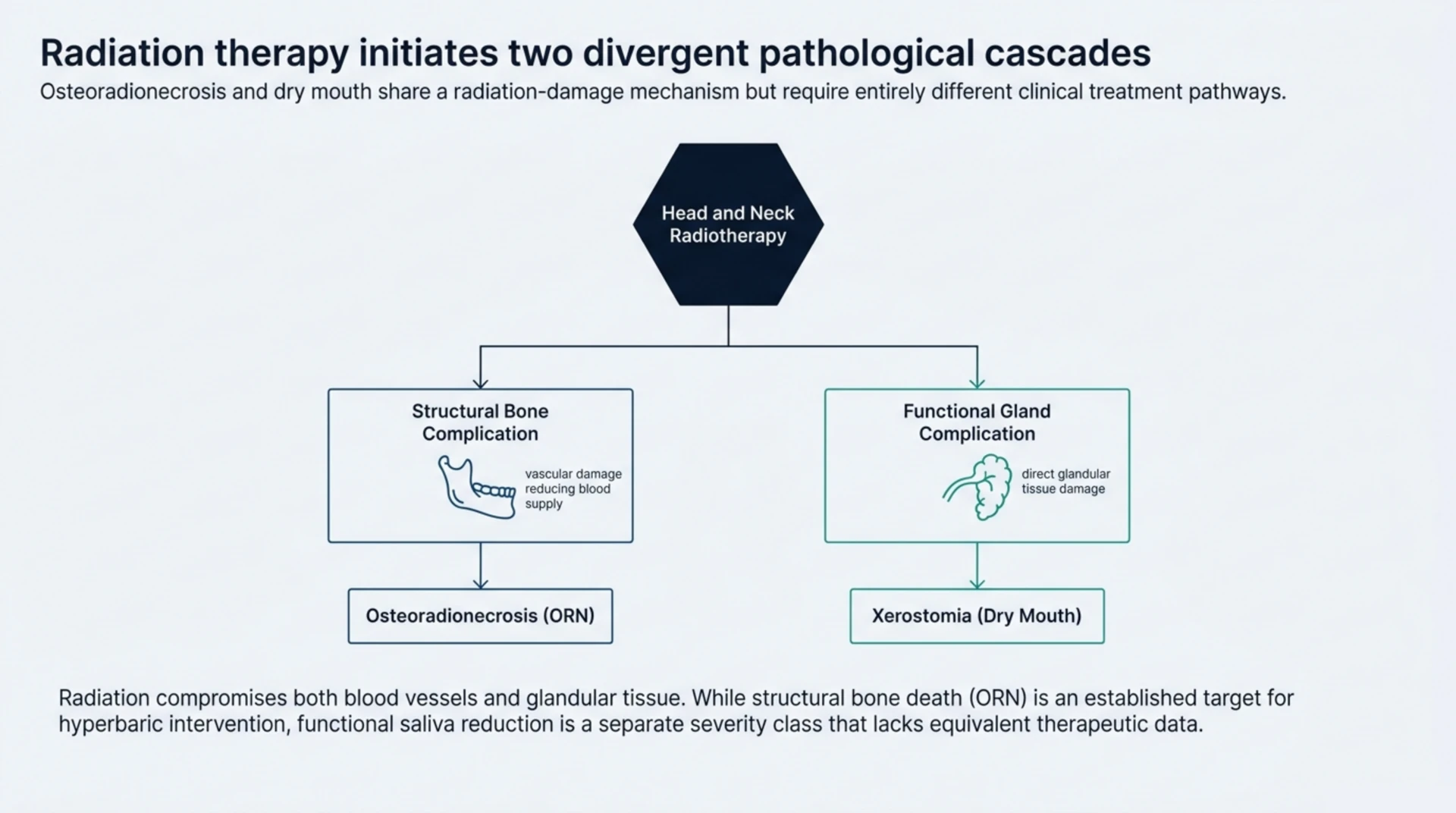
Radiation-induced xerostomia happens when radiotherapy aimed at head and neck cancers damages the salivary glands, reducing how much saliva they produce. Saliva keeps the mouth comfortable, helps with chewing and swallowing, and protects teeth from decay. When glands are damaged by radiation, patients can be left with a persistently dry mouth, difficulty eating certain foods, altered taste, and a higher long-term risk of cavities and gum problems.
Radiation can also damage the jawbone and soft tissue around it, sometimes leading to a much more serious complication called osteoradionecrosis (ORN), where bone tissue dies because radiation has reduced its blood supply. ORN and dry mouth share a root cause, radiation injury to blood vessels and glandular tissue, but they are different clinical problems with different severity and different treatment pathways.
What Does the Evidence Actually Say About HBOT and Radiation-Induced Dry Mouth Specifically?
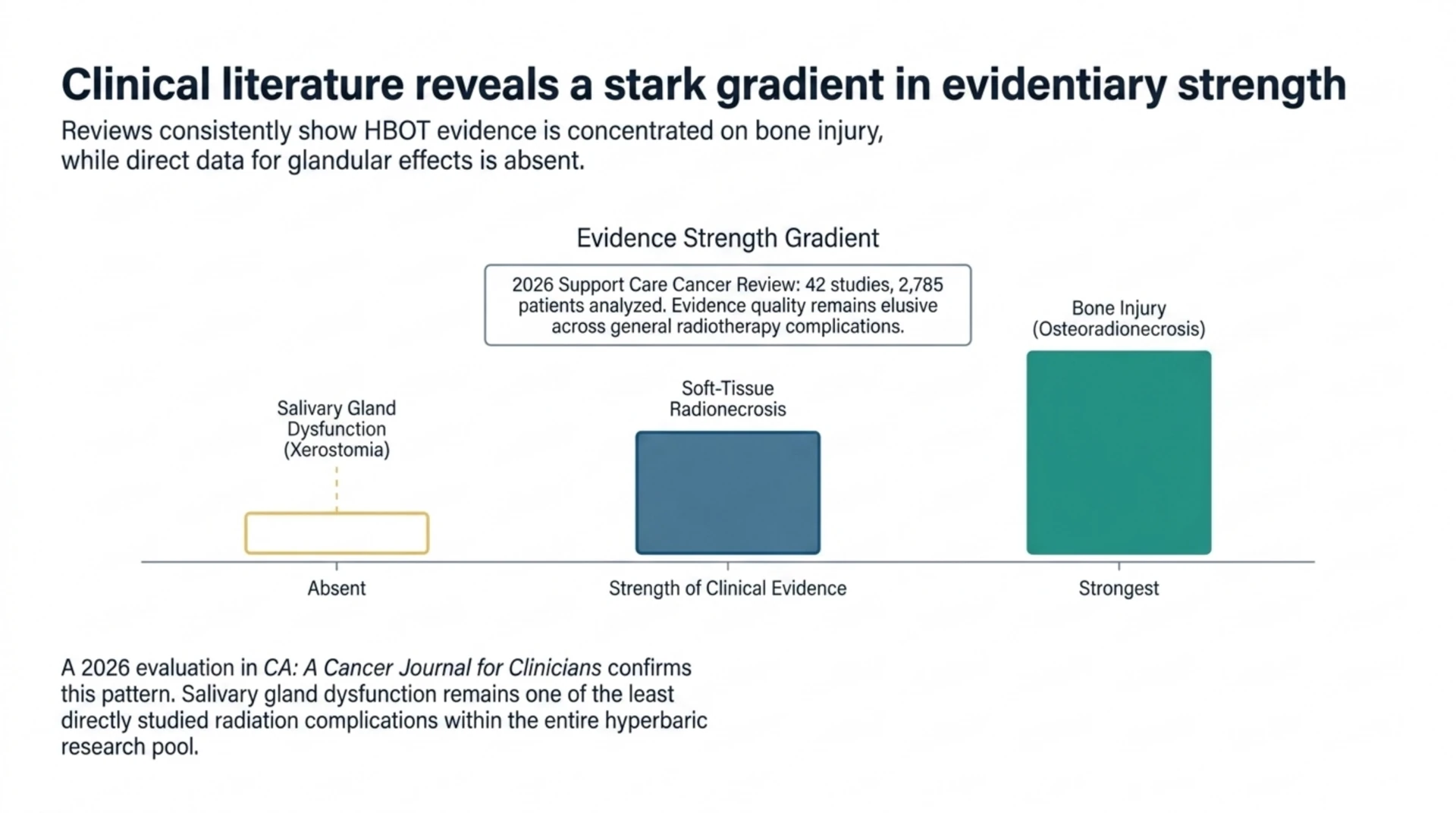
Honestly, not much yet. A 2026 systematic review in Support Care Cancer looked at 42 studies covering 2,785 patients on HBOT for managing radiation therapy side effects broadly (PubMed | Our Assessment). Its title says it plainly: the evidence across radiotherapy complications is “elusive,” meaning quality and consistency vary a great deal depending on which complication is being studied. Salivary gland dysfunction is one of the least directly studied radiation complications in the HBOT literature, compared to bone and bladder injuries.
A separate 2026 clinically focused review in CA: A Cancer Journal for Clinicians set out to critically evaluate the evidence for HBOT across chronic radiotherapy-related adverse effects (PubMed | Our Assessment). Reviews of this kind consistently point to the same pattern: evidence quality is not uniform across conditions, it is strongest for bone injury (osteoradionecrosis) and weaker or absent for softer-tissue and glandular effects like xerostomia. That pattern is the honest starting point for this topic.
Why Is HBOT Used for Other Radiation Injuries, and What Does That Tell Us?
To understand where HBOT does have a foothold, it helps to look at the condition it is most associated with in this research pool: osteoradionecrosis of the jaw.
Osteoradionecrosis of the Jaw: The Best-Studied Related Condition
A 2026 review chapter in Undersea and Hyperbaric Medicine examined HBOT’s use for delayed radiation injuries, including soft tissue and bony necrosis, and looked specifically at safety and future research directions (PubMed | Our Assessment). This kind of late radiation bone and tissue injury is the area where HBOT has the longest track record and the most established safety profile, and the review identifies it as an area where more targeted research, including for softer-tissue effects, is still needed.
Surgical Reconstruction and HBOT: A Mixed Picture Even in ORN
Even within osteoradionecrosis, the evidence is not uniformly favourable, and it is important not to overstate what HBOT can do. A 2025 retrospective study compared surgical outcomes in patients with advanced mandibular osteoradionecrosis who underwent segmental resection and free tissue transfer, with some patients receiving perioperative HBOT and others not (PubMed | Our Assessment). The study found no significant difference in postoperative complication rates between the group that received HBOT and the group that did not. This is a useful, sobering data point: in severely radiation-damaged tissue requiring major reconstructive surgery, this retrospective comparison did not find that adding HBOT changed surgical outcomes. It does not mean HBOT has no role in ORN generally, but it is a reminder that the evidence is mixed even for the condition where HBOT is best established, and it should make readers cautious about assuming benefit for a less-studied condition like dry mouth.
Alternative and Adjunct Therapies
HBOT is not the only approach studied for radiation-damaged jaw and oral tissue. A 2025 literature review in Ear, Nose, & Throat Journal examined the PENTOCLO protocol, a combination of pentoxifylline, tocopherol (vitamin E), and sometimes clodronate, for treating and preventing osteoradionecrosis in the head and neck (PubMed | Our Assessment). This medication-based protocol works through a different mechanism than HBOT (targeting inflammation and fibrosis rather than oxygen delivery) and is part of the broader toolkit clinicians consider for radiation-damaged tissue, sometimes alongside HBOT and sometimes instead of it.
How Does This Connect to Dental and Oral Health After Radiation?
Dry mouth does not exist in isolation. Reduced saliva flow after radiation raises the long-term risk of tooth decay and can complicate dental rehabilitation, including implants. A 2025 retrospective survey in the Journal of Pharmacy & Bioallied Sciences followed 80 head and neck cancer survivors who received dental implants after radiotherapy, assessing long-term outcomes, peri-implant health, and patient satisfaction (PubMed | Our Assessment). This study speaks to the broader oral health picture for radiation survivors, including the tissue environment that dry mouth contributes to, rather than to dry mouth or HBOT directly. It is included here because oral rehabilitation after radiation is a connected, ongoing concern for the same patient population, not because it tests HBOT for xerostomia.
Is Hyperbaric Oxygen Therapy Safe for Head and Neck Radiation Patients?
Where HBOT is used for radiation injury, its safety profile in that context is relatively well described in the literature, as reflected in the 2026 review of delayed radiation injuries above. That said, safety in one context (established bone and tissue injury protocols) is not the same as evidence of benefit in a different, unstudied context (dry mouth). Anyone considering HBOT for a radiation-related symptom should have that conversation directly with their radiation oncology or hyperbaric medicine team, who can weigh their specific radiation history and current tissue status.
HBOT vs Other Approaches for Radiation-Damaged Oral Tissue
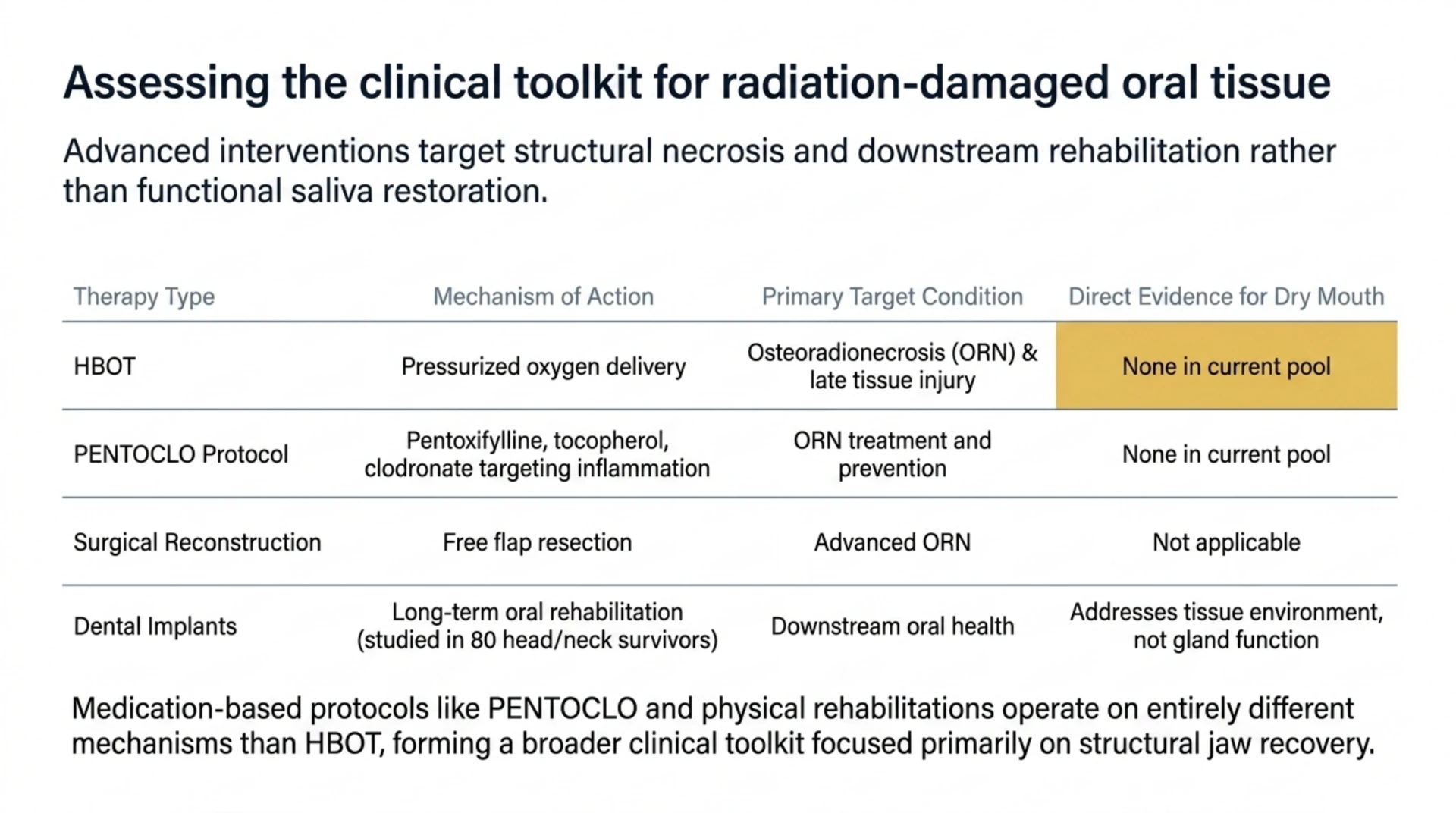
| Approach | What the Evidence Pool Covers | Direct Evidence for Dry Mouth |
|---|---|---|
| Hyperbaric oxygen therapy (HBOT) | Osteoradionecrosis (ORN), late radiation soft-tissue and bony injury, mixed surgical-outcome data | None in this pool; not a recognised indication |
| PENTOCLO protocol (pentoxifylline, tocopherol, clodronate) | ORN treatment and prevention, head and neck | None in this pool |
| Surgical reconstruction (e.g. free flap) | Advanced ORN requiring segmental resection | Not applicable to dry mouth |
| Dental implants post-radiotherapy | Long-term oral rehabilitation outcomes and satisfaction | Addresses downstream oral health, not gland function |
Frequently Asked Questions
Is HBOT an approved treatment for radiation-induced dry mouth in Canada?
No. Recognised HBOT indications for radiation injury centre on conditions like osteoradionecrosis and soft tissue radionecrosis. Xerostomia specifically is not a recognised HBOT indication, and it is not directly studied in the evidence reviewed here. You can read more about which uses of HBOT are recognised and covered at our HBOT coverage in Canada overview.
What is osteoradionecrosis, and how is it different from dry mouth?
Osteoradionecrosis (ORN) is death of jawbone tissue caused by reduced blood flow after radiation. It is a structural bone complication that can require surgery. Dry mouth is a functional gland complication. They can occur in the same patients and share a radiation-damage mechanism, but they are not the same problem and do not necessarily respond to the same treatments.
Does HBOT help with dental implants after radiation therapy?
The dental implant study in this pool assessed long-term outcomes and satisfaction for implants placed after radiotherapy, but it did not test HBOT as a variable in this evidence base. If you are considering implants after head and neck radiation, that is a conversation for your dentist or oral surgeon, who can advise whether HBOT or other adjuncts are relevant to your specific case.
What are the risks or side effects of hyperbaric oxygen therapy?
HBOT is generally described as having a well-characterized safety profile in the contexts where it has been studied for radiation injury, though any medical procedure carries some risk, and pressurized oxygen therapy is not appropriate for everyone. A full risk discussion belongs in a conversation with a hyperbaric medicine provider who can review your medical history.
How many HBOT sessions are typically used for radiation-related tissue injury?
Session counts vary by condition and protocol in the literature on radiation-related bone and soft tissue injury, and none of the studies in this pool establish a protocol for dry mouth specifically. Session numbers for an unstudied indication cannot be responsibly generalized from protocols designed for a different condition.
Should I bring up HBOT with my care team if I have radiation-induced dry mouth?
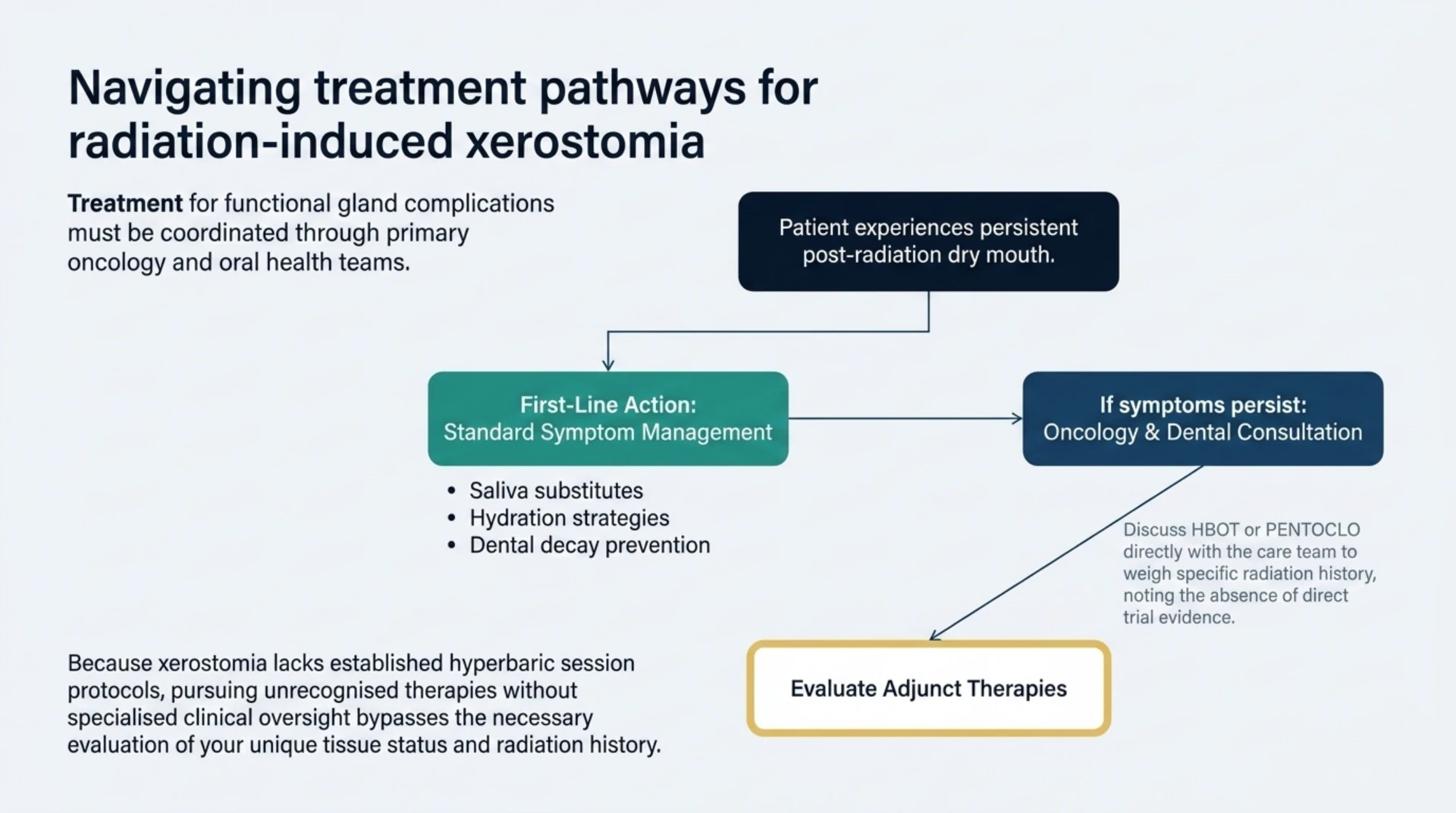
It is reasonable to ask, especially if standard dry mouth management (saliva substitutes, hydration strategies, dental prevention) has not been enough. Your radiation oncologist or dentist is best placed to say whether HBOT, PENTOCLO, or another approach fits your situation, given that direct trial evidence for dry mouth is currently limited.
Related Reading
- Is Hyperbaric Oxygen Therapy Covered by Insurance?
- HBOT Referral Pathway for Patients Without a Local Chamber
- Hyperbaric Chamber Barrie: A Patient’s Step-by-Step Guide
Canada Hyperbarics maintains a research library of more than 14,000 peer-reviewed studies on hyperbaric oxygen therapy, and we update our condition pages as new evidence is published. For radiation-induced dry mouth, the honest summary today is that direct evidence is limited, and the closest related evidence, on osteoradionecrosis, is itself mixed. If dry mouth is affecting your quality of life after radiation treatment, talk to your physician or radiation oncology team about whether HBOT is appropriate for you, alongside standard dry mouth management strategies.
This content is for informational purposes only and is not medical advice.