
TL;DR: Pyoderma gangrenosum is a rare, painful inflammatory skin condition that causes rapidly enlarging ulcers, and the evidence for hyperbaric oxygen therapy (HBOT) as an add-on treatment comes almost entirely from single case reports and small retrospective reviews rather than controlled trials. Across the literature compiled by the Canada Hyperbarics research library, HBOT has most often been added when standard immunosuppressive treatment alone was not enough, with individual patients reported to improve or reach remission. No randomised trial has tested HBOT specifically for pyoderma gangrenosum, so the evidence should be read as suggestive, not conclusive.
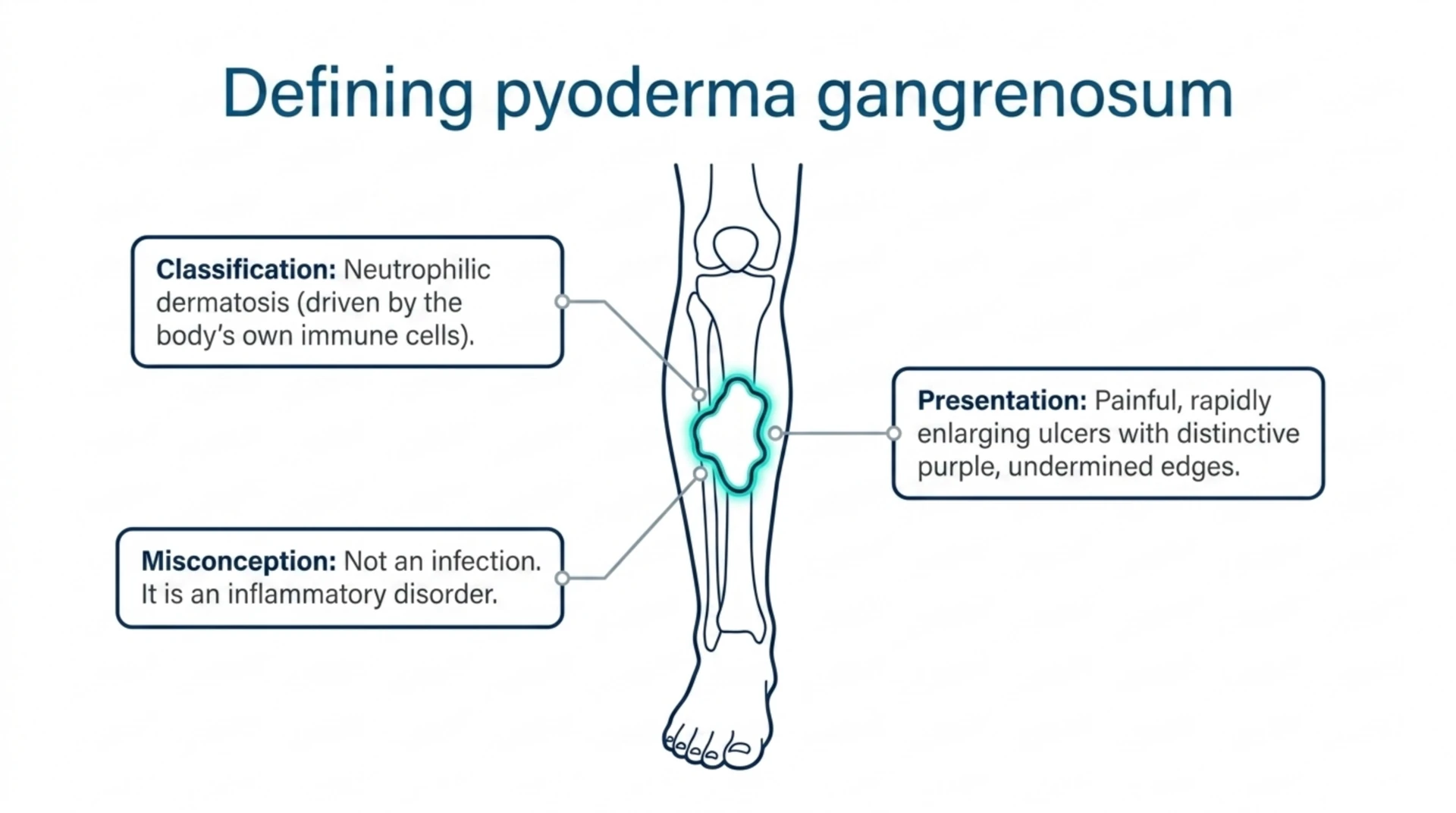
Pyoderma gangrenosum (PG) is an uncommon, poorly understood inflammatory skin disorder in which painful ulcers appear and spread quickly, often on the legs. It is classified as a neutrophilic dermatosis, meaning it is driven by the body’s own immune cells rather than an infection, and it frequently occurs alongside conditions like inflammatory bowel disease or rheumatoid arthritis. Because standard treatment with steroids and immunosuppressants does not always control the disease, some clinicians have added hyperbaric oxygen therapy for hyperbaric oxygen pyoderma gangrenosum evidence when wounds are slow to heal. This article reviews what that evidence actually shows, drawing only on studies in the Canada Hyperbarics research library.
What Is Pyoderma Gangrenosum?
PG typically begins as a small, tender bump or blister that breaks down into a rapidly expanding ulcer with a distinctive purple, undermined edge. It can appear anywhere but is most common on the lower legs. Diagnosis is one of exclusion, since there is no single definitive test, and biopsies are mainly used to rule out infection, cancer, or vascular disease.
PG is strongly linked to systemic inflammatory conditions. Roughly half of cases occur alongside inflammatory bowel disease, rheumatoid arthritis, or blood disorders. It can also be triggered by surgery or trauma, a phenomenon called pathergy, which is why it sometimes appears after orthopaedic procedures, cesarean sections, or other operations.
Where Does Hyperbaric Oxygen Fit Into Pyoderma Gangrenosum Treatment?
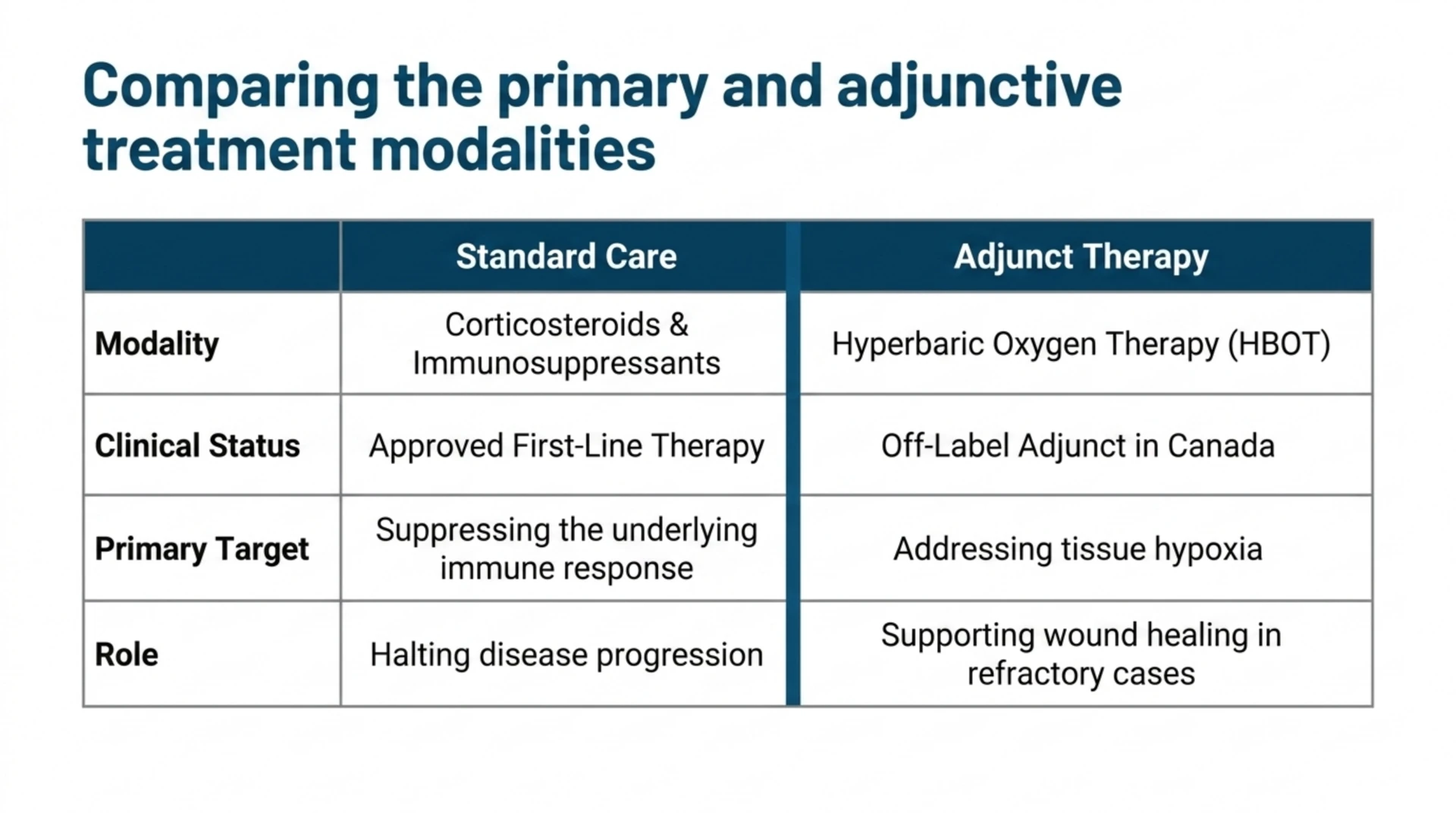
Standard PG treatment centres on suppressing the underlying immune response with corticosteroids and steroid-sparing agents. HBOT is not a first-line or approved therapy for PG in Canada. When it appears in the literature, it is almost always described as an adjunct, added alongside immunosuppression when wounds are refractory or when surgical wound closure is being attempted.
The proposed rationale is that PG ulcers are often hypoxic and slow to heal, and that increased tissue oxygen delivery under hyperbaric conditions may support wound healing processes once the underlying inflammation is controlled by medication. This is a biologically plausible mechanism, but plausibility is not the same as proof, and it is important to be direct about the type of evidence that exists.
Case Reports Make Up Most of the Evidence
The great majority of PG and HBOT publications are single case reports describing one patient’s course. A 2024 case report in the Journal of Tissue Viability (PubMed | Our Assessment) described a patient with treatment-resistant PG who achieved remission after hyperbaric oxygen was added to standard care. A 2023 case report and literature review in Cureus (PubMed | Our Assessment) similarly reported a single patient whose PG resolved with a combination of mycophenolate and hyperbaric oxygen.
Other single-patient reports follow the same pattern. A case published in Intestinal Research (PubMed | Our Assessment) described a patient with ulcerative colitis and PG treated successfully with hyperbaric oxygen. A 2016 case report in Ostomy/Wound Management (PubMed | Our Assessment) described a woman treated with oral prednisone plus adjunctive hyperbaric oxygen, and a 2011 case report in Dermatologic Therapy (PubMed | Our Assessment) described improvement in a woman with ulcerative PG treated with HBOT.
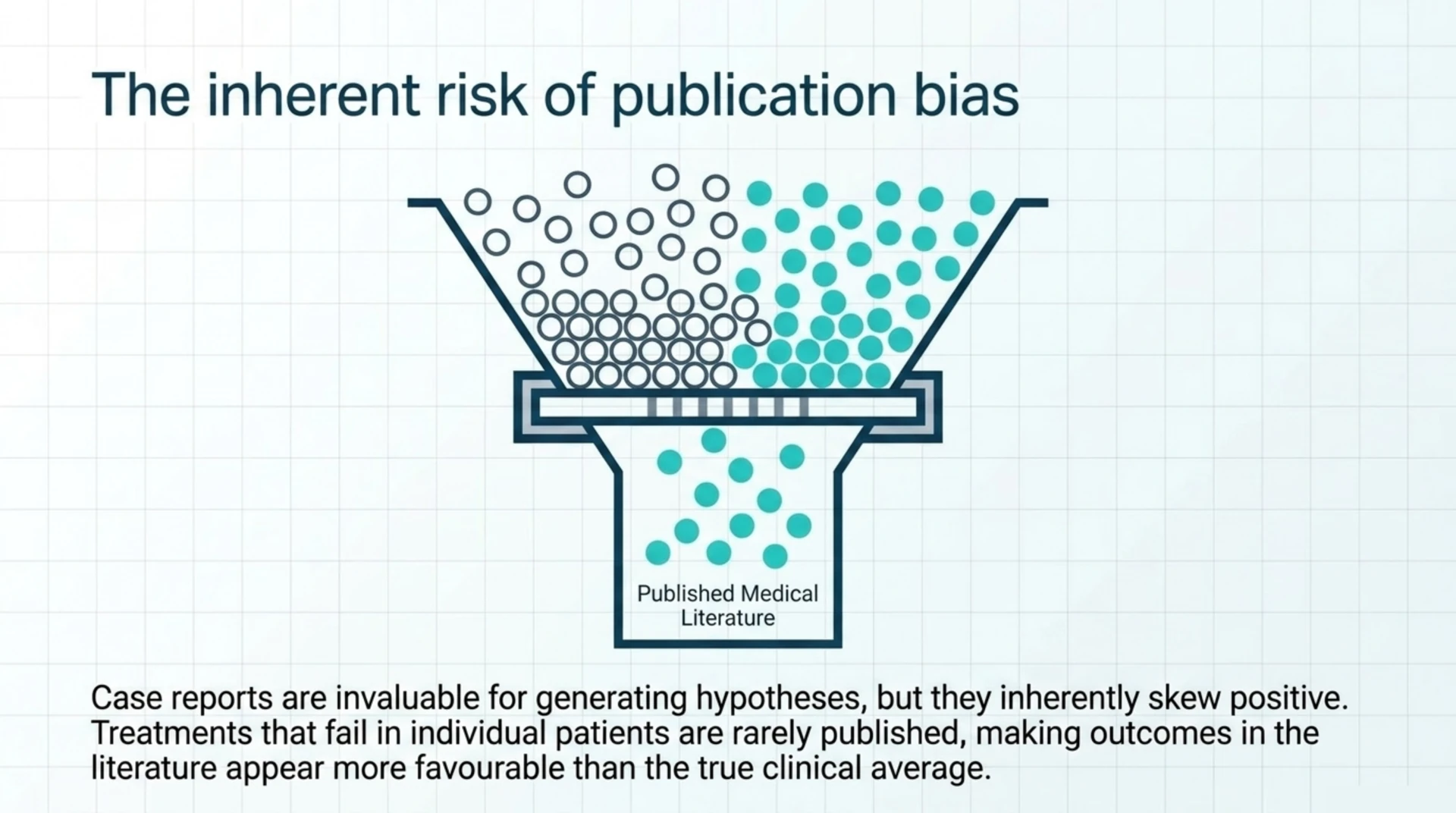
Each of these reports is a single patient, so while the individual outcomes are encouraging, they cannot show how often HBOT helps, how it compares with treatment alone, or whether the improvement would have happened anyway. Case reports are useful for generating hypotheses, not for confirming that a treatment works.
Two Reviews Add Broader Context
A small number of literature reviews have looked across published PG cases as a group rather than reporting a single patient. A 2007 review in the Journal of Drugs in Dermatology (PubMed | Our Assessment) summarized the existing case literature on hyperbaric oxygen for PG and concluded it may be a reasonable adjunct in refractory cases, while noting the evidence base was limited to case reports.
A separate systematic review in International Orthopaedics (PubMed | Our Assessment) identified 31 published cases of PG occurring after orthopaedic or trauma surgery. This review is valuable for understanding how PG can be triggered by surgery and how it was managed across those cases, though it was not designed to isolate the effect of HBOT specifically.
What a Larger Inpatient Cohort Shows About Disease Severity
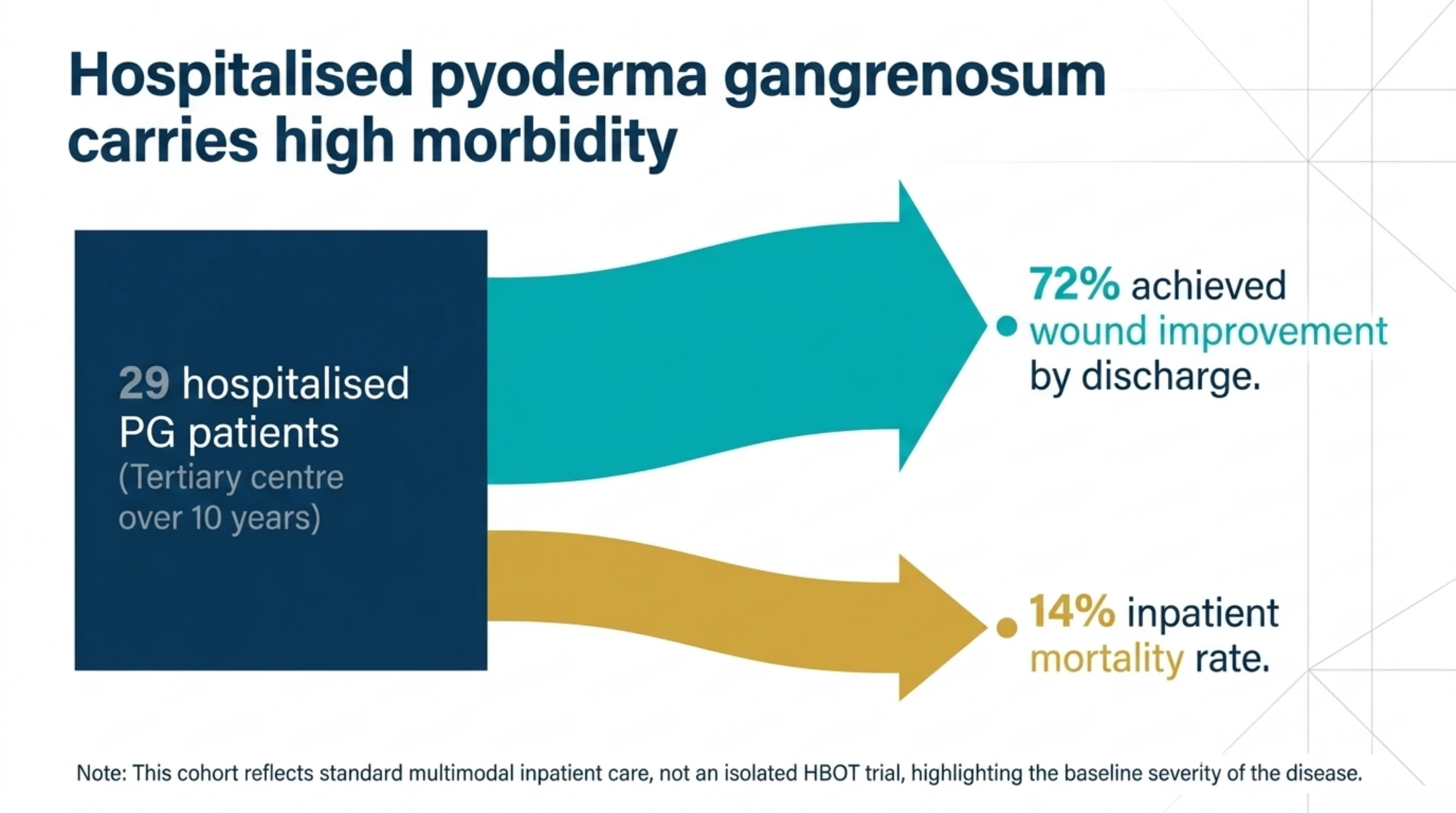
One retrospective study in Annals of Plastic Surgery (PubMed | Our Assessment) reviewed records of 29 patients hospitalized with PG at an Australian tertiary centre over a decade. Twenty-one of the 29 patients, or 72 percent, showed wound improvement by the time of discharge, while four patients, or 14 percent, died during their hospital admission. This study was not designed to isolate HBOT’s effect and instead reflects the mix of treatments used for hospitalized PG patients generally. Its main value here is context: even with multimodal inpatient care, PG is a serious disease with meaningful morbidity and mortality, which is part of why clinicians look for adjunctive options like HBOT when standard treatment is not enough.
What About HBOT for Related Inflammatory and Wound Conditions?
Because PG so often occurs alongside inflammatory bowel disease, it is worth noting what the evidence shows for HBOT in that related setting. A study in Acta Cirurgica Brasileira (PubMed | Our Assessment) followed 29 patients with refractory Crohn’s disease treated with adjunctive hyperbaric oxygen and observed an overall healing success rate of 76 percent in that group, with the pyoderma gangrenosum subgroup specifically reaching 100 percent healing (subgroup size not reported in the abstract). This is a within-study result for that specific patient group, not a claim that HBOT cures Crohn’s disease or PG.
A broader review in Diving and Hyperbaric Medicine (PubMed | Our Assessment) examined HBOT’s role across a range of refractory wounds of rare cause, PG among them, and concluded that hyperbaric oxygen may have a role as an adjunct in selected difficult wounds, again based on published case literature rather than trial data.
How Strong Is This Evidence, Really?
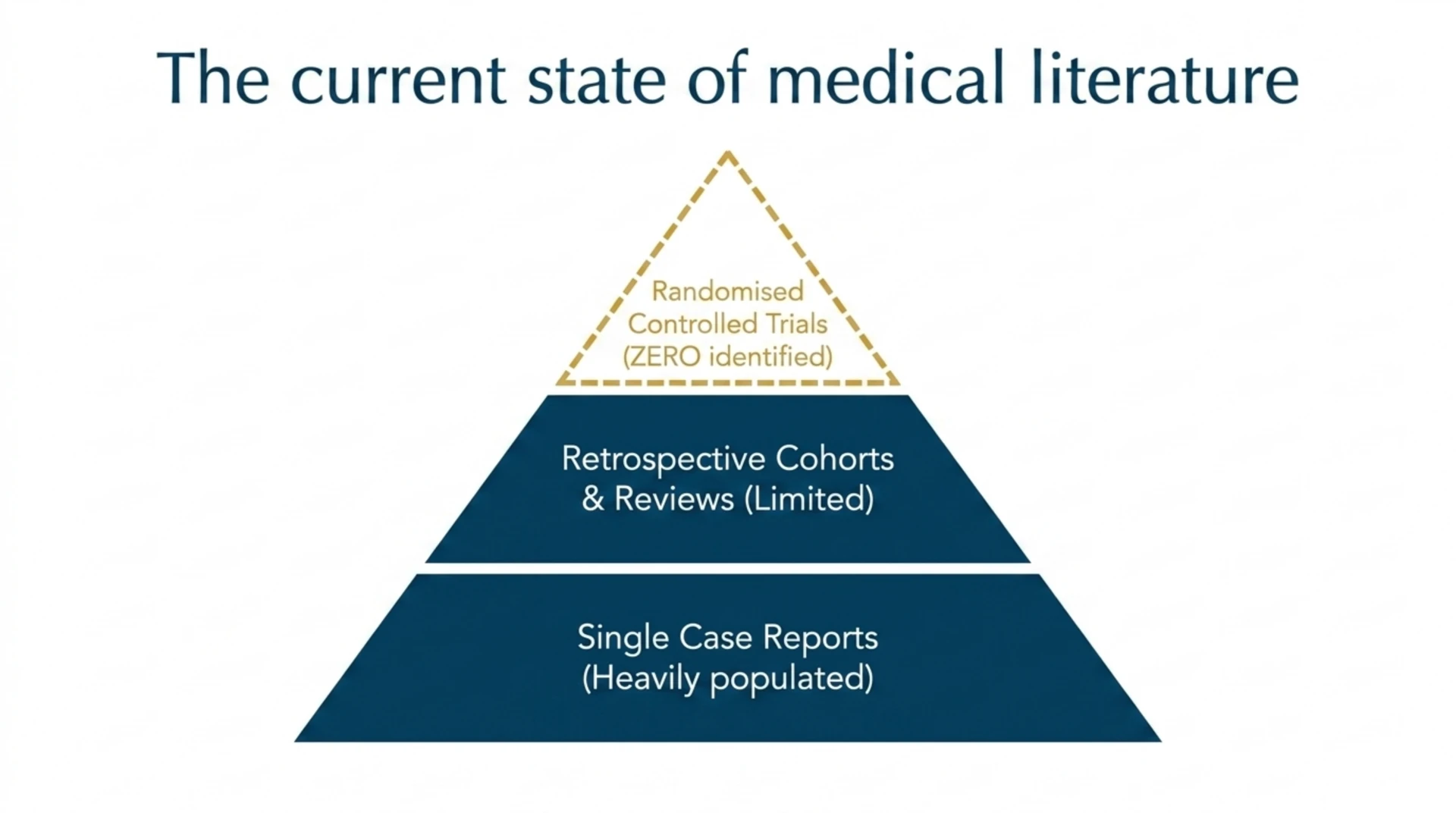
Reviewing the studies as a set makes the pattern clear: this is case-report-level evidence. No randomised controlled trial of HBOT for pyoderma gangrenosum exists in the current literature. The table below summarizes the type of evidence available.
| Evidence Type | What It Shows | Present in This Review? |
|---|---|---|
| Single case reports | One patient’s course when HBOT was added to standard therapy | Yes, the majority of studies |
| Literature/systematic reviews | Summaries of previously published cases, not new trial data | Yes, a small number |
| Retrospective cohort studies | Outcomes across a larger group, though not always HBOT-specific | Yes, limited |
| Randomised controlled trials | Direct comparison of HBOT versus standard care alone | None identified |
This does not mean HBOT does not help; it means the current literature cannot answer that question with confidence. Case reports tend to be published when a treatment appears to work, which can make published outcomes look more favourable than the true average result. Sound clinical decision-making for a rare condition like PG has to weigh this limitation carefully, alongside the individual patient’s disease severity and response to standard therapy.
Frequently Asked Questions
What is pyoderma gangrenosum?
Pyoderma gangrenosum is a rare inflammatory skin condition that causes painful, rapidly spreading ulcers, most often on the legs, and is frequently associated with underlying inflammatory bowel disease or rheumatologic conditions.
Is hyperbaric oxygen therapy an approved treatment for pyoderma gangrenosum?
No. HBOT is not an approved or first-line treatment for PG in Canada. Where it has been used, it has been as an adjunct to standard immunosuppressive therapy in cases that were slow to respond.
What does the case report evidence actually show?
It shows that individual patients with difficult-to-treat PG have been reported to improve, and in some cases reach remission, after hyperbaric oxygen was added to their treatment. It cannot show how often this happens or whether HBOT itself caused the improvement.
Are there any controlled trials of HBOT for pyoderma gangrenosum?
No randomised controlled trials specific to PG were identified in the studies reviewed here. The evidence base consists of case reports, small case series, and literature reviews.
Could HBOT help related inflammatory conditions linked to PG, such as Crohn’s disease?
A small study of patients with refractory Crohn’s disease reported a high rate of healing with adjunctive HBOT, which is a related but separate question from PG treatment specifically. It is not evidence that HBOT treats PG itself.
What are the risks of relying on case report evidence for a treatment decision?
Case reports are more likely to be published when outcomes are positive, which can skew the picture. They also cannot separate the effect of HBOT from the effect of the other treatments the patient received at the same time.
The Canada Hyperbarics research library includes case-level evidence like this alongside stronger study designs where they exist, drawing from a corpus of over 14,000 peer-reviewed studies on hyperbaric oxygen therapy. For a condition as rare as pyoderma gangrenosum, case reports are often what is available, and reviewing them honestly, without overstating what they prove, is part of how the Canada Hyperbarics team approaches every topic in the library. Readers who want to understand how HBOT coverage works more broadly in Canada can also see HBOT coverage in Canada.
Related Reading
- Hyperbaric Oxygen for Calciphylaxis: What Evidence Shows
- Hyperbaric Oxygen for Buerger’s Disease: What Evidence Shows
- Building an Academic Research Partnership for HBOT Clinics
Anyone considering hyperbaric oxygen therapy for pyoderma gangrenosum or a related condition should talk to their physician about whether it is appropriate for their specific situation.
This content is for informational purposes only and is not medical advice.